Clues emerging from DNA could unlock the mystery of human ancestors that are missing from the fossil record yet present in the genes of people living today.
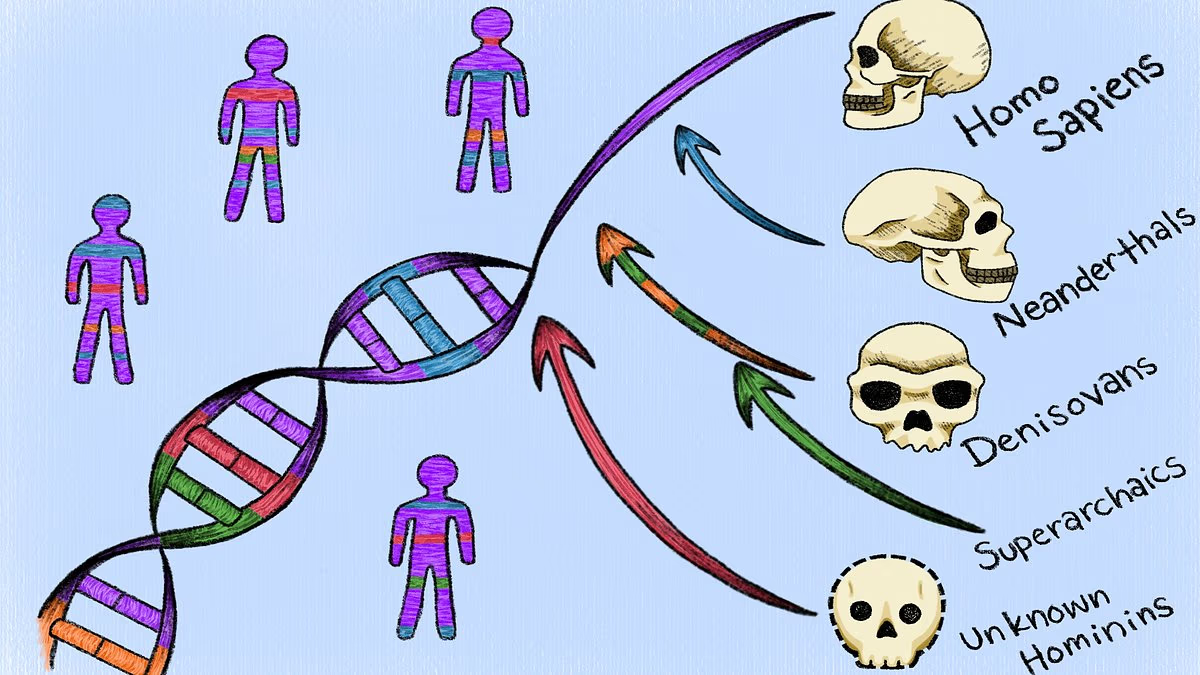
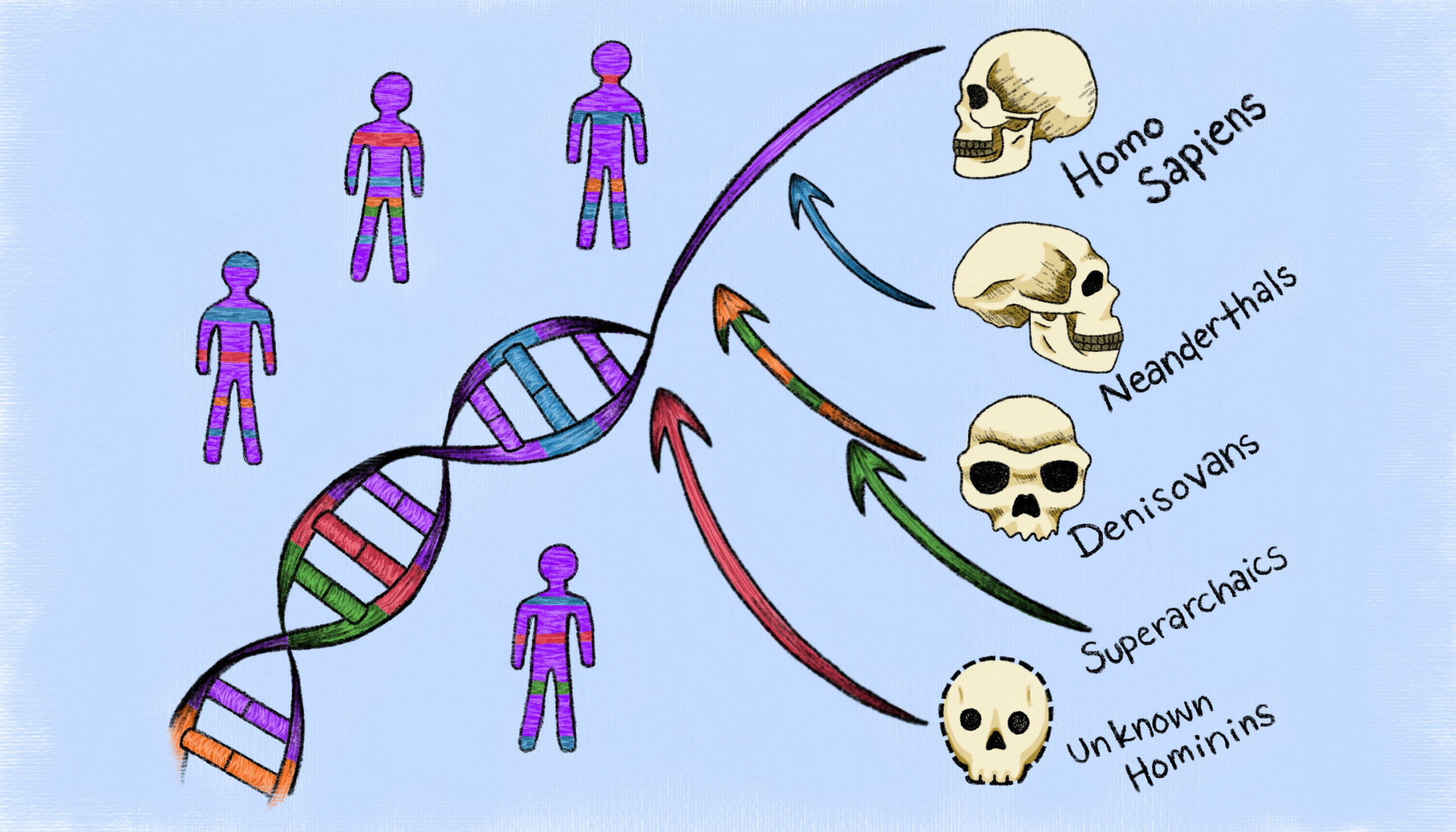
Scientists found evidence years ago that our species, Homo sapiens, had interbred with now-extinct human relatives, including Neanderthals and Denisovans. But some lineages have been difficult to identify, because — unlike Neanderthals and Denisovans, whose DNA has been recovered from prehistoric remains — they are essentially genetic “ghosts,” with no DNA proof of their existence to compare with the hints spotted in our genomes.
While previous studies have discovered remnants of the ghost lineages, they could not determine when the interbreeding happened or how far back these lineages diverged from the ancestors of modern humans.
Now, researchers have developed a new method to analyze modern human genomes and uncovered evidence of two previously unknown ancestral lineages by working backward from DNA in living people to reconstruct missing parts of the human family tree. One of the lineages appears to have interbred directly with Homo sapiens in Africa more than 50,000 years ago, while the other was an even older group that passed some of its DNA to humans indirectly through Denisovans. The researchers reported their findings July 30 in the journal Science.