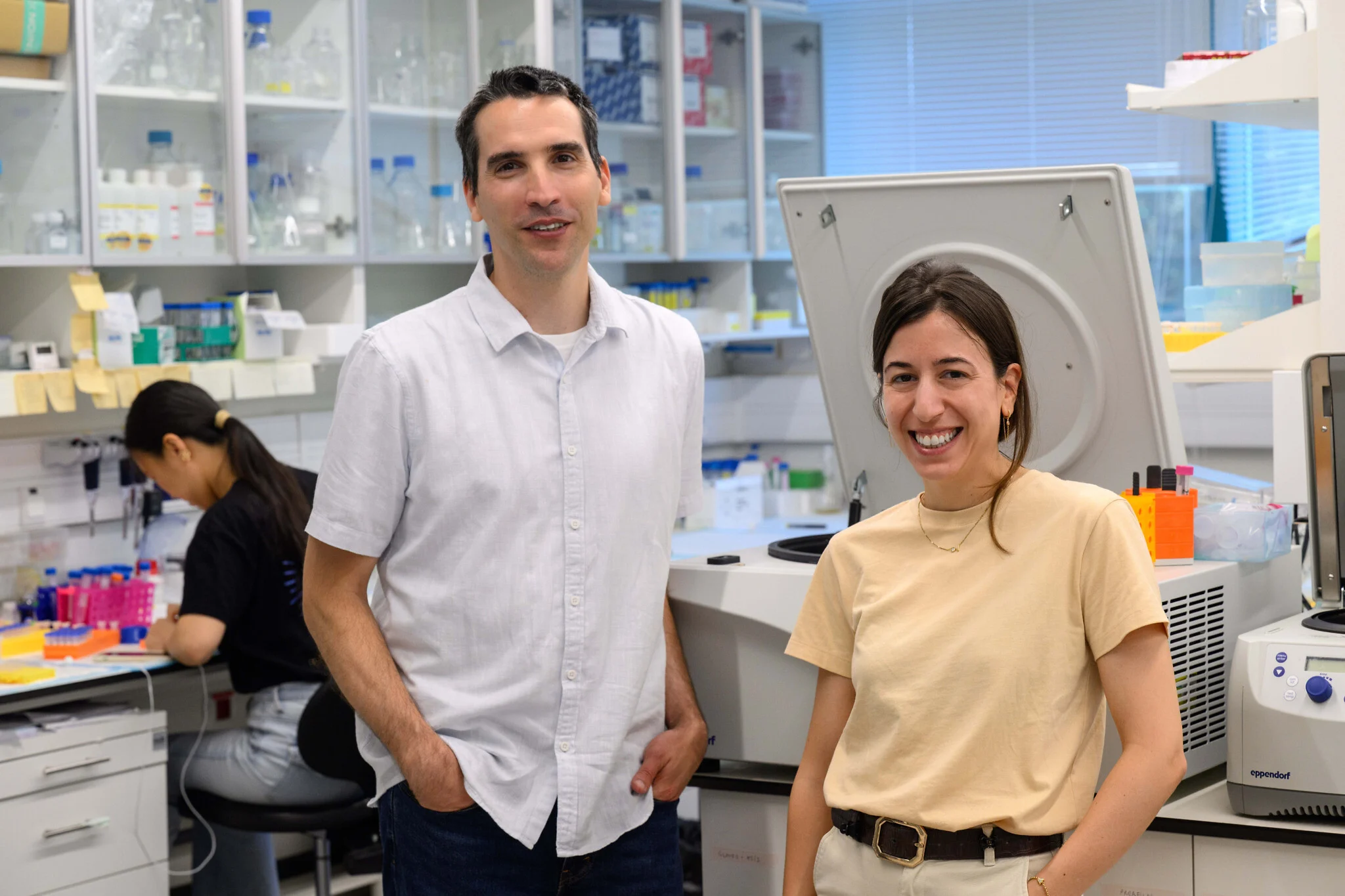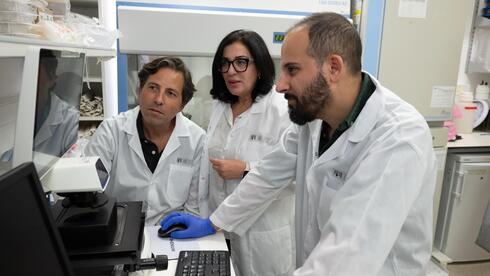
Weizmann Institute researchers find that damage to the tissue surrounding intestinal cells persisted for more than a year in mice, altered stem-cell behavior and may help explain recurrent Crohn’s disease and ulcerative colitisA short bout of severe intestinal inflammation may end quickly, but the damage it leaves behind could persist far longer than previously thought.A new study by scientists at the Weizmann Institute of Science suggests that even after the gut appears to recover, lasting changes can remain in the extracellular matrix, the network of proteins and sugars that surrounds and supports cells. That lingering damage can alter how intestinal stem cells behave, interfere with regeneration of the gut lining and potentially contribute to chronic inflammatory bowel diseases such as Crohn’s disease and ulcerative colitis.GalleryFrom right: Dr. Idan Adir, Prof. Irit Sagi and Dr. Moshe Biton (Photo: Weizmann Institute of Science)The study, published Wednesday in the journal Immunity, was conducted in the laboratories of Prof. Irit Sagi and Dr. Moshe Biton of Weizmann’s Department of Immunology and Regenerative Biology and led by Dr. Idan Adir. The findings could eventually point to new ways of identifying people at risk and developing treatments, but the work was conducted mainly in mouse models and laboratory-grown cells.The lining of the intestine renews itself completely every three to five days, one of the fastest turnover rates in the human body. That rapid regeneration is essential in tissue constantly exposed to mechanical wear, bacteria and other potentially harmful substances. The researchers wanted to know whether the underlying structure surrounding those cells recovers just as efficiently after inflammation.At the center of the study is the extracellular matrix, or ECM, a scaffold of proteins and sugars that surrounds cells throughout the body. Once considered little more than structural packing material, it is now understood to play a major role in determining how cells function and how tissues repair themselves.Previous work from Sagi’s laboratory had already shown that the ECM changes before inflammatory bowel disease fully develops. In a 2021 study, the team found that collagen 18 accumulated in tissue before the onset of disease, both in mice and in human samples, suggesting it might serve as an early marker.During that work, Adir noticed that similar changes appeared in mice with short-lived inflammation and in animals that developed chronic disease.Mouse colon: 80 days after temporary inflammation, collagen 18 buildup and an active immune response remained, mainly in the area where ulcerative colitis develops in humans (Photo: Weizmann Institute of Science)“That is how we came to hypothesize that the extracellular matrix has a ‘memory,’ and that a severe initial injury can change it irreversibly,” Sagi said.Inflammatory bowel diseases such as Crohn’s and ulcerative colitis are marked by chronic inflammation and recurring flare-ups. Researchers still do not fully understand why a temporary injury resolves in some people but progresses to chronic disease in others.Sagi and Biton said known genetic variants account for only about a quarter of the risk, suggesting that genetics, environmental factors and changes in the gut’s local environment all play a role.Their new findings add another possible factor: long-term damage to the connective tissue surrounding intestinal cells.According to the researchers, contact between stem cells and a damaged ECM changes the way those stem cells develop. Instead of producing normal intestinal lining cells, they can become pro-inflammatory epithelial cells that release signals attracting immune cells, potentially creating a self-reinforcing inflammatory cycle.To test the theory, the team used mouse models of acute intestinal inflammation and followed the animals for more than a year.They found that immune cells accumulated in the intestinal lining during inflammation and released enzymes that broke down the extracellular matrix.“A month after the experiment began, the mice had indeed recovered, but the extracellular matrix refused to forget the injury,” Sagi said.The tissue failed to regenerate normally, and the architecture of the intestine remained distorted even after 80 days. The ECM lost its normal stiffness, became more porous and remained structurally abnormal even 400 days after the initial inflammation.Mouse intestine sample: 80 days after the acute inflammation subsided, collagen fibers remained damaged and the number of pro-inflammatory epithelial cells had increased (Photo: Weizmann Institute of Science)The researchers then used organoids, tiny three-dimensional intestinal structures grown from stem cells in the laboratory, to test how the damaged matrix affected otherwise healthy cells.When healthy stem cells were grown on abnormal ECM taken from mice during and after acute inflammation, they failed to develop into normal three-dimensional intestinal tissue. Instead, they formed a shapeless layer.RNA sequencing showed that the cells did not mature normally but instead became pro-inflammatory epithelial cells. Those cells released chemical signals that attracted immune cells, creating conditions that could promote persistent inflammation.“Growing the stem cells as organoids inside a damaged extracellular matrix was enough to change their fate,” Biton said.To assess the relevance to human disease, the researchers analyzed a single-cell RNA sequencing database and seven biopsies taken from patients with ulcerative colitis.They said the genetic and protein patterns matched what they had seen in mice. Inflamed human samples contained the same spatial signature of what the researchers call modECM, including excess collagen 18, together with KRT7, a marker associated with the abnormal epithelial cells.The researchers say these findings raise the possibility that ECM damage and related biomarkers could eventually help identify patients at greater risk of severe disease, recurrent flare-ups or poor response to biologic drugs.They are now testing whether patients with stronger signs of this inflammatory “memory” are indeed more likely to experience those outcomes.How long such tissue memory persists in humans is still unknown.(Photo: Shutterstrock)“Our findings show that when there is severe and prolonged damage, the tissue accumulates that damage, like a ‘scar’ that remains for a very long time,” Sagi and Biton said. Repeated inflammation, they added, appears to worsen the injury.That scar may itself aggravate disease by influencing the stem cells responsible for repairing the intestine and could help explain why some patients either fail to respond to biologic treatments from the outset or lose their response over time.The team is working with Dr. Ehud Zigmond and colleagues at Sheba Medical Center to investigate those questions in larger groups of patients followed over time.The study also points to collagen 18 as a possible driver of the process rather than simply a marker of it.The researchers found that collagen 18 can trap signaling molecules, interfere with the signals reaching stem cells and push them toward a pro-inflammatory state.When the scientists deleted the gene encoding collagen 18 in mice, the tissue regenerated more quickly and more normally after injury. Lasting ECM damage was prevented, and chronic disease did not develop.The researchers are now exploring whether treatments that reduce the accumulation of collagen 18 could allow stem cells to repair inflamed tissue more effectively. Such an approach might one day help prevent disease progression or even promote healing, though it has not yet been tested in humans.They are also examining whether it is possible to stop the cells that produce collagen 18 from reaching diseased areas in the first place.For now, the researchers say the findings suggest that the extracellular matrix acts as a kind of signaling hub, storing and regulating molecules that influence how the gut lining regenerates.Sagi believes the implications may extend beyond inflammatory bowel disease.“Until now, we assumed that the extracellular matrix returned to normal after injury, but it is now clear that it ‘remembers’ and changes throughout our lives,” she said. Because the matrix exists throughout the body, she added, understanding how it changes before and during disease could eventually contribute to diagnosis and treatment in other conditions as well.When the ECM is damaged, enzymes cut proteins in the connective tissue into fragments that may enter the bloodstream. The researchers are now examining whether those fragments could provide a detectable blood signature of inflammatory bowel disease and recurrent flare-ups.Growing intestinal organoids in the laboratory from stem cells taken from patients. Each 'circle' represents one organoid (Photo: Petro Bosco, from Dr. Moshe Biton’s laboratory)They are particularly looking for fragments of collagen 18 and enzymes involved in breaking down the matrix, together with inflammatory signals linked to stem cells and the immune system.Sagi and Biton said they believe it should eventually be possible to detect the modECM signature in blood, though developing such a diagnostic test will require further work.Biton said the findings also suggest why existing treatments, which largely target the immune system, may not be enough for all patients.“Treatments targeting the immune system have revolutionized inflammatory bowel disease care, but many patients still suffer severe flare-ups,” he said.“Now that we understand that changes in the extracellular matrix alter the fate of stem cells and that these processes underlie the inflammatory response, it is also clear that existing treatments are targeting the outcome rather than the root of the problem.”The researchers ultimately envision treatments that act on several levels at once: the extracellular matrix, stem cells and the immune system. Their next goal is to identify molecules that could help break down the lingering inflammatory scar, enable stem cells to regenerate tissue normally and prevent the creation of a chronic inflammatory environment.
Crohn’s breakthrough? Your gut may never forget inflammation, Israeli scientists find
Weizmann Institute researchers find that damage to the tissue surrounding intestinal cells persisted for more than a year in mice, altered stem-cell behavior and may help explain recurrent Crohn’s disease and ulcerative colitis
1,510 words~7 min read