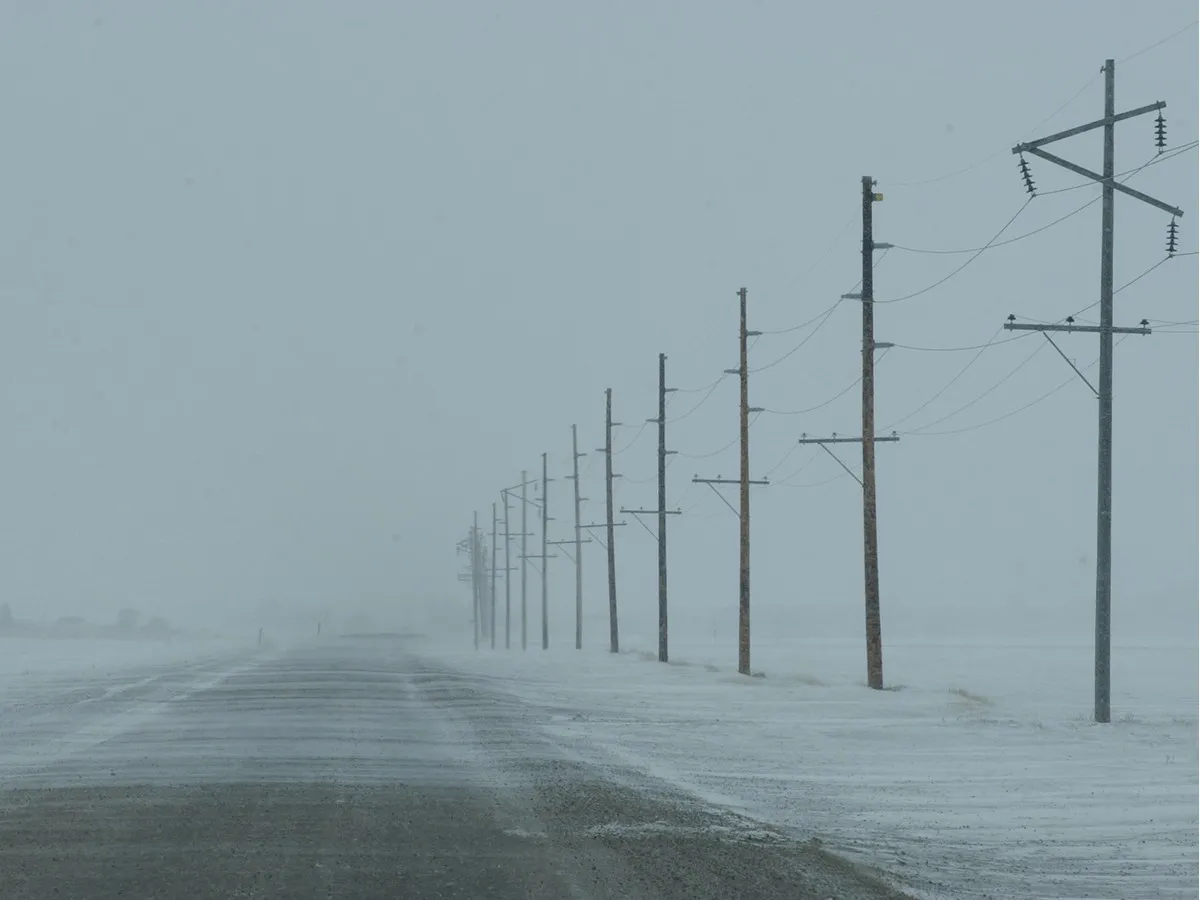
Skip to Content Subscribe My Account Manage My Subscriptions FAQ Newsletters Canada Canadian True Crime Canadian Politics Health World Israel & Middle East Financial Post NP Comment Longreads Puzzmo Diversions Comics NP News Quiz New York Times Crossword Horoscopes Life Eating & Drinking Style Sponsored Play for Ontario Travel Travel Canada Travel USA Travel International Cruises Travel Essentials Culture Books Celebrity Movies Music Theatre Television Business Essentials Advice Lives Told Tails Told Shopping Buy Canadian Home Living Outdoor Living Kitchen & Dining Tech Style & Beauty Personal Care Entertainment & Hobbies Gift Guide Travel Guide Amazon Prime Day Deals Savings National Post Store More Sports Hockey Baseball Basketball Football Soccer Golf Tennis Driving Vehicle Research Reviews News Gear Guide Obituaries Place an Obituary Place an In Memoriam Classifieds Place an Ad Celebrations Working Business Ads Archives Healthing Epaper Manage Print Subscription Profile Settings My Subscriptions My Offers Newsletters Customer Service FAQ Newsletters Canada World Financial Post NP Comment Longreads Puzzmo Diversions Life Shopping Epaper Manage Print Subscription HomeNewsScienceNew study names the best place to ride out a global catastrophe. It isn't CanadaThe lead author says agriculture in Canada ceases almost completely in many nuclear winter scenariosA windblown, empty municipal road during winter. Bryan SchlosserAustralia is the country most often named as best able to ride out a global catastrophe. Canada is on the other side of the ledger.Enjoy the latest local, national and international news.Exclusive articles by Conrad Black, Barbara Kay and others. Plus, special edition NP Platformed and First Reading newsletters and virtual events.Unlimited online access to National Post.National Post ePaper, an electronic replica of the print edition to view on any device, share and comment on.Daily puzzles including the New York Times Crossword.Support local journalism.Enjoy the latest local, national and international news.Exclusive articles by Conrad Black, Barbara Kay and others. Plus, special edition NP Platformed and First Reading newsletters and virtual events.Unlimited online access to National Post.National Post ePaper, an electronic replica of the print edition to view on any device, share and comment on.Daily puzzles including the New York Times Crossword.Support local journalism.Create an account or sign in to continue with your reading experience.Access articles from across Canada with one account.Share your thoughts and join the conversation in the comments.Enjoy additional articles per month.Get email updates from your favourite authors.Create an account or sign in to continue with your reading experience.Access articles from across Canada with one accountShare your thoughts and join the conversation in the commentsEnjoy additional articles per monthGet email updates from your favourite authorsSign In or Create an AccountorFlorian Ulrich Jehn is the lead author of the first review to map which places on Earth would hold up best in a global catastrophe, published Aug. 23 in the journal Global Challenges.The paper defines a global catastrophic risk as the death of a significant share of humanity, most commonly at least 10 per cent of the world’s population within months to years. It reviews 152 documents rather than modelling anything new.The authors sorted those threats three ways with the first being sunlight reduction scenarios. That is the review’s term for anything that suddenly blocks out the sun, whether a nuclear war, a large volcanic eruption or an asteroid strike.Get a dash of perspective along with the trending news of the day in a very readable format.By signing up you consent to receive the above newsletter from Postmedia Network Inc.A welcome email is on its way. If you don't see it, please check your junk folder.The next issue of NP Posted will soon be in your inbox.We encountered an issue signing you up. Please try againAnother is infrastructure loss, usually a long blackout caused by a solar storm, a cyberattack or an electromagnetic pulse from a nuclear weapon detonated at high altitude. The third is a pandemic severe enough to cause mass casualties.“In many nuclear winter scenarios agriculture ceases almost completely in Canada,” Jehn said in an email to National Post.Canada is strong on biological threats and mediocre on infrastructure collapse, he wrote, and “probably near the worst among wealthy democracies for abrupt sunlight reduction scenarios.”Australia is the only country directly named as resilient across all three categories in the research the authors reviewed. New Zealand and Japan were the only others with evidence in all three.On nuclear winter, the review lists Canada among the countries identified as particularly at risk, along with the United States, Russia, China, Central Europe and Eastern Europe. High latitude regions in the Northern Hemisphere would take the most cooling, the paper said.Jehn put it in terms of where the country starts. Canada is so far north that it begins from a lower base temperature, he wrote, and the temperature effects get stronger the further from the equator a place sits.Canada does better on the second category. Geomagnetic storms do not hit everywhere equally, and the zones with the highest likelihood of damage take in Canada, Ireland, the United States, the United Kingdom, northern Germany, the Baltics, New Zealand, Tasmania, Russia and Scandinavia.Canada is one of three countries the review named as having hardened its grid against those storms, along with the United States and Sweden. Past storms drove that investment, Jehn wrote. “I think other countries can likely learn from Canada how it worked on adapting to the threat of geomagnetic storms.”He attached limits to the grid work. An electromagnetic pulse or a large cyberattack could still take out the grid, he wrote, and Canada trades enough that it would struggle if trade stopped. He is not familiar enough with Canadian industry to make a solid assessment, he wrote.The third category is where Canada is named as capable. It is among the countries with the highest scores on the Global Health Security Index, a measure of a country’s ability to prevent, detect and respond to disease outbreaks.“Canada only has one border to cover, it has a good health system and is a rich and stable democracy,” Jehn wrote.The individual placements make the picture look worse than it is, he wrote. Most countries that came up in the research carry vulnerabilities across several of the risks, and “with the exception of being so far North, Canada is not a negative outlier in comparison with many other countries.”Very few countries are less vulnerable, Jehn wrote, and the authors did not look at every country systematically. The review does not rank countries, and the paper said a ranking is not possible.The authors flagged a limit in their own work. Australia and New Zealand come up often in resilience research, but much of it comes from a small group focused on those two countries, and other countries “might also have a relatively high resilience, but nobody has gotten around to studying them yet,” the paper said.More research into Canada specifically would most likely pay off on infrastructure, Jehn wrote, which is also the least studied part of the field.“A country cannot suddenly become an island or relocate to the Southern Hemisphere,” the paper said. Most of what determines resilience is how a society is built and how well it prepared, and the two factors the authors found both changeable by policy and free of trade-offs were governance quality and decentralization.Democratic backsliding, rising inequality and concentrated supply chains are all moving the other way, the paper said. Prevention is always better than resilience, but some catastrophes cannot be prevented and, when they happen, “the difference between societies that have invested in the factors identified here and those that have not will be measured in lives.”Research goes where researchers expect to find something new, Jehn wrote. “No amount of research will make Canada be a good place in a nuclear winter.” Join the Conversation This website uses cookies to personalize your content (including ads), and allows us to analyze our traffic. Read more about cookies here. By continuing to use our site, you agree to our Terms of Use and Privacy Policy.
New study names the best place to ride out a global catastrophe. It isn't Canada
Canada rates well for a pandemic and near the worst among wealthy democracies for a nuclear winter, a new review finds.
1,316 words~6 min read