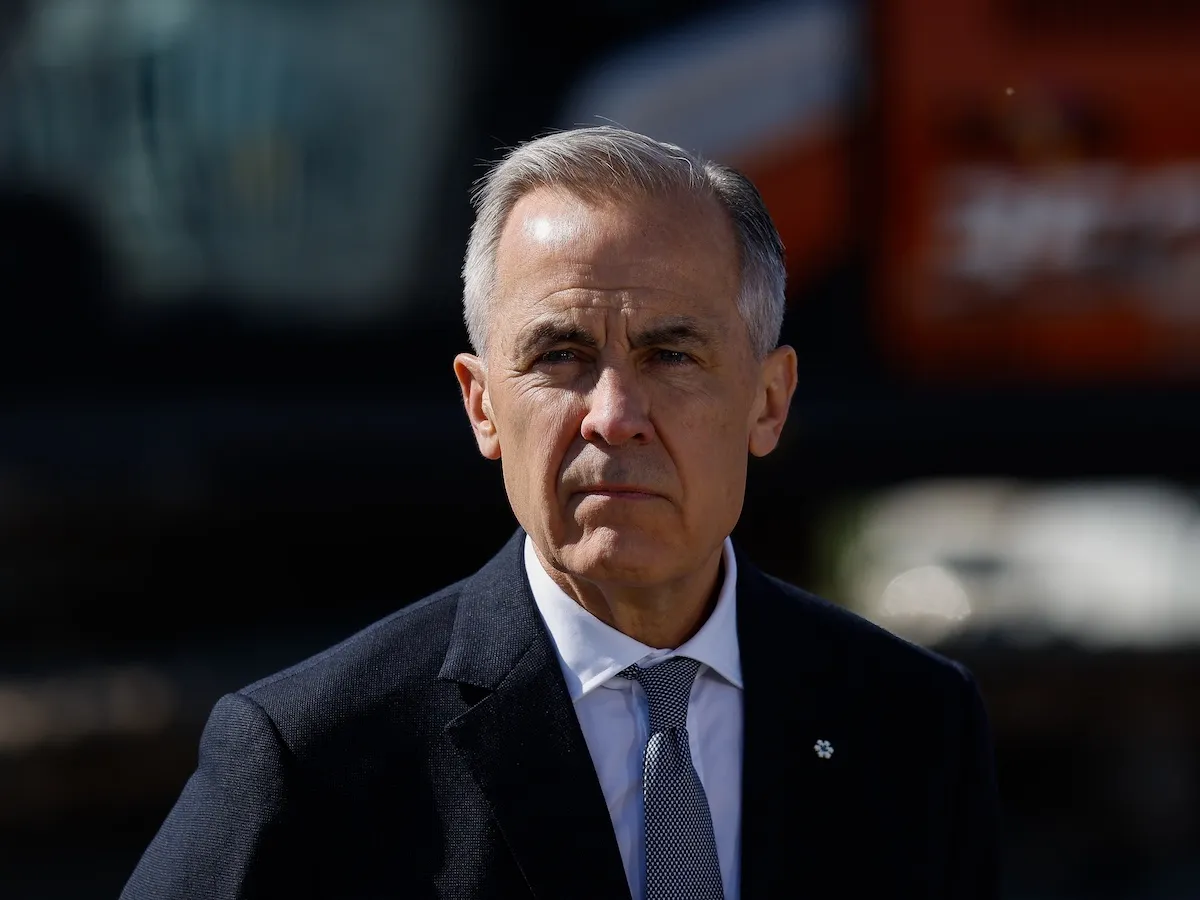
Skip to Content Subscribe Our Offers My Account Manage My Subscriptions FAQ Newsletters Canada Canadian True Crime Canadian Politics Health World Israel & Middle East Financial Post NP Comment Longreads Puzzmo Diversions Comics NP News Quiz New York Times Crossword Horoscopes Life Eating & Drinking Style Sponsored Play for Ontario Travel Travel Canada Travel USA Travel International Cruises Travel Essentials Culture Books Celebrity Movies Music Theatre Television Business Essentials Advice Lives Told Tails Told Shopping Buy Canadian Home Living Outdoor Living Tech Style & Beauty Kitchen & Dining Personal Care Entertainment & Hobbies Gift Guide Travel Guide Deals Savings National Post Store More Sports Hockey Baseball Basketball Football Soccer Golf Tennis Driving Vehicle Research Reviews News Gear Guide Obituaries Place an Obituary Place an In Memoriam Classifieds Place an Ad Celebrations Working Business Ads Archives Healthing Epaper Manage Print Subscription Profile Settings My Subscriptions Saved Articles My Offers Newsletters Customer Service FAQ Newsletters Canada World Financial Post NP Comment Longreads Puzzmo Diversions Life Shopping Epaper Manage Print Subscription HomeNP CommentFIRST READING: And just like that, nobody cares about climate change anymoreSudden Canadian disinterest in emissions matching global trends You can save this article by registering for free here. Or sign-in if you have an account.Member of Parliament Steven Guilbeault walks to a Liberal caucus meeting on Parliament Hill in Ottawa May 27, 2026. Photo by Photo by Blair Gable/PostmediaFirst Reading is a Canadian politics newsletter curated by the National Post’s own Tristin Hopper. To get an early version sent directly to your inbox, sign up here.Enjoy the latest local, national and international news.Exclusive articles by Conrad Black, Barbara Kay and others. Plus, special edition NP Platformed and First Reading newsletters and virtual events.Unlimited online access to National Post.National Post ePaper, an electronic replica of the print edition to view on any device, share and comment on.Daily puzzles including the New York Times Crossword.Support local journalism.Enjoy the latest local, national and international news.Exclusive articles by Conrad Black, Barbara Kay and others. Plus, special edition NP Platformed and First Reading newsletters and virtual events.Unlimited online access to National Post.National Post ePaper, an electronic replica of the print edition to view on any device, share and comment on.Daily puzzles including the New York Times Crossword.Support local journalism.Create an account or sign in to continue with your reading experience.Access articles from across Canada with one account.Share your thoughts and join the conversation in the comments.Enjoy additional articles per month.Get email updates from your favourite authors.Create an account or sign in to continue with your reading experience.Access articles from across Canada with one accountShare your thoughts and join the conversation in the commentsEnjoy additional articles per monthGet email updates from your favourite authorsSign In or Create an AccountorBefore Steven Guilbeault announced his resignation from the House of Commons, he first had to watch the slow dismantling of his Canadian climate change empire.The consumer carbon tax — the policy that Guilbeault defended more than any other while environment minister — was eliminated on Prime Minister Mark Carney’s first day in office.Guilbeault had been the point man for the Clean Electricity Regulations, a series of mandates designed to completely purge fossil fuels from the Canadian electricity grid by 2035. These were just gutted by a new National Electricity Strategy that abandoned the obsessive decarbonization of Guilbeault’s plan in favour of one that was much friendlier towards natural gas.This newsletter from NP Comment tackles the topics you care about. (Subscriber-exclusive edition on Fridays)By signing up you consent to receive the above newsletter from Postmedia Network Inc.We encountered an issue signing you up. Please try againWhen Guilbeault introduced an emissions cap on Canada’s fossil fuel sector in 2024, he infamously declared that “no other major oil and gas producer” was imposing similar handicaps on energy production. The emissions cap was scrapped just 12 months later as part of a pipeline agreement with Alberta.As the former Greenpeace activist prepares to exit public life this summer, one of the only remaining pieces of his legacy is that it’s still illegal for Canadians to use a plastic straw. His single-use plastic ban, introduced in 2022, remains in force.“It’s clear to be that there’s been a shift in our approach to climate change. I don’t understand why we decided to take this turn. I can’t explain it,” Guilbeault said in French to La Presse.And the story of Guilbeault’s ignominious last 12 months is pretty emblematic of his life’s cause as a whole. Climate change — once the animating mission of Western policymakers — has been sidelined and deprioritized with stunning speed.When the Liberals first took power in 2015, “climate change” or “the environment” frequently topped polls of the issues that Canadians thought were important.A year later, when Ottawa first released the details of its planned federal carbon tax, an Abacus Data poll found an incredible 69 per cent of Canadians saying that the new tax was either “good” or “acceptable.”By last July, however, Leger pollsters were describing climate change as a “third tier” issue. A mere four per cent of Canadian respondents ranked “climate change/extreme weather” as the top challenge facing Canada, well below a litany of concerns ranging from U.S. tariffs to immigration to affordability.Just five years ago, billionaire Bill Gates put the term “climate disaster” right in the name of his newest book, How to Avoid a Climate Disaster.In interviews at the time, he warned that avoiding the looming calamity could only be done by “transitioning the world’s entire energy system at an unprecedented speed.”Last October, Gates published a lengthy blog post suggesting that maybe this view had been a bit too hasty.He rejected the idea that climate change was an existential threat, or even that it should be humanity’s chief concern.“People will be able to live and thrive in most places on Earth for the foreseeable future,” wrote Gates, adding that “human welfare” was ultimately more important than emissions reduction or temperature change.The Intergovernmental Panel on Climate Change, arguably the world’s most cited body on the issue, has also recently dealt a blow to the more extremist pronouncements of climate activists.In 2011, the IPCC drew up a set of four hypothethical scenarios outlining the possible future of a warmed planet. The worst, known as RCP8.5, forecast temperature increases of as much as five degrees Celsius compared to pre-industrial carbon levels.But according to a new paper published in the journal Geoscienific Model Development, this scenario is now scheduled for deletion as its conditions “have become implausible, based on trends in the costs of renewables, the emergence of climate policy and recent emission trends.”As a teenager, climate activist Greta Thunberg became Time magazine’s person of the year in 2019 for, in their words, being “the biggest voice on the biggest issue facing the planet.”And unlike most others in the climate advocacy field, Thunberg was personally quite disciplined about keeping her carbon budget low. When she came to Canada for a 2019 tour she refused to fly, opting instead to cross the Atlantic by sail.Now, the Swede mostly spends her time on a range of leftist causes ranging from migration to anti-Israel campaigns, and is much more agnostic about burning large quantities of fossil fuels to do so.This included a particularly ironic moment in February in which she campaigned for more fossil fuels to be sent to Cuba. Specifically, she came out against a U.S.-led oil blockade on the island, leading to some of the country’s worst-ever fuel shortages.Climate change isn’t even being mentioned at the Academy Awards anymore. As noted by the Los Angeles Times, the March Oscars ceremony didn’t see emissions or the environment raised in a single acceptance speech.But arguably one of the world’s most dramatic examples of a public figure seeming to change their mind on climate change sits in the prime minister’s office.Only five years ago, climate change advocacy was one of Carney’s main job descriptions.After leaving the governorship of the Bank of England, Carney was appointed the UN Special Envoy on Climate Action and Finance and headed up the Glasgow Financial Alliance for Net Zero, a consortium of more than 140 banks pledging to invest their billions towards a global economy purged of fossil fuels by 2050.When Carney appeared before House of Commons committees or in interviews with Canadian media, it was usually about climate change.His 2021 book Values is a paean to aggressive climate change policy, with a particular emphasis on carbon pricing.“The Canadian federal carbon pricing framework is a model for others,” writes Carney of the policy he would personally destroy.Upon Guilbeault announcing his resignation this week, Green Party Leader Elizabeth May joined him in expressing confusion about the state of the Canadian climate change agenda.She told reporters Canada was now “pro-pipeline,” “pro-fossil fuel” and “anti-environmental regulation.”“I didn’t expect that. I thought it would be good,” she said. Amid rumours that the caucus of Alberta’s ruling United Conservative Party was split right down the middle by the issue of secession, the Edmonton Journal decided to call all 47 of them and ask. The results were … inconclusive. 21 backbenchers never called back, most cabinet ministers returned a statement echoing Premier Danielle Smith’s position, saying they support “a strong and sovereign Alberta within a united Canada.” Tany Yao, Parliamentary Secretary for Small Business and Northern Development, said only that he would be handing out Canadian flags on Canada Day.One recurrent theme of the Trudeau government was its uncanny ability to spend unbelievable quantities of money on foreign trips, such as the time then prime minister Justin Trudeau booked a $6,000-a-night hotel suite to attend the funeral of Queen Elizabeth II.But the Carney government has somehow managed to beat Trudeau’s record in the particularly ignominious field of in-flight catering.Trudeau’s worst reported tally was a 2024 trip to Italy that incurred $43,000 in in-flight food expenses. But during a 2025 trip, also to Italy, the Carney government managed to incur $94,000 in in-flight catering fees. The RCAF Airbus 330 used for the trip would have been in the air for about 16 hours, meaning that the flight managed to consume an average of $6,000 in food and drink for every hour that it took to cross the Atlantic.The figures all come from the Canadian Taxpayers Federation, which calculated that across just three European trips in 2025, the Carney government’s in-flight food bill topped $200,000.Also, on the semi-frequent occasion that the Liberals are caught in a six-figure spending scandal, the Conservatives are always quick to note that they once fired a cabinet minister, Bev Oda, for expensing a $16 glass of orange juice ($22 with inflation).Assuming a 12-ounce glass of orange juice, $94,000 would be enough to buy 1,500 litres’ worth. Or, enough $16 orange juice to fill an average hot tub.First Reading is a Canadian politics newsletter curated by the National Post’s own Tristin Hopper. To get an early version sent directly to your inbox, sign up here. Get the latest from Tristin Hopper straight to your inbox Join the Conversation This website uses cookies to personalize your content (including ads), and allows us to analyze our traffic. Read more about cookies here. By continuing to use our site, you agree to our Terms of Use and Privacy Policy.
FIRST READING: And just like that, nobody cares about climate change anymore
Sudden Canadian disinterest in emissions matching global trends
1,861 words~8 min read