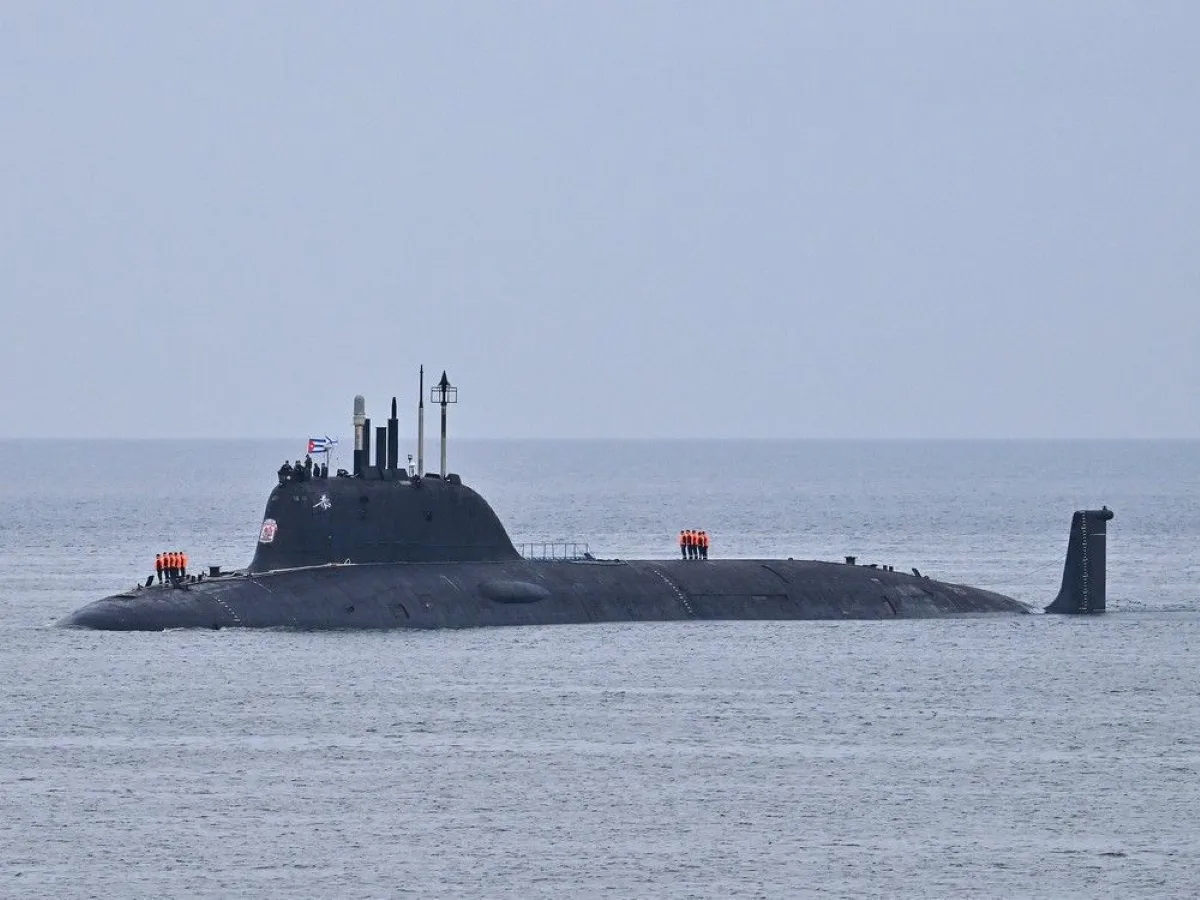
Skip to Content Subscribe Our Offers My Account Manage My Subscriptions FAQ Newsletters Canada Canadian True Crime Canadian Politics Health World Israel & Middle East Financial Post NP Comment Longreads Puzzmo Diversions Comics NP News Quiz New York Times Crossword Horoscopes Life Eating & Drinking Style Sponsored Play for Ontario Travel Travel Canada Travel USA Travel International Cruises Travel Essentials Culture Books Celebrity Movies Music Theatre Television Business Essentials Advice Lives Told Tails Told Shopping Buy Canadian Home Living Outdoor Living Kitchen & Dining Tech Style & Beauty Personal Care Entertainment & Hobbies Gift Guide Travel Guide Amazon Prime Day Deals Savings National Post Store More Sports Hockey Baseball Basketball Football Soccer Golf Tennis Driving Vehicle Research Reviews News Gear Guide Obituaries Place an Obituary Place an In Memoriam Classifieds Place an Ad Celebrations Working Business Ads Archives Healthing Epaper Manage Print Subscription Profile Settings My Subscriptions Saved Articles My Offers Newsletters Customer Service FAQ Newsletters Canada World Financial Post NP Comment Longreads Puzzmo Diversions Life Shopping Epaper Manage Print Subscription HomeNP CommentOpinion: Canada must confront Russia's Arctic aspirationsThe region can't be ceded to authoritariansLast updated 8 minutes ago You can save this article by registering for free here. Or sign-in if you have an account.Russian nuclear-powered submarine Kazan in 2024. Photo by BloombergAs the U.S.-Iran conflict pulls eyes to the Middle East, Canadians need to maintain a steady gaze north. When it comes to protecting sea lanes, not all the action is in the Straits of Hormuz. At the recent NATO summit in Turkey, Canada and its allies pledged to strengthen maritime security in the Arctic and North Atlantic oceans. But dealing with Vladimir Putin’s authoritarian Arctic ambitions will require Canada to act at home and abroad.Enjoy the latest local, national and international news.Exclusive articles by Conrad Black, Barbara Kay and others. Plus, special edition NP Platformed and First Reading newsletters and virtual events.Unlimited online access to National Post.National Post ePaper, an electronic replica of the print edition to view on any device, share and comment on.Daily puzzles including the New York Times Crossword.Support local journalism.Enjoy the latest local, national and international news.Exclusive articles by Conrad Black, Barbara Kay and others. Plus, special edition NP Platformed and First Reading newsletters and virtual events.Unlimited online access to National Post.National Post ePaper, an electronic replica of the print edition to view on any device, share and comment on.Daily puzzles including the New York Times Crossword.Support local journalism.Create an account or sign in to continue with your reading experience.Access articles from across Canada with one account.Share your thoughts and join the conversation in the comments.Enjoy additional articles per month.Get email updates from your favourite authors.Create an account or sign in to continue with your reading experience.Access articles from across Canada with one accountShare your thoughts and join the conversation in the commentsEnjoy additional articles per monthGet email updates from your favourite authorsSign In or Create an AccountorRussia is determined to control access, setting the terms for exploiting regional shipping and resources. It wants to extend command over stretches of Arctic water, with little justification under international law. If Canada wants stronger maritime security — as the Canadian Coast Guard’s transfer to the Department of National Defence last September suggests — it must grasp Russia’s Arctic plans and the long-term persistent threat they pose.The National Post newsletter that doesn’t hold back, giving readers the unvarnished truth on media, politics and culture.By signing up, you consent to receive the above newsletter from Postmedia Network Inc.A welcome email is on its way. If you don't see it, please check your junk folder.The next issue of Right? will soon be in your inbox.We encountered an issue signing you up. Please try againThe Arctic is central to Russia’s deepening partnership with China and its broader authoritarian agenda. Moscow is courting Chinese investment while giving Beijing access denied by Arctic democracies. China is using Arctic waters to diversify its export routes while gaining experience operating in the region. The Canadian Security Intelligence Service says that both countries are increasing their espionage activities.Russia’s strategy is layered presence and power. The most lethal layer is its navy’s formidable nuclear submarines — and yet another one of these is under construction. Another is positioning the paramilitary Russian Coast Guard to exert control over access to the Northern Sea Route, which runs north of Russia and borders on the United States in the east and Norway in the west.Civilian fleets are in on the act, including Russia’s eight nuclear icebreakers, with three more under construction. They are core to Russia’s commercial pitch to promote Arctic shipping year-round — and its assertion of power in the region.Fishing fleets and cargo ships add to the picture. Russia just launched its second homebuilt ice-class liquefied natural gas carrier; these vessels are suspected of smuggling and of having security service oversight. Russian fishing companies have been sanctioned by Norwegian and European Union authorities for possible espionage and infrastructure sabotage.Russia is forging an economic model around these sea lanes. Its proposed “Transarctic Transport Corridor” would connect southern industrial centres and Siberian resource projects to foreign markets through the Northern Sea Route. The seabed is also on the agenda — offshore drilling and underwater mining are supposed to alleviate dwindling resources on land.Propaganda wraps all these layers. Putin’s regime pretends it has a plan for the economy’s future, all running through the north. It portrays Arctic sea lanes as a frontier for national greatness, where trailblazing women captain nuclear icebreakers and where Russians develop innovative technologies like electric vehicles. At the same time, state media deride any Canadian, U.S. or Danish development in the North American Arctic as inherently hostile, a “bridgehead” to threaten Russia — despite almost three decades of its own Arctic military buildup.Multiple factors hinder these grandiose ambitions. Sanctions limit access to foreign polar tech and know-how. Ukrainian drones batter Russian shipyards. Nearly half of the state budget may be going to military expenditures and the Ukraine war.But whatever setbacks Russia incurs, it will prioritize Arctic power.That’s because complex elite networks extending well beyond the Kremlin’s walls drive these policies. In addition to the large energy, mining, nuclear energy and shipbuilding sectors that extract the region’s wealth, regional governments, civil society groups and the Russian Orthodox Church promote national dominance in the north. Even after the war in Ukraine or Putin’s exit from the scene, Moscow is likely to augment its power in Arctic waters — its elites are not about to lose interest.Canada is one of Russia’s primary strategic competitors, not just for resources and sea lanes, but for Arctic legitimacy. Russia’s multilayered capabilities will set an authoritarian tone for the region’s development if Canada doesn’t get its house in order.Arctic maritime security therefore calls for an all-of-society strategy. New Canadian Coast Guard icebreakers and Royal Canadian Navy submarines will offer flexible tools to monitor and manage activity. Community-grounded institutions on remote coasts like the Canadian Coast Guard Auxiliary and the Canadian Rangers can inform smarter operations. Arctic science is also important in creating strong fundamentals for security policy.Our ace card is democracy. Russia’s Arctic strategy is a top-down authoritarian affair. In Canada, formulating security with provincial, territorial and Indigenous partners optimizes our presence in the region. If done well, it lends a legitimacy that no Kremlin propaganda will match.National PostAlexander Dalziel is a senior fellow at the Macdonald-Laurier Institute. Sergey Sukhankin is a senior fellow at the Jamestown Foundation. Join the Conversation This website uses cookies to personalize your content (including ads), and allows us to analyze our traffic. Read more about cookies here. By continuing to use our site, you agree to our Terms of Use and Privacy Policy.
Opinion: Canada must confront Russia's Arctic aspirations
The region can't be ceded to authoritarians
1,277 words~6 min read