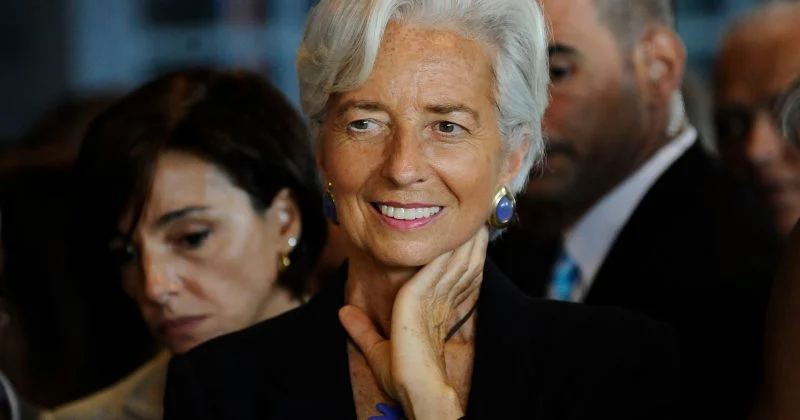
12 min ago2 min readECB executive board member Piero Cipollone said the digital euro will be as private as cash. (ECB/Press)SummaryEuropean Central Bank official Piero Cipollone said the digital euro would provide greater privacy than bank transfers because the Eurosystem could not link individuals to their transactions.Offline payments would be visible only to the payer and recipient, while banks could identify users in online transactions solely for anti-money-laundering purposes, Cipollone said.The digital euro is scheduled to be introduced in 2029 alongside physical cash, though civil society groups say its privacy protections rely too heavily on institutional promises rather than technical safeguards.The European Central Bank (ECB) is pushing back against surveillance fears over its upcoming digital euro with a senior official insisting it will offer more privacy protection than existing bank transfers, not less.ECB executive board member Piero Cipollone said in a recent interview the Eurosystem would be structurally incapable of linking specific individuals to their digital euro transactions, whether conducted online or offline."At present, in the case of a bank transfer, all the transaction details are known to the parties involved," Cipollone said. "The digital euro would guarantee greater protection for privacy. The digital euro guarantees the maximum level of privacy that current technology can offer."Cipollone’s reassurances come as public opposition to the digital euro has grown over fears that The ECB’s planned digital euro and other central bank digital currencies (CBDC) often face public opposition over concerns they would give governments the ability to monitor and control how citizens spend their money.Austrian digital rights group Epicenter.works and other civil society organizations said the digital euro's privacy guarantees "rely too heavily on institutional assurances rather than technical enforcement," in a joint statement earlier this month. Legislative promises, they warned, can be weakened in implementation, reinterpreted in court, or simply broken.Cipollone went further with privacy reassurances, saying payments conducted offline would take place directly between individuals, with details known only to the payer and the payee, equivalent to a cash transaction. Only banks involved in online transactions would be able to identify users, and only for anti-money laundering purposes, he added.He also pushed back on fears that the digital euro would replace physical cash. He pointed to the ECB's recently launched public consultation on the design of new euro banknotes as evidence of the institution's commitment to keeping cash in circulation. "It wouldn't make any sense to do this if it were planning to get rid of cash," he said.His comments follow the European Parliament's approval of the digital euro regulation last month, which is scheduled for rollout in 2029. ECB President Christine Lagarde recently told Europeans that the digital euro and physical cash would coexist.12345678910Anvil: The Missing Collateral LayerAnvil: The Missing Collateral LayerAnvil is a shared on-chain collateral layer built on a programmable letter of credit: reserve assets as a guarantee -no loan, no interest, keep custody & yield.Jul 29, 2026Anvil is a shared on-chain collateral layer built on a programmable letter of credit: reserve assets as a guarantee -no loan, no interest, keep custody & yield.Why it matters:Anvil is a shared on-chain collateral layer built on a programmable letter of credit: reserve assets as a guarantee -no loan, no interest, keep custody & yield.View Full Report
ECB claims CBDC will offer 'maximum level of privacy' amid surveillance fears
Payment details for offline transactions will stay strictly between the payer and payee as European regulators push back against surveillance concerns.
537 words~2 min read