49% of organizations running Kubernetes in production report rising infrastructure costs since adoption — 17% say the increase has been significant. If you've felt that creep on your own cluster's bill and immediately started reading about spot instances, Karpenter, and multi-year commitment discounts, you're not wrong to look there eventually. But you're skipping a step.
Before any of that, there's a "Phase 1" cleanup that most teams never do properly — and on its own, it typically recovers 30–50% of wasted spend with zero architectural change and no new tooling budget. This is that cleanup.
Why Kubernetes Bleeds Money Quietly
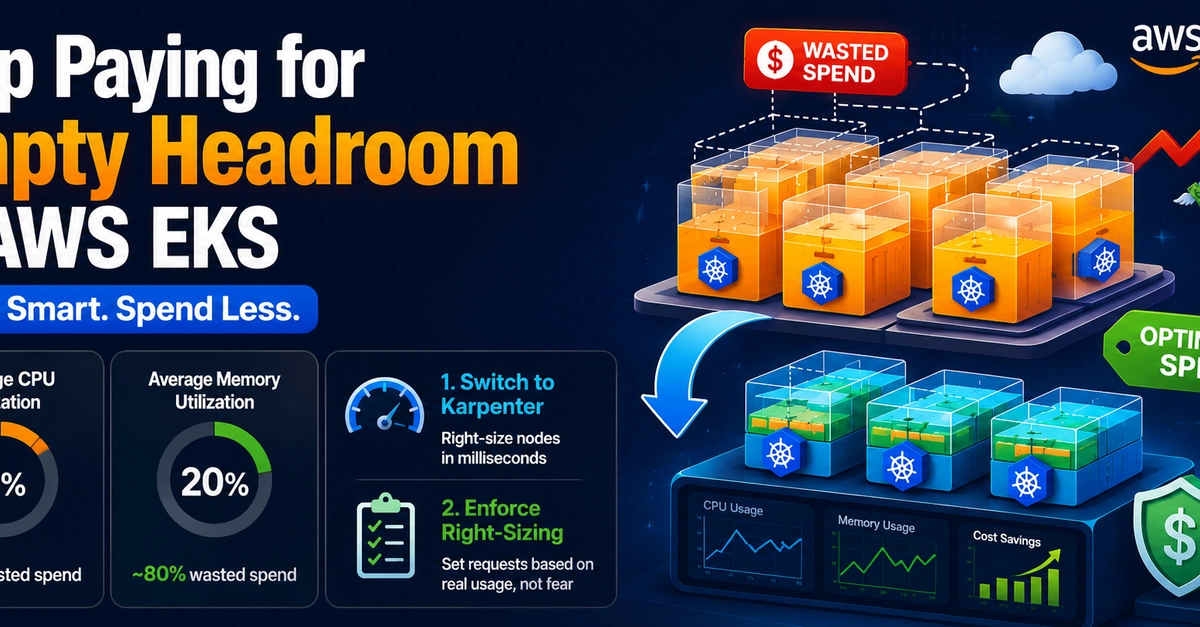
Kubernetes doesn't waste money the way a forgotten EC2 instance does. It wastes money structurally: every pod you deploy reserves resources whether it uses them or not, every PVC you delete doesn't always delete its underlying volume, and every namespace you spin up for a two-week experiment quietly keeps billing you eight months later. None of this shows up as an alarm. It shows up as a bill that's 40% higher than your actual workload needs, with no single line item to blame.
That's exactly why "Phase 1" gets skipped — there's no dramatic failure forcing the fix, just slow, distributed waste across hundreds of pods.