KEDA 3.0 just landed, and the headline feature is the one I care about most as someone who watches a cloud bill: event-driven autoscaling now covers 80+ event sources (Kafka, RabbitMQ, and a long list more) with proper scale-to-zero. If you run workloads that sit idle most of the day and spike when work arrives, this is the difference between paying for capacity you use and paying for capacity that waits.
I have been moving our intermittent workloads onto this pattern, so here is what scale-to-zero actually does to the bill, where it helps, and the sharp edges nobody mentions.
The problem: HPA scales to one, not to zero
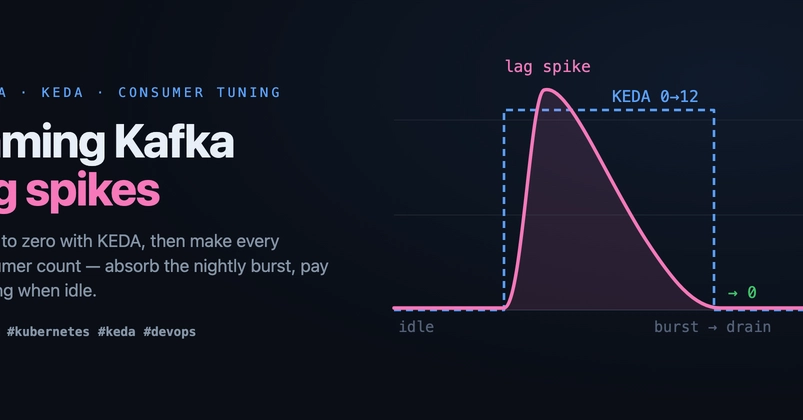
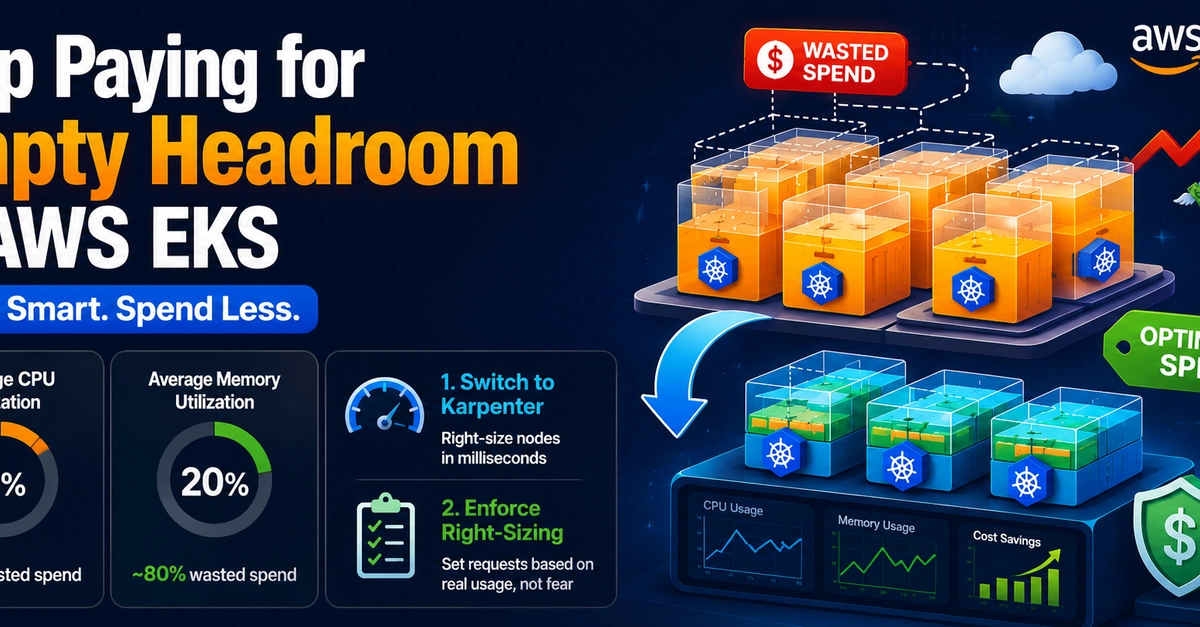
Standard Horizontal Pod Autoscaler has a floor. minReplicas cannot be zero, so a workload that processes a queue twice a day still keeps at least one pod (and often the node under it) running 24/7. For a consumer that is busy 2 hours a day, you are paying for 22 hours of nothing.
KEDA changes the shape of the question. Instead of "how many replicas does current CPU justify," it asks "are there events waiting." No events, zero pods. Events arrive, it scales from zero up to whatever the load needs. That floor of zero is the whole game for intermittent work.