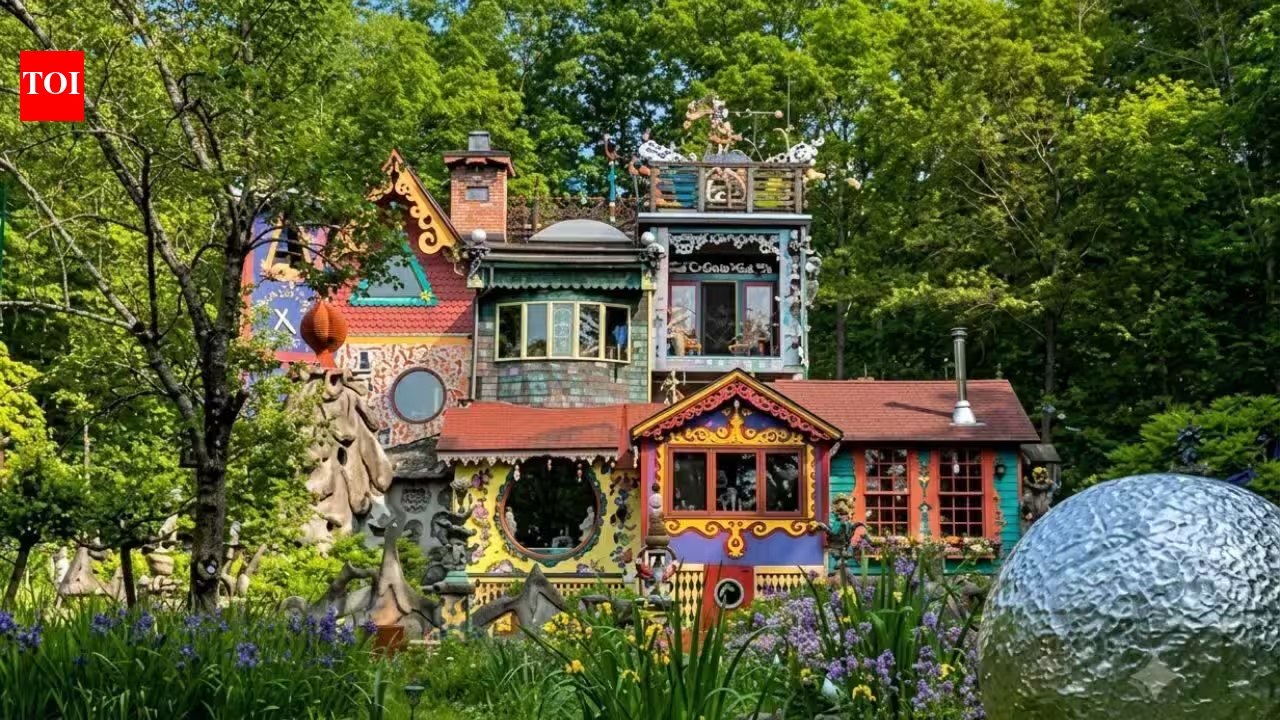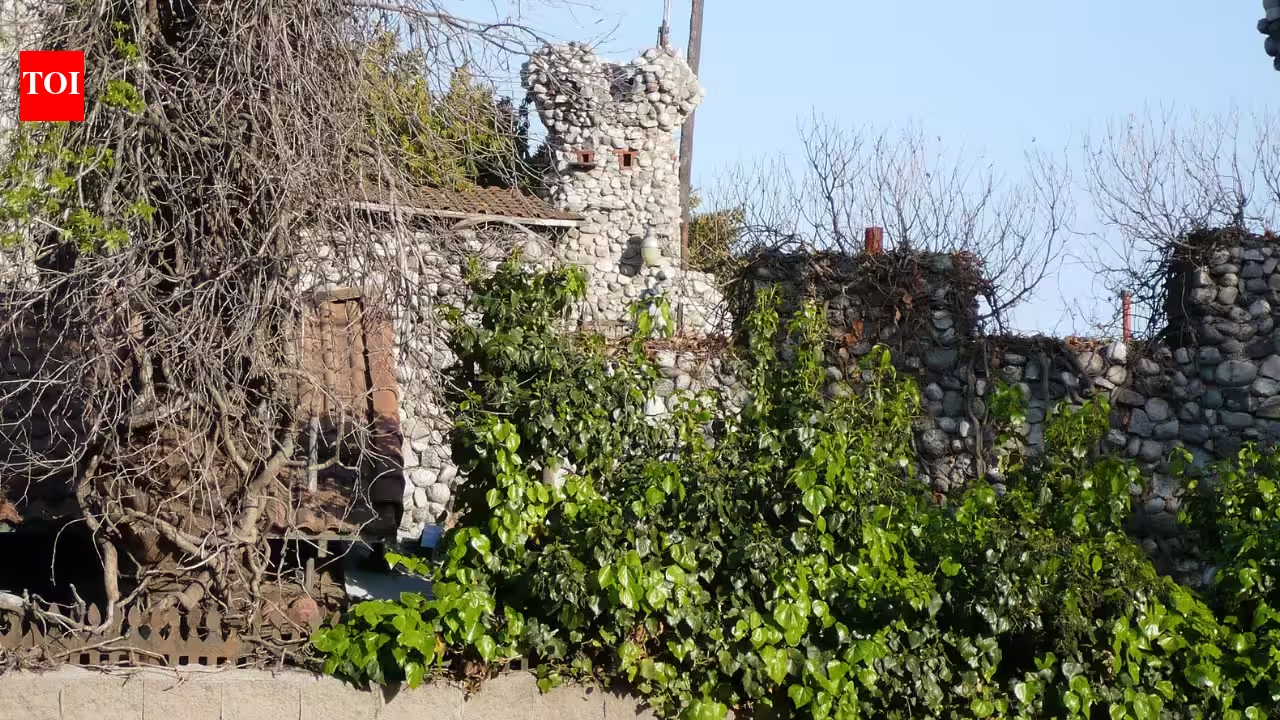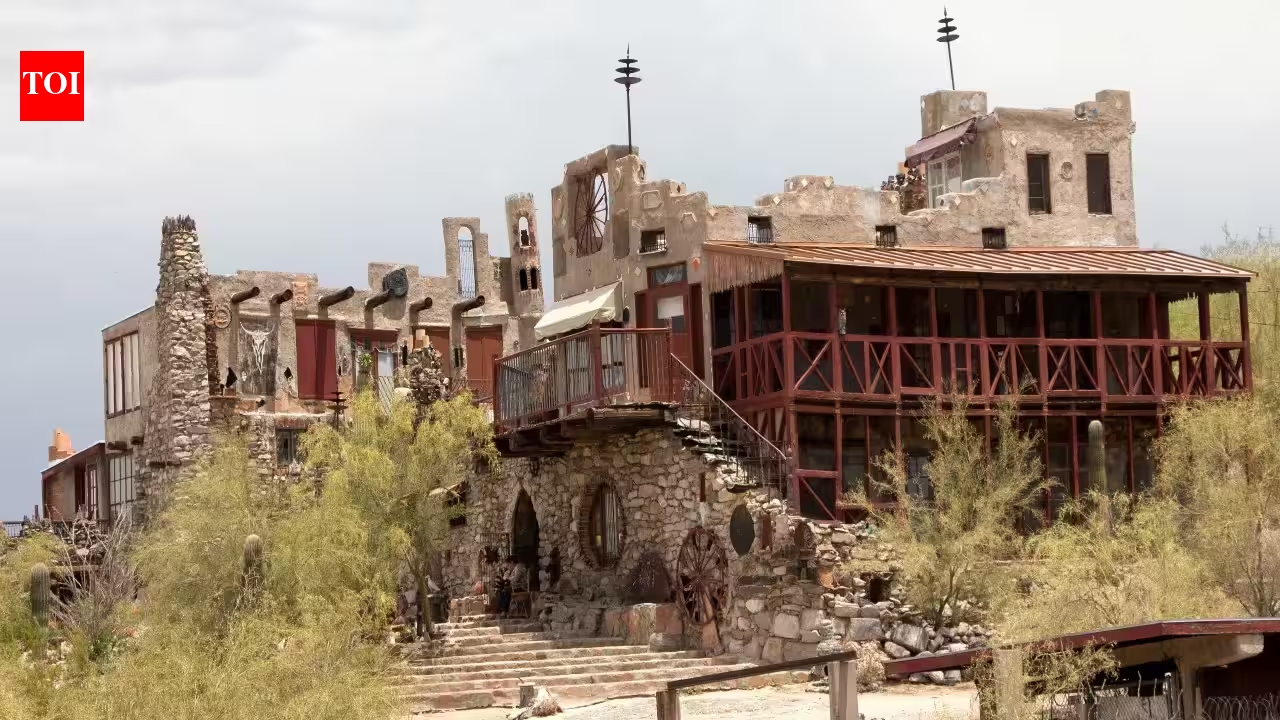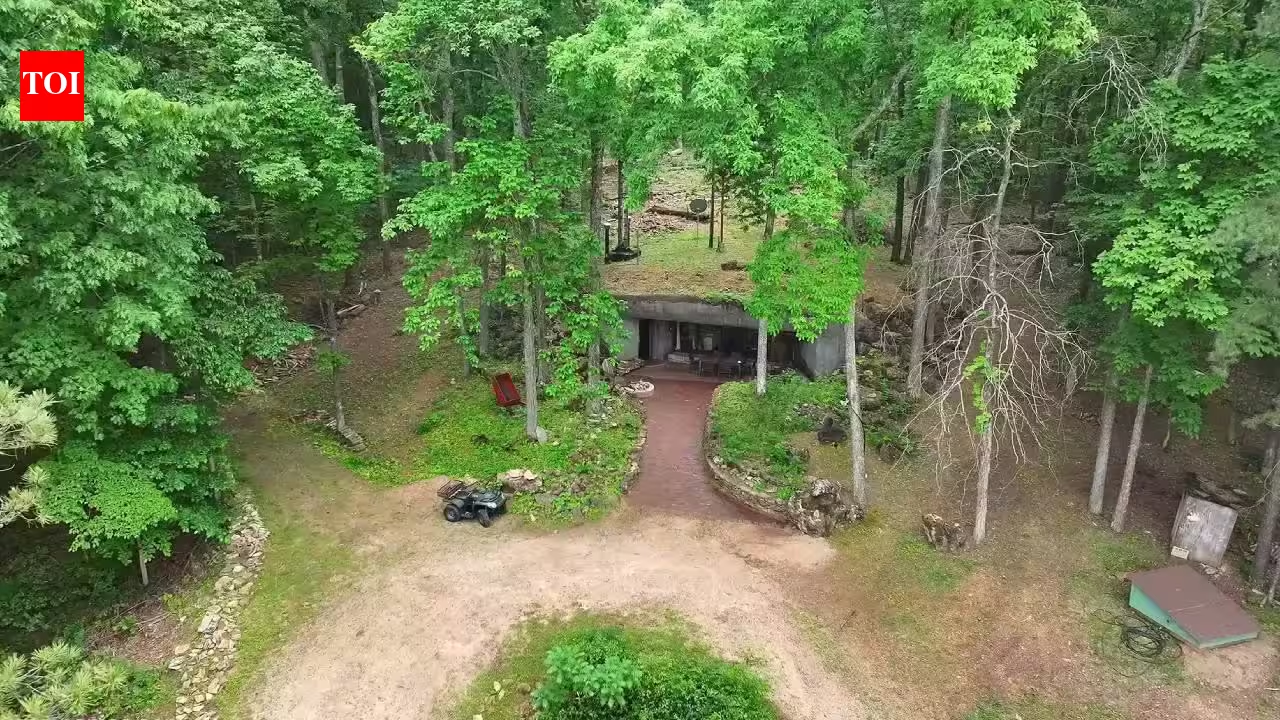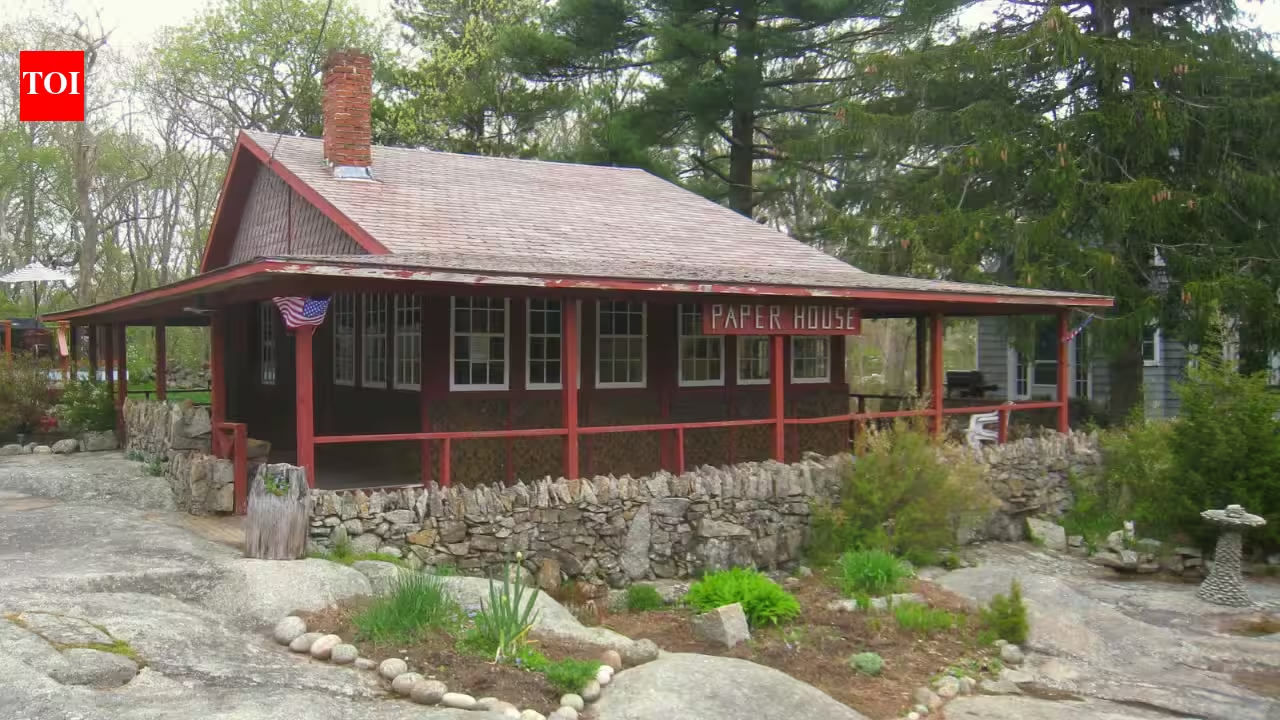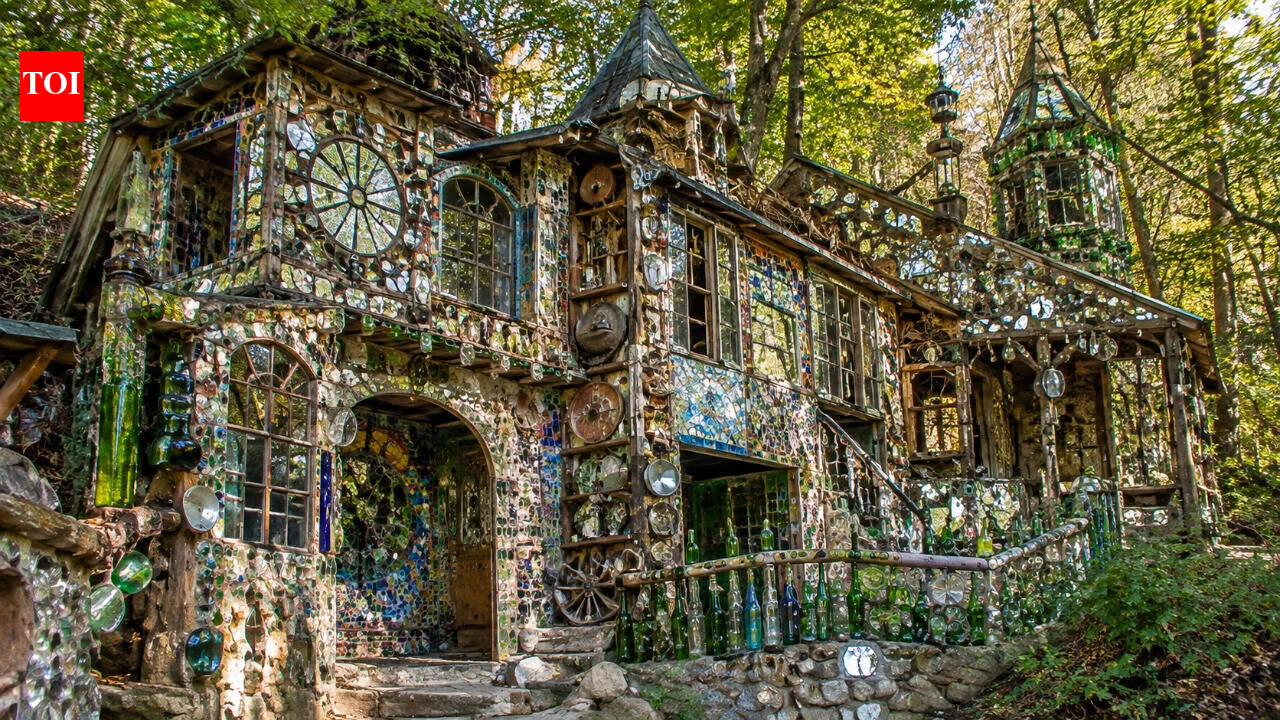
Representation of a cabin with railroad ties and cast-off objects. Image Credits: ChatGPT.Clarence Schmidt did not set out to build one of America’s strangest houses. What began as a modest cabin on a wooded mountainside in Woodstock, New York, became an enormous handmade environment of rooms, walkways, balconies, gardens, grottoes and shrines. Built without a conventional architectural plan, the structure expanded as Schmidt found new materials, developed new ideas and reshaped the landscape around him. At its fullest form, the House of Mirrors extended nearly seven storeys down the mountainside and contained roughly 35 caverns and alcoves.According to Philadelphia’s Magic Gardens, Clarence Schmidt (1897–1978) moved to Woodstock in the 1940s and, having trained as a mason and plasterer, found work as a handyman. His first home, Journey’s End, began as a simple log cabin made from railroad ties. Schmidt tarred the exterior and covered it with cracked glass, transforming the modest cabin into an unusual reflective structure. The cabin became the starting point for a much larger environment, which Schmidt expanded and altered as he developed the mountainside site.A cabin that kept growingBy the 1940s, Schmidt was reshaping the mountainside around his home. He cleared sections of the steep slope and built retaining walls from locally quarried bluestone, creating terraces that allowed him to work with the terrain. He later built another cabin around a large tree, which became his living quarters and was eventually known as the Inner Sanctum. From there, the project expanded through successive additions rather than according to a fixed architectural plan. Schmidt added rooms, corridors, elevated sections and other structures, connecting them with stairs, galleries, wooden walkways and balconies. The House of Mirrors developed as an interconnected environment that followed the contours of the mountainside rather than the conventions of a traditional house.The landscape continued to shape Schmidt’s approach. Instead of flattening the site to create a conventional building plot, he worked around the existing contours, fitting new sections around structures that were already in place. Walls followed the terrain and terraces stepped across the hillside, while each addition became part of a larger, increasingly complex environment. According to Ricco/Maresca, the House of Mirrors evolved organically as Schmidt continually added and altered elements in response to the landscape. Its windows and reflective surfaces became distinctive features, while the growing structure incorporated roughly 35 alcoves and caverns connected by corridors, galleries and staircases.Where discarded objects became part of the architectureSchmidt’s materials were as unconventional as his approach to construction. Alongside wood and stone, he incorporated mirrors, pieces of glass and objects that had little connection to traditional house building. Discarded items collected from around the area were given new roles within the structure, becoming part of its walls, surfaces and decorative elements. Woodstock Arts notes that Schmidt incorporated a striking assortment of found objects into the House of Mirrors, including car bumpers, wheels, bicycles, lawnmowers, guitars, saw blades, beer cans and doll parts.The result was an immersive environment in which ordinary building materials existed alongside reflections and found objects. Visitors could move through wooden passages and interconnected spaces containing glass, plants and handmade decorations. Some areas resembled grottoes, shrines or outdoor enclosures rather than conventional rooms. This approach placed Schmidt within the tradition of self-taught artists who created what are now known as art environments, works that blurred the boundaries between sculpture, architecture, gardening and everyday life. Rather than simply decorating a house, Schmidt transformed the structure itself into an evolving artwork.A view of the wooded mountainside in Woodstock, New York, near the former site of Clarence Schmidt’s House of Mirrors, which once transformed the landscape into a sprawling handmade art environment. Image credits: Wikimedia Commons.A fragile masterpiece that disappearedAs the structure became more elaborate, it also became increasingly fragile. Schmidt relied on improvised construction techniques and unconventional materials, including roofing tar, which he used to attach objects and coverings to parts of the structure. In January 1968, the House of Mirrors was destroyed by fire, leaving photographs and written accounts as the main records of the environment he had created. However, Schmidt continued building after the loss. He began another structure, known as Mark II, but it too was destroyed by fire in 1971. His work nevertheless left a lasting impression on other artists, including Philadelphia artist Isaiah Zagar. As a student at Pratt Institute, Zagar visited Woodstock and encountered Schmidt’s environment, an experience that influenced his ideas about art and later informed the development of Philadelphia’s Magic Gardens.Schmidt died in 1978, while the House of Mirrors had already disappeared from the mountainside. Its legacy endured as an important example of an art environment created outside conventional architectural and artistic systems. Its significance lay not only in its extraordinary appearance, but also in the way Schmidt transformed an ordinary cabin into an evolving handmade world. He used materials around him, worked with the landscape and continued adding to the structure until architecture, sculpture and the mountainside became closely intertwined.
In the 1940s, a New York handyman began expanding a cabin with railroad ties and cast-off objects; it grew into a seven-storey labyrinth with around 35 caverns and alcoves
Clarence Schmidt did not set out to build one of America’s strangest houses. What began as a modest cabin on a wooded mountainside in Woodstock, New York, became an enormous handmade environment of rooms, walkways, balconies, gardens, grottoes and shrines.
824 words~4 min read