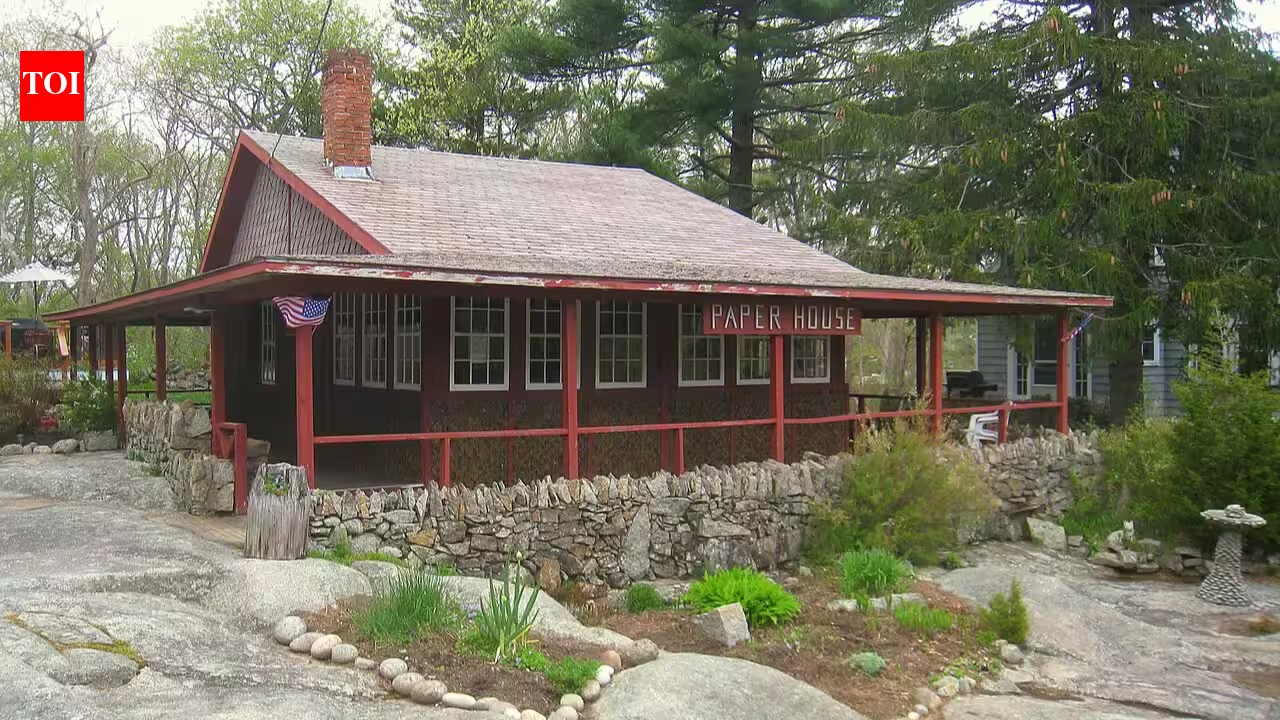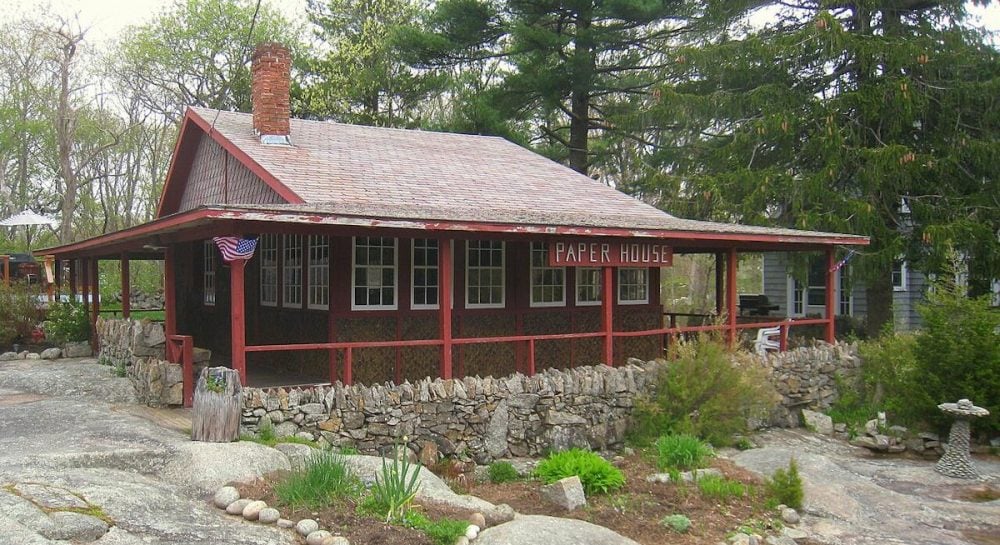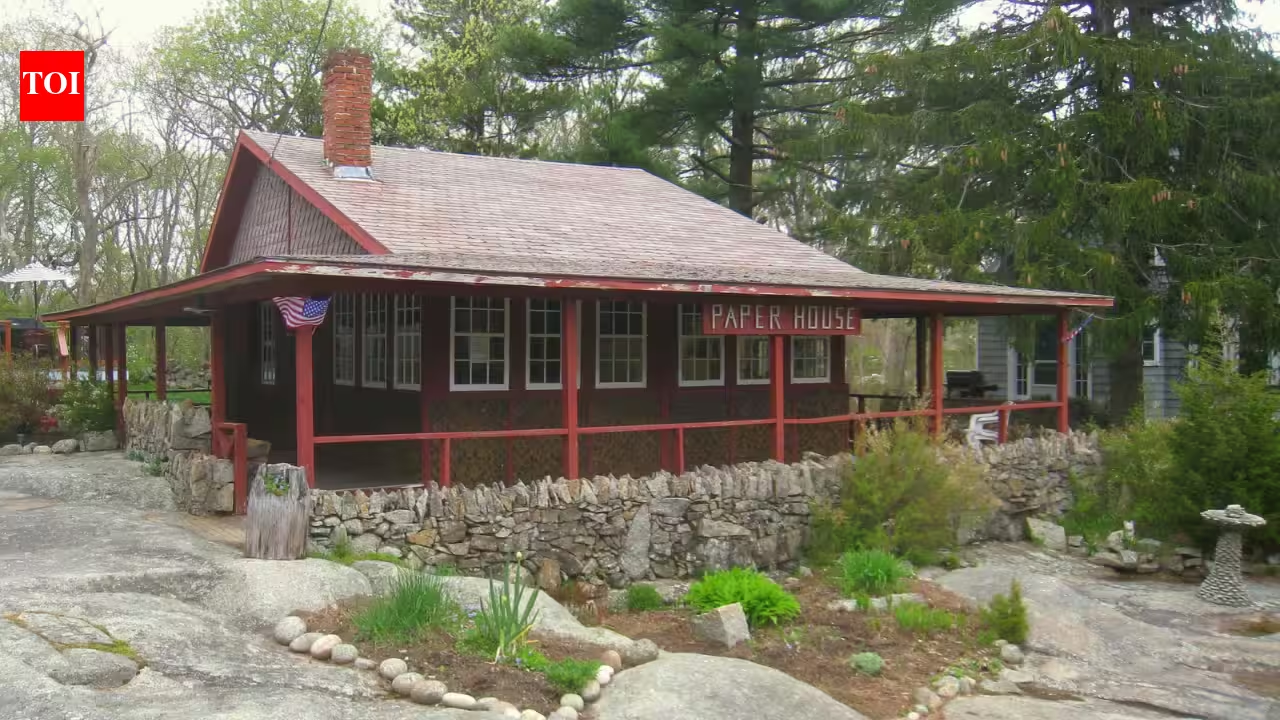
Exterior in 2010 | Wikimedia CommonsElis F. Stenman, a mechanical engineer, began building a summer home in Rockport, Massachusetts. The house had a conventional wooden frame, floor and roof, but Stenman chose an unusual material for its walls: old newspapers. He originally intended the paper to serve as insulation; instead, the experiment became the defining feature of the house. Stenman glued layers of newspaper together, pressed them into thick panels, and coated the exposed surfaces with varnish. The official history of the site says the wall material was made from layers of newspaper about an inch thick, with the paper held together by a homemade adhesive and protected on the outside. The structure remains at 52 Pigeon Hill Street as the Paper House, a museum open to visitors, more than 100 years after construction began.Exterior in 2010 | Wikimedia CommonsHe started with a normal wooden frameThe Paper House was not literally built from nothing but paper, as its basic structure was wood. Stenman framed the small summer home, but when work turned to the walls, he began experimenting with newsprint. A later account preserved by SPACES, an archive documenting art environments and related sites, says he began collecting old newspapers and also received them from friends and neighbors. The papers were layered and glued together with a mixture based on flour and water, with apple peels and other sticky substances added to the recipe. The material was then varnished for protection.The archive says the house contains an estimated 100,000 newspapers, with sections of the walls built from 215 layers. Stenman had apparently planned to cover the exterior with conventional clapboards. After seeing how hard the paper surface had become, however, he decided to test whether the paper itself could remain exposed. The house became an extended experiment in durability. Stenman and his wife used it as a summer home until 1930. A porch with an extended roof was added later, which provided additional protection for the paper-covered exterior.When the walls held up, Stenman moved on to the furnitureOnce Stenman had established that the paper construction could withstand use, he began making furniture from newspapers as well. Some pieces were built from tightly rolled sheets formed into thick paper rods or logs. Others were existing objects covered with newspaper. The piano, for example, was a conventional instrument with a paper exterior, while much of the rest of the furniture was made largely from rolled newsprint.The newspapers also preserved fragments of the period in which the furniture was made. A desk contains coverage of Charles Lindbergh's 1927 transatlantic flight, while another piece records Herbert Hoover's 1928 presidential campaign. A grandfather clock incorporates newspapers from the capitals of the 48 states that existed at the time. Smithsonian Magazine reported that visitors can still see and read parts of the old print throughout the house, where headlines, advertisements and other pieces of 1920s and 1930s news remain visible.Visitors were coming to see the house by the late 1920s, and it later operated as a museum. Its survival was never based on untreated stacks of loose newspaper. The wood frame carried the basic structure, while the newspaper components were layered, compressed, glued, and repeatedly protected with varnish. That distinction helps explain how a material usually associated with something disposable remained part of a functioning building for decades.Exterior of a wall | Wikimedia CommonsA century later, the experiment is still on displayThe Paper House remains a private family property and museum rather than an abandoned curiosity. Age has affected parts of the paper surfaces, and some sections have peeled or worn enough to expose more of the original print. That deterioration has also left visitors with something unusual: walls and furniture that function as a record of the newspapers Stenman and his family collected during the project's long construction period.It initially began as a summer-house experiment in 1922, and still exists in Rockport more than a century later. The wooden frame, protective varnish and later additions have all been part of its survival, but the feature that continues to draw visitors is the same one Stenman began testing at the start: hundreds of layers of old newspaper still visible across the walls of a Massachusetts house.
In 1922, a Massachusetts engineer began gluing old newspapers into the walls of his summer home: More than a century later, the paper house is still standing
Elis F. Stenman, a mechanical engineer, began building a summer home in Rockport, Massachusetts.
700 words~3 min read