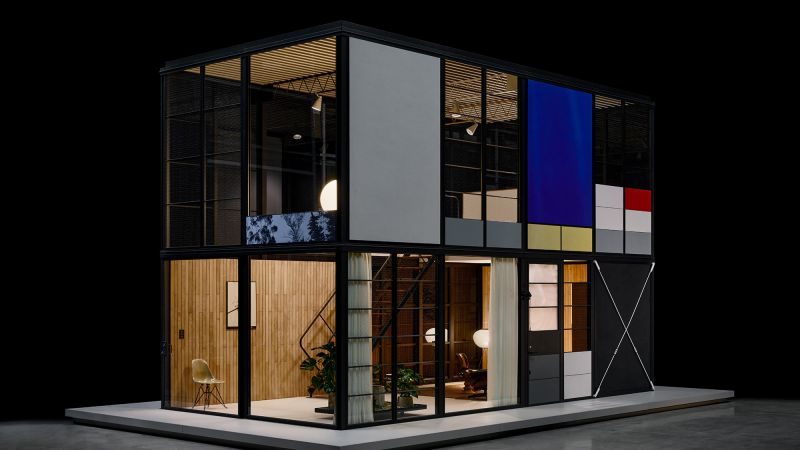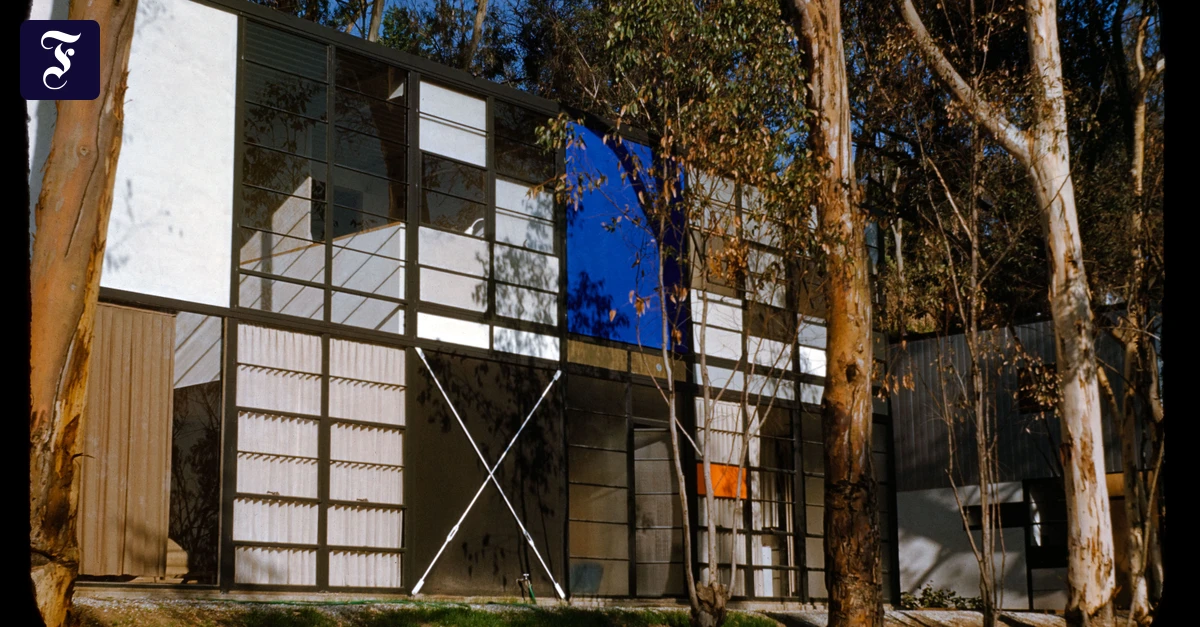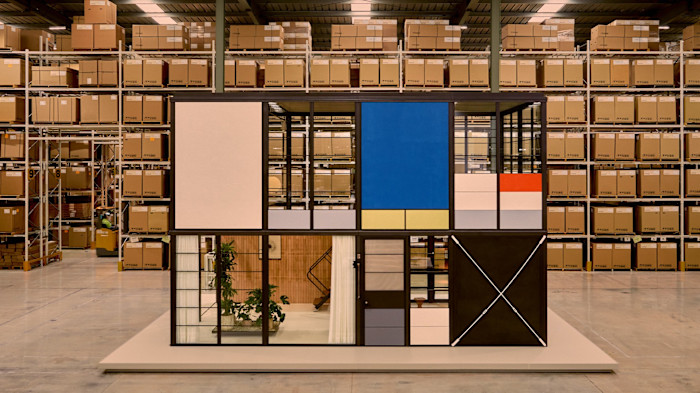
In 1949, Charles and Ray Eames built themselves a home on a patch of meadow in California’s Pacific Palisades. Sequestered by hill, ocean and a eucalyptus grove, in what was then the outskirts of Los Angeles, the architect-designer couple dreamed up a pair of voluminous box-like structures – one for living, one for working. Each was composed of a steel-edged patchwork of clear glass and coloured stucco panels in cobalt blue, geranium red and gold. The Eameses compared them to climbing frames.
“It was a wonderland,” says Eames Demetrios, Charles and Ray’s grandson. He recalls chasing Monarch butterflies in the wooded grounds, spying the rings of Saturn through their Galilean refractor telescope, and enjoying picnic breakfasts on the patio. The studio workshop, a sometimes guesthouse, had its own internal rope swing.
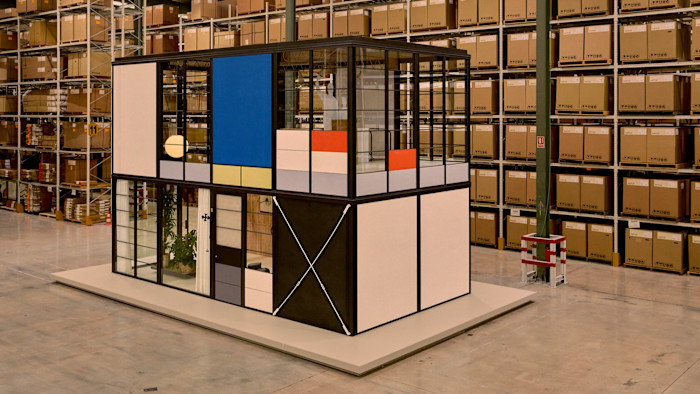
The double-height living room of the two-storey prototype with a wrought aluminium frame © Anna Huix
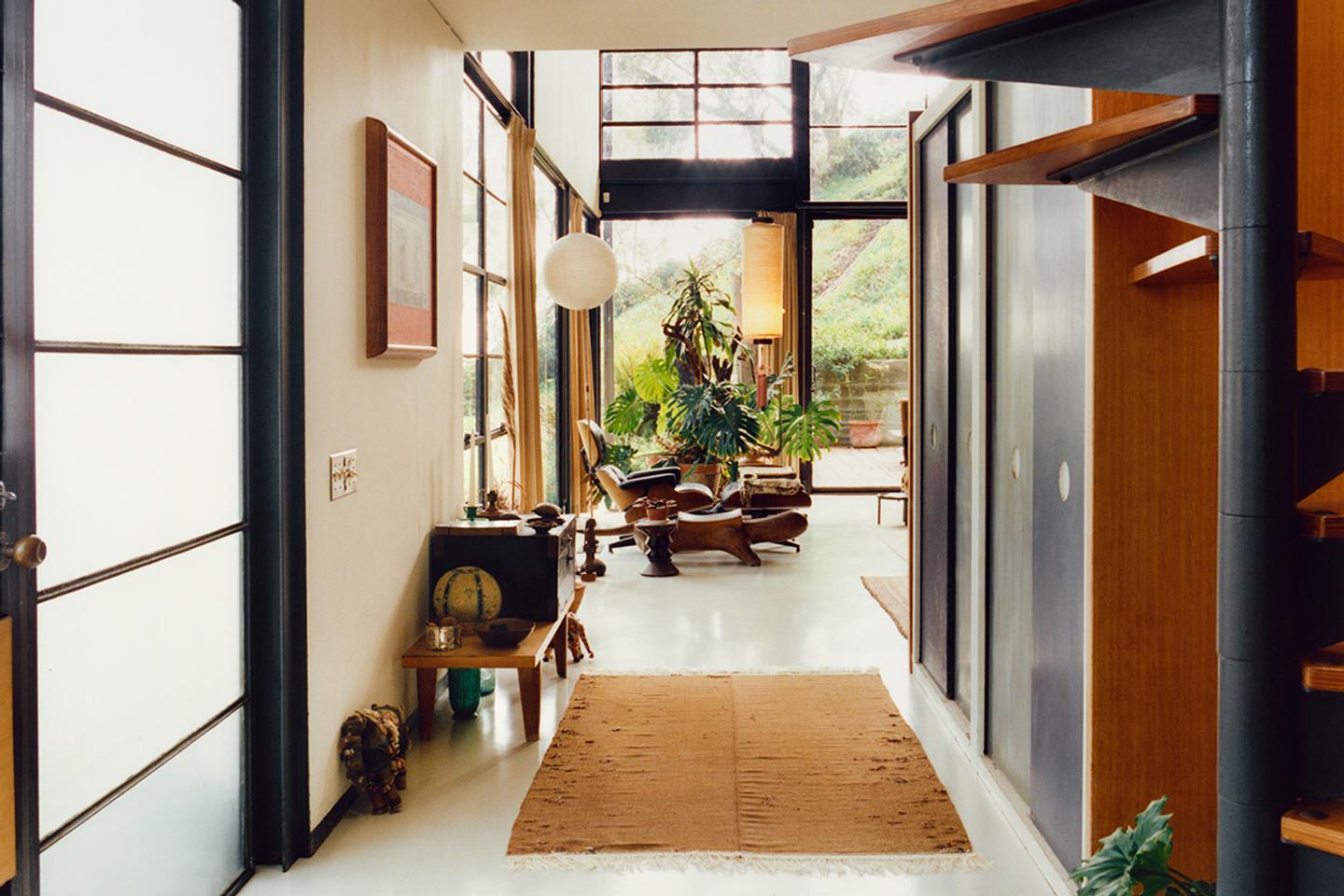
The space, with its childlike spirit of play, was an incubator for the couple’s era-defining oeuvre; it’s where they were living when they came up with furniture such as the iconic Lounge Chair, as well as toys, textiles, films and graphic design. The home’s grid-like construction is mirrored in the Eames Storage Units. They lived and worked there together for nearly 30 years. Charles died in 1978; Ray exactly 10 years later. Since then, the house has become a place of pilgrimage, managed and preserved since 2004 (despite a close brush with last year’s wildfires) by Eames foundations. Yet the Eameses never intended it to be a one-off. Seventy-seven years later, and more than 6,000 miles away, their original vision of prefab living is finally coming to pass.