ByRichard Olsen,
Forbes Staff.
N
o one should ever be able to dictate what you do with your house.
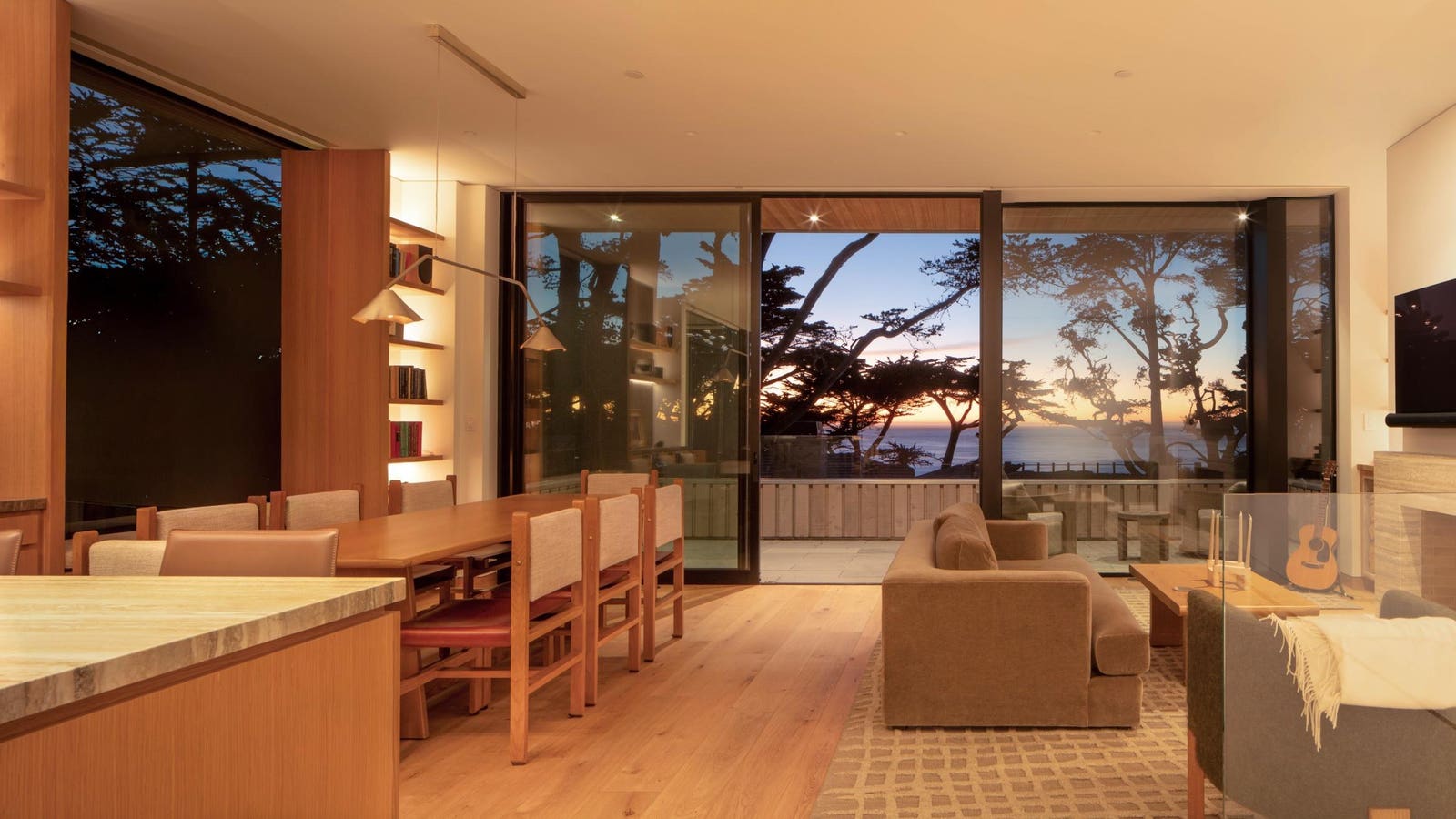
Or should they? In California’s Carmel-by-the-Sea, the onetime colony of painters, poets, and writers founded in the Arts & Crafts movement’s crux of 1916, the city’s ever-stringent “residential design guidelines” and review-and-approvals proceedings grant it near-total control over what homeowners can and cannot do with their properties, down to the smallest of details. Carmel-by-the-Sea, with its tourism economy and resident population of about 3,000 dispersed over little more than 1 square mile, holds an incomparableness of character that leans heavily on one main physical attribute: the prevailing artistic “quality” of the local architecture’s stylistically varied traditions. By controlling the protection of this fundamental premise of the community’s identity as they do, Carmel-by-the-Sea keeps a firm grip on the preservation of its sense of place. Before any project gets built, the guidelines and those members of the city council charged with their enforcement have, in their extended efforts and to an extraordinary extent, directly challenged the integrity and reach of the project architect’s artistic and technical repertoires, along with that architect’s ability to communicate those concepts and practices through each stage of review. Here too, however, in the frequently long, strange trip toward the final analysis, architecture, like art, ultimately is subjective in appreciation.