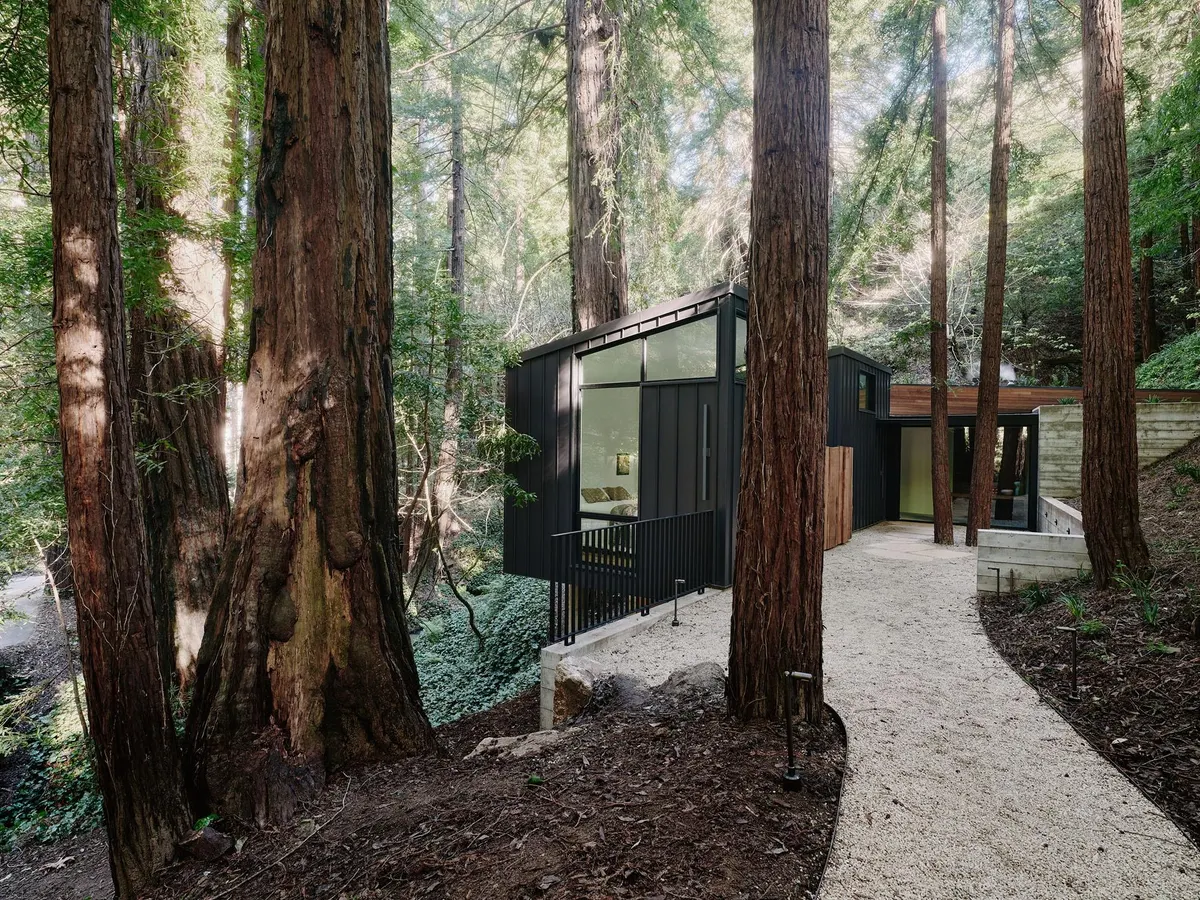
ESSENTIALSFirm Name: Studio SchicketanzPrincipal: Mary Ann Schicketanz Headquarters: Carmel, CaliforniaAccolades: Forbes Architecture’s “America’s Top 200 Residential Architects,” 2025; Forbes Architecture’s “America’s Best-in-State Residential Architects,” 2025House Name: Big Sur CabinLocation: Big Sur, CaliforniaArea & Layout: 1,194 square feet, 1 BR, 2 BAArchitectural Photographer: Joe Fletcher (joefletcher.com)Studio Schicketanz designs outstanding houses that aren’t designed to stand out. Their projects burrow into the landscape, establishing an intimate connection with nature through retractable walls of glass, natural materials, green roofs and massing that diminishes the home’s scale without compromising its utility. Faced with a fire-prone site in a dark California ravine, studio founder Mary Ann Schicketanz designed a small, segmented cabin that pairs fire-resistant siding with warm, redwood-accented interiors that harness sunlight through skylights and clerestories, animating the 1,200-square-foot interior.FRED ALBERT, Forbes Deputy Editor, Architecture: In terms of scale, scope and identity, how does this project fit into your overall body of residential work?MARY ANN SCHICKETANZ: It’s rare that we get to work on a small-scale project with so many physical challenges. The site was very shady and damp, choked with roots and invasive species, vulnerable to wildfires, and serviced by an untreated surface well and leaky septic system. Getting to restore this small parcel as an example for the neighborhood, and contributing to the rehabilitation of the creek and the redwood forest—while at the same time creating a modest, barrier-free home for an elderly couple—was very rewarding.ALBERT: Creatively, from a design problem-solving viewpoint, what are a few of the most satisfying solutions that came together here?SCHICKETANZ: We were able to break down the overall size of the home into smaller volumes, which blend nicely with the scale of the neighborhood’s historic logging cabins. Despite the steep terrain and the dense root zones of the redwood forest, we were able to design a barrier-free pathway from the parking area to the cabin’s front door. Also, the bottom of the canyon is very dark. By studying the path of the sun during the seasons, we came up with fenestrations that follow the sparse sunlight in clerestory windows, skylights and strategically placed windows—such as the bookshelf window in the great room, which captures the last sunlight on summer afternoons. ALBERT: And what’s next for the studio?SCHICKETANZ: In addition to my passion for design intervention (in the landscape or an urban environment), I am interested in sustainability—beyond energy neutrality and the health impacts of a building. We are studying carbon and are hoping to deliver a carbon-neutral home in the near future that would reduce carbon emissions from daily activities, as well as the embodied carbon “locked into” the building from the manufacturing, transporting and assembly of materials. ABOVE: Seen from the busy access road, the cabin seems to blend into its forested setting. “It was designed to evoke the smaller buildings traditionally seen in this neighborhood of historic logging cabins,” Schicketanz says.Joe FletcherABOVE: “A concrete patio expands the kitchen toward the western hillside,” Schicketanz says. “All of the wood was reclaimed from fallen redwood trees, locally milled, and fabricated into siding, wall paneling and cabinetry.”Joe FletcherABOVE: “The great room affords privacy from the busy access road while capturing all the available daylight,” says Schicketanz, who augmented the window wall with a circular skylight and a narrow bookshelf window that captures the last rays of the setting sun in the summer.Joe FletcherABOVE: “The redwood cube inserted into the great room contains the pantry, laundry, utilities and powder room,” Schicketanz says.Joe FletcherABOVE: “The monastic bedroom is sheltered from the street and focuses on morning light and treetop views from the bed,” says Schicketanz.Joe FletcherABOVE: The entry serves as a buffer between the great room and the bedroom suite, and includes a cozy reading area backed by views of the trees.Joe FletcherABOVE: A desk flanks the glass front door on the right, allowing the entry to double as a study. “A printer and files are hidden behind the redwood paneling,” notes Schicketanz. Radiant-heated floors (and good ventilation) help stave off the mold that’s common in this damp canyon.Joe FletcherABOVE: A tiny courtyard was inserted between the primary bedroom and bath to help diminish the building’s volume and accommodate an outdoor Japanese soaking tub.Joe FletcherStudio SchicketanzMore from America’s Top ArchitectsForbesAmerica’s Top Architects: A Lake Michigan Retreat by Chicago’s Wheeler KearnsBy Richard OlsenForbesForbes House of the Week: Tropical ModernBy Richard OlsenForbesForbes House of the Week: Big Sky CountryBy Richard OlsenForbesForbes House of the Week: New England RenewalBy Richard OlsenForbesForbes House of the Week: A Tahoe Cabin’s ConsciousnessBy Richard OlsenForbesForbes House of the Week: At Sag Harbor’s Cutting EdgeBy Richard OlsenForbesForbes House of the Week: Rocky Mountain High ArtBy Richard OlsenForbesForbes House of the Week: A Carmel-by-the-Sea CottageBy Richard OlsenForbesForbes House of the Week: Enlightened in L.A.By Richard OlsenForbesForbes House of the Week: Sedona’s High Desert RadianceBy Richard OlsenForbesForbes House of the Week: Texas Hill Country HavenBy Richard OlsenForbesForbes House of the Week: Big Island BreakawayBy Richard Olsen
America’s Top Architects: A Big Sur Cottage by California’s Studio Schicketanz
Houses from Forbes “America's Best Architects” 2025 lists
816 words~4 min read