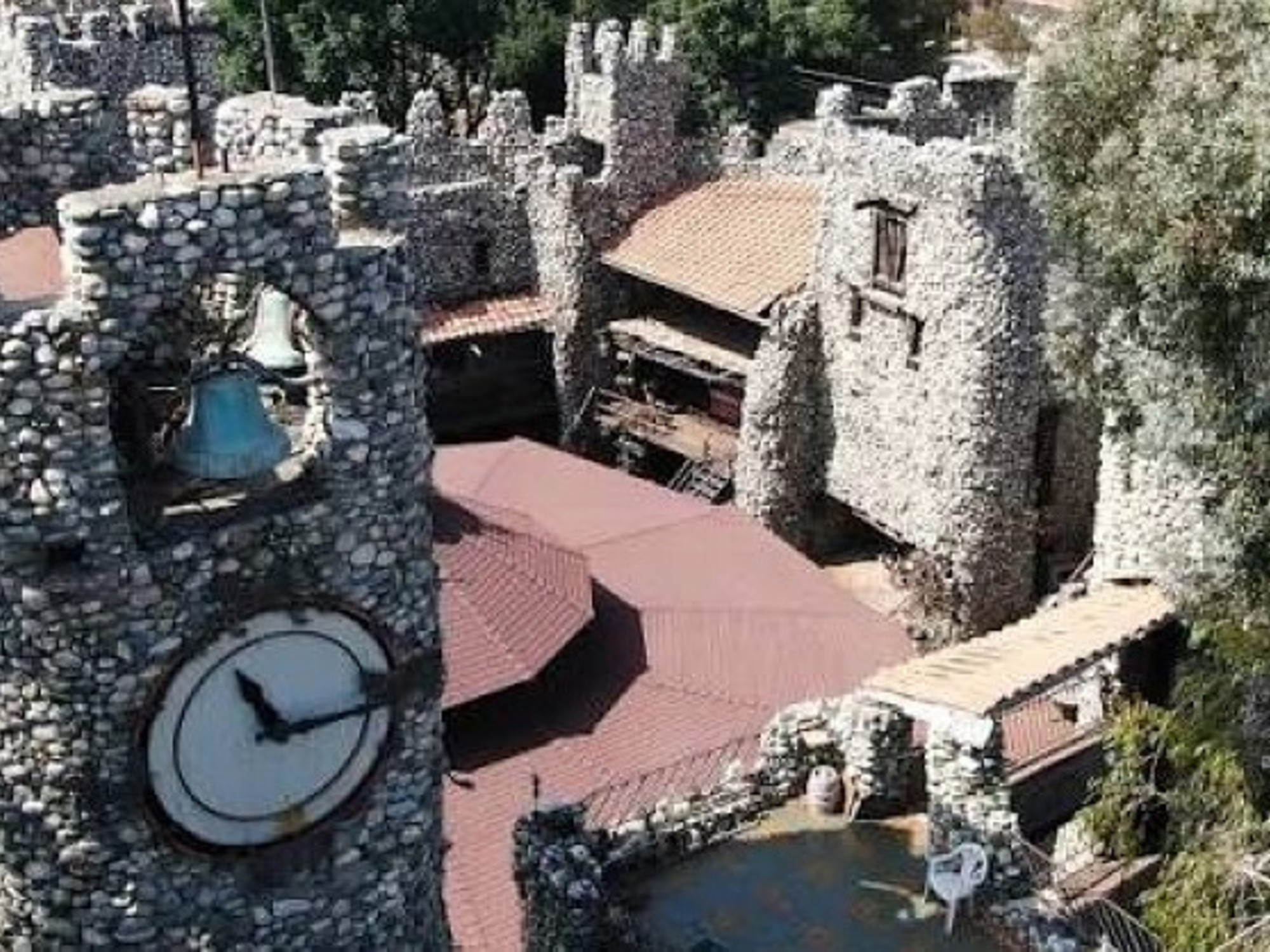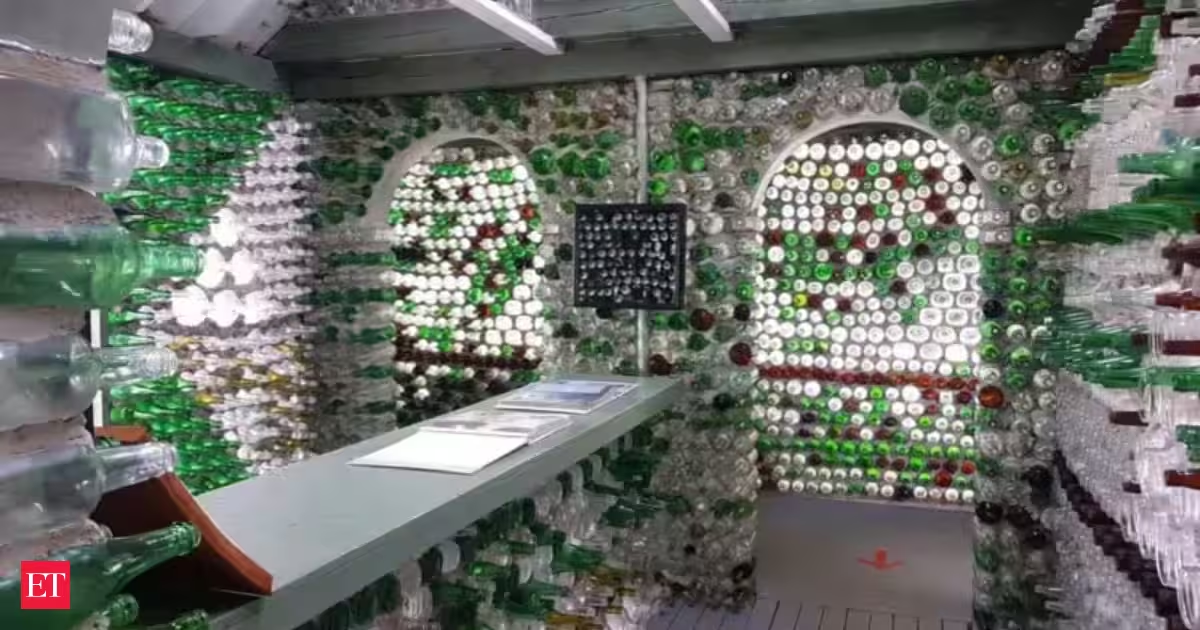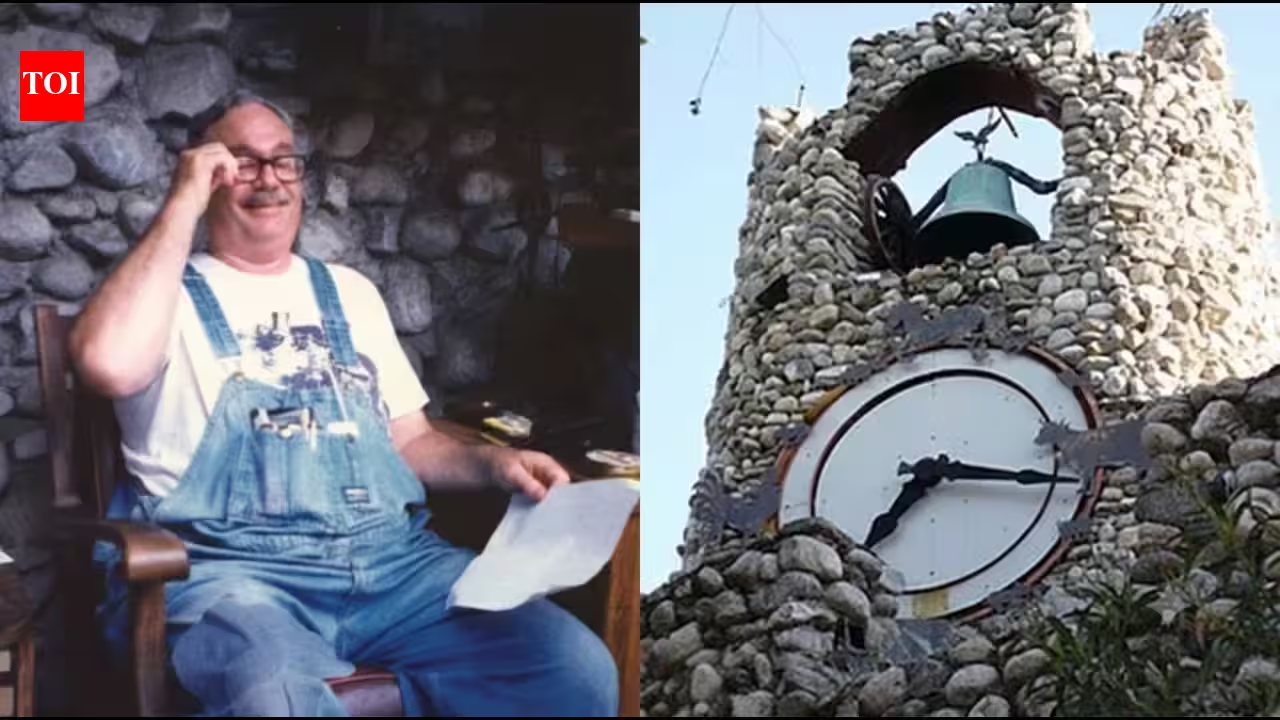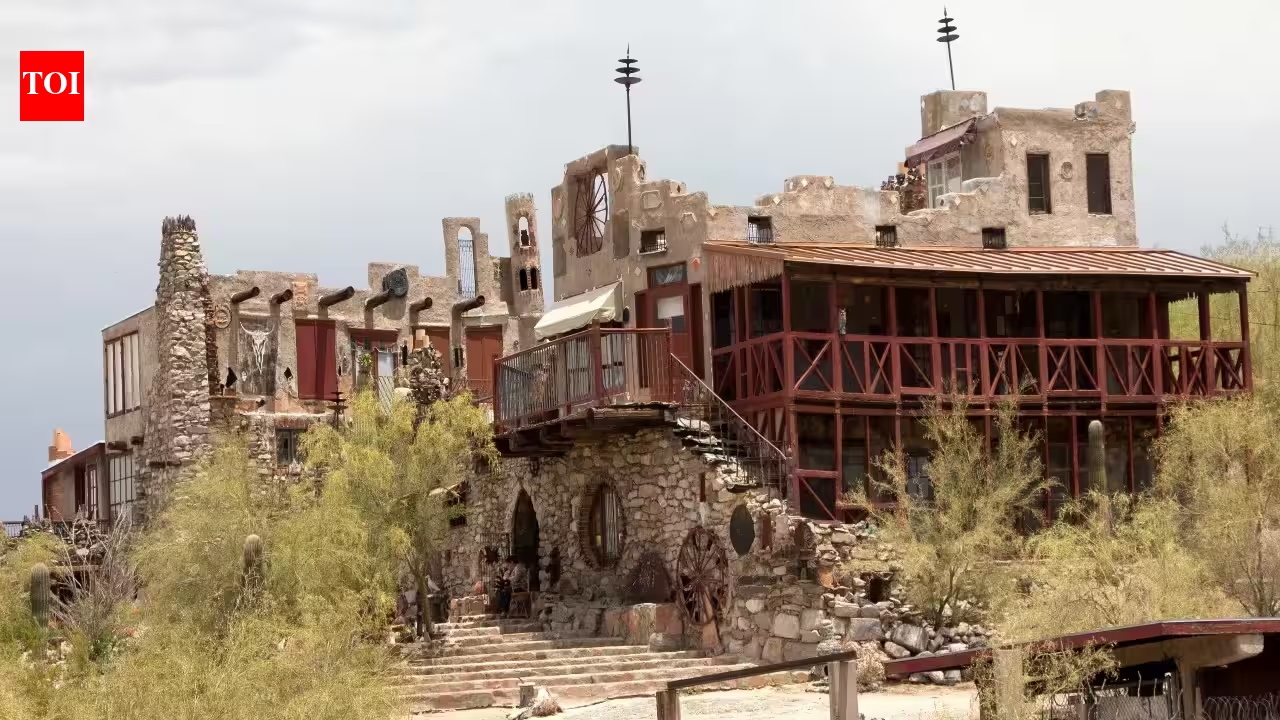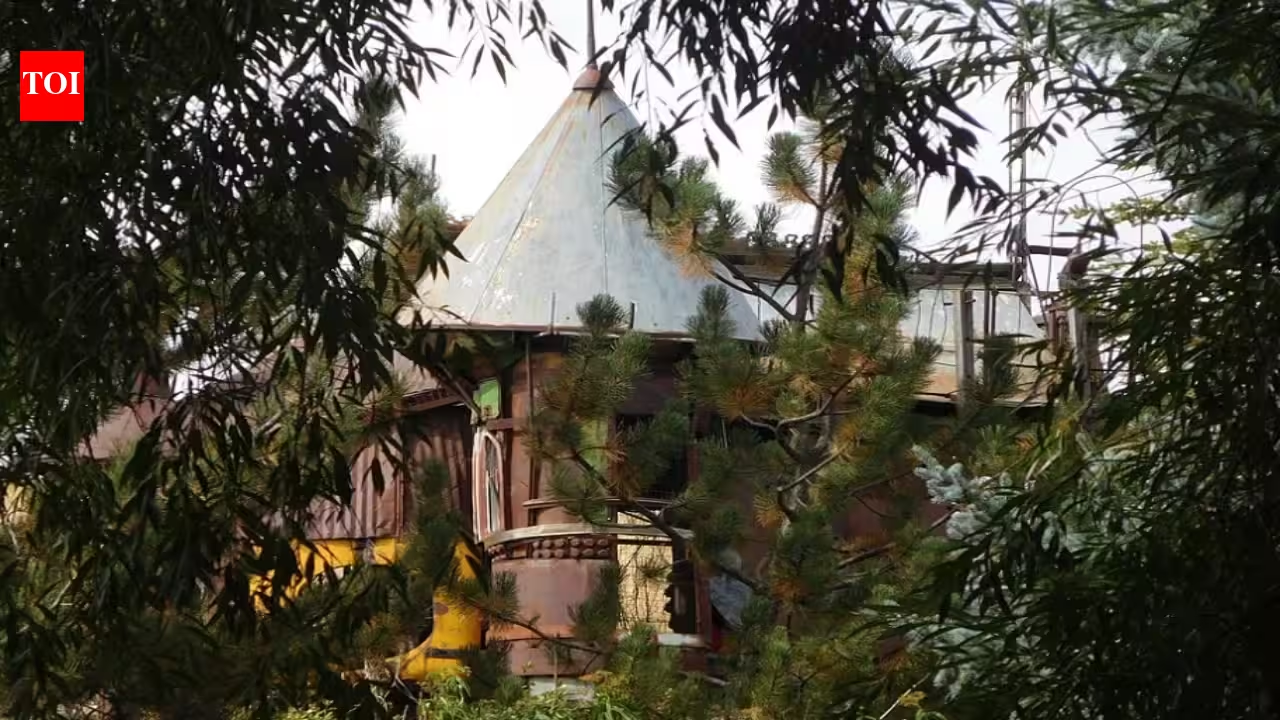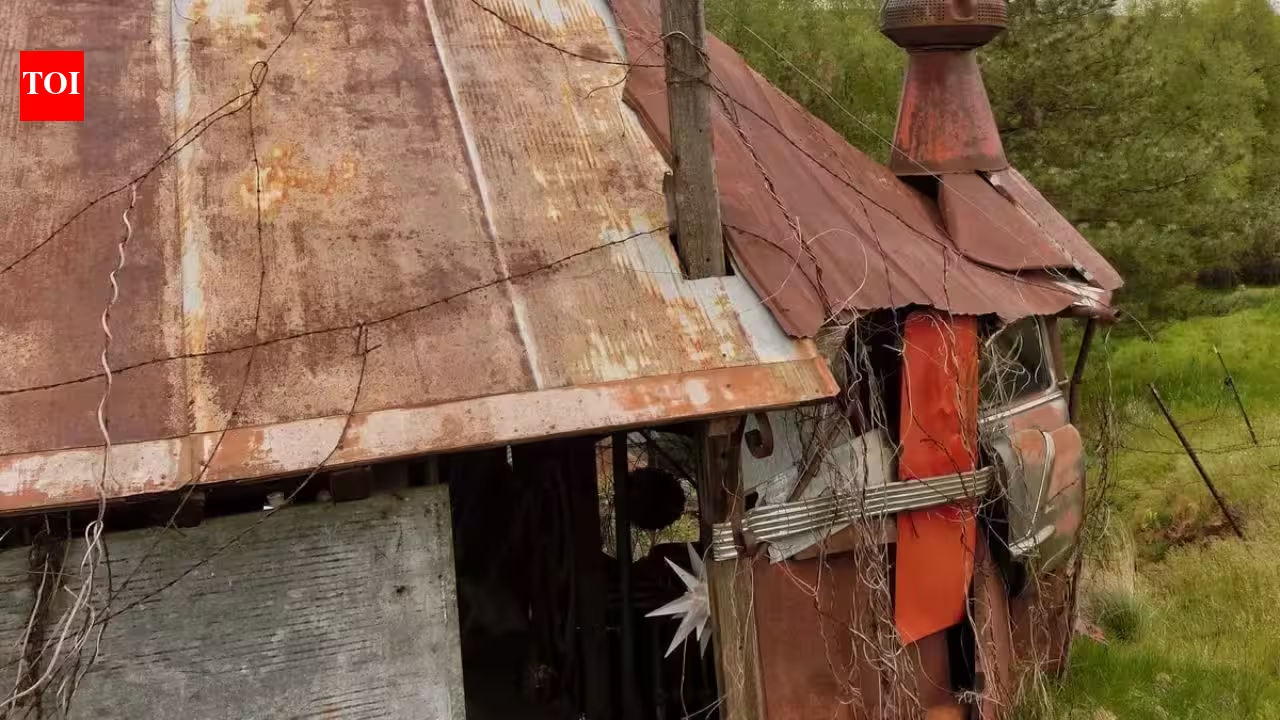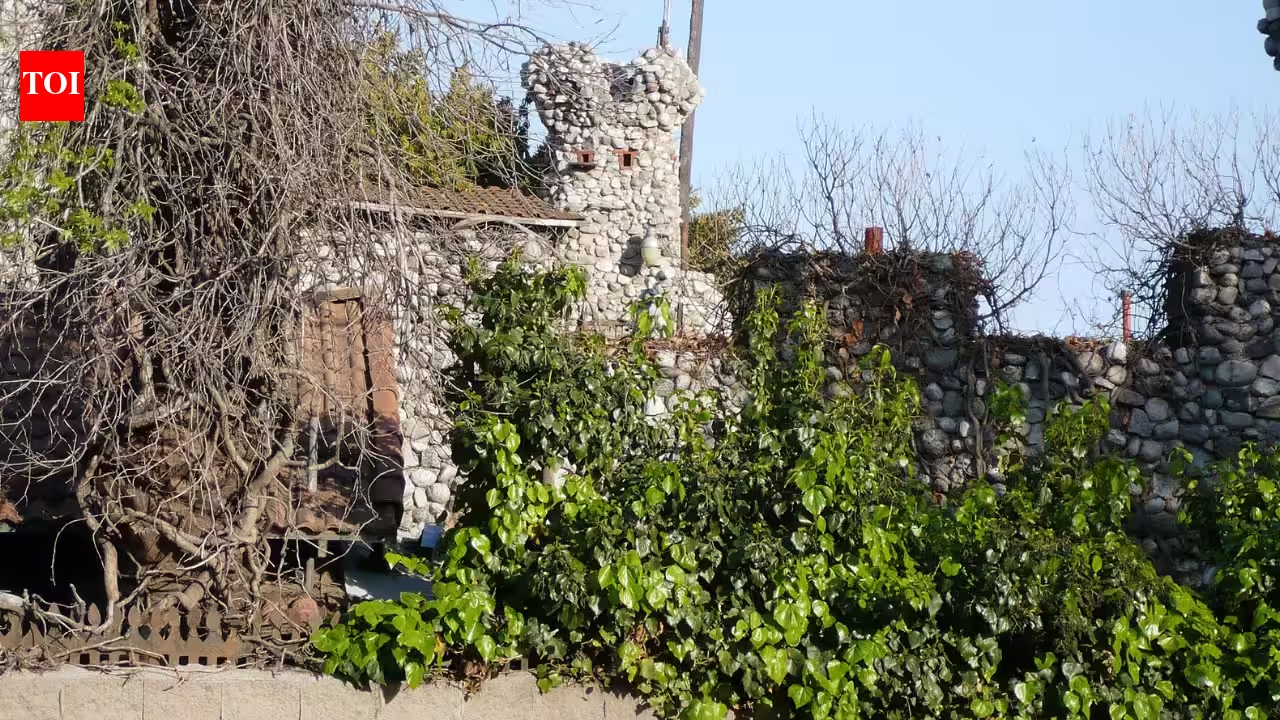
PC: wikipediaIn the foothills of Southern California, an unusual castle grew out of materials that most people would have thrown away. Bottles, scrap metal, old machinery, car parts and fragments of Glendora’s past were collected and worked into a sprawling handmade complex that took decades to complete. Michael Clarke Rubel began the project when he was just 19, drawing on a childhood habit of building makeshift forts from discarded objects. Over the following 26 years, he mixed concrete almost every day, adding towers, walls and other structures to the site. The finished Rubel Castle is not a replica of a European fortress, but a distinctly Californian creation shaped by the town around it. Its towers rise from a former citrus-growing landscape, while a giant clock, bottle-filled buildings, tunnels and salvaged objects form part of the unusual site. Much of what Rubel used had once been destined for demolition, abandonment or the scrap yard.How the Albourne Rancho and Glendora scrap yard shaped Michael Rubel’s castle projectMichael Rubel had known the area around the old Albourne Rancho from childhood. According to the Glendora Historical Society, he worked odd jobs there when he was young and became familiar with its citrus-packing facilities and reservoir. He and other children also spent time collecting discarded materials from the municipal scrap yard, using whatever they could find to make improvised forts and castles.That early habit of turning unwanted objects into something else stayed with him. By the time the citrus groves and older agricultural buildings around Glendora were disappearing under suburban development, Rubel was looking at the remains differently. In 1959, aged 19, he bought the last remnant of the Albourne Rancho. What began as a childhood idea then became a project that would occupy much of his life. The historical society describes the finished site as a “one-of-a-kind monument” to Rubel’s imagination and to the people who helped him build it.How Michael Rubel built Rubel Castle from salvaged materialsRubel did not build the castle by simply ordering conventional construction materials. Salvage became part of the process. Bottles, metal objects, machinery and other fragments gathered from around Glendora could be incorporated into the site, while friends, neighbours and relatives helped with the physical work. Rubel made a point of mixing at least a yard of concrete every day, gradually adding to the structures over a period of 26 years.The walls were constructed using river rock and Portland cement alongside pieces rescued from the town’s past. Some objects became part of the buildings themselves, while others were adapted for use elsewhere on the property. The construction therefore happened in a piecemeal way, with the site changing as Rubel found new materials and ideas. Towers eventually reached about 75 feet, while the wider property developed into much more than a single castle.What can you see inside Rubel Castle in CaliforniaRubel Castle is made up of several connected features rather than one conventional building. The complex includes the Bottle House, a clock tower, a windmill, a blacksmith shop and a printing press. There is also a Santa Fe caboose on the property and the Tin Palace, a former packing house that became part of the Rubel family home.The clock tower is among the structures that give the site its castle-like appearance, while the towers and passages create an unusual arrangement that grew gradually rather than from a single architectural plan. The use of bottles and salvaged objects is also visible in the character of the buildings. As the historical society puts it, Rubel Castle was built around the remains of a former citrus-packing complex and reservoir, turning parts of an older Glendora landscape into something entirely different.How Glendora’s citrus-farming past became part of Rubel CastleThe materials used at Rubel Castle were not simply convenient construction supplies. Many came from a period when Glendora was changing rapidly. Citrus farming had shaped the area, but orchards and agricultural structures were increasingly being replaced by suburban development. Buildings and equipment that had once been ordinary parts of local life were being demolished, abandoned or discarded.Rubel gathered some of those remnants and incorporated them into the castle. That gives the site a connection to the town beyond its unusual appearance. The castle became a place where materials and memories from the city’s agricultural past were given another purpose. What survived at Rubel Castle was therefore not just a collection of discarded objects, but pieces of an earlier Glendora embedded in a structure that continued to grow for decades.Today, the site is owned and operated by the Glendora Historical Society and can be visited only through scheduled tours. The castle remains a record of Rubel’s long building project, but also of the community that gathered around it. Friends, relatives, neighbours and the wider group known as the Pharmhands became part of its history. The result is a California castle assembled over years from concrete, bottles, metal, machinery and salvaged fragments, rather than a building transported from another place or period.
In 1959, a California teenager began building a castle from bottles, car parts and scrap metal; decades later, it had towers and a giant clock
In the foothills of Southern California, an unusual castle grew out of materials that most people would have thrown away. Bottles, scrap metal, old machinery, car parts and fragments of Glendora’s past were collected and worked into a sprawling handmade complex that took decades to complete.
826 words~4 min read