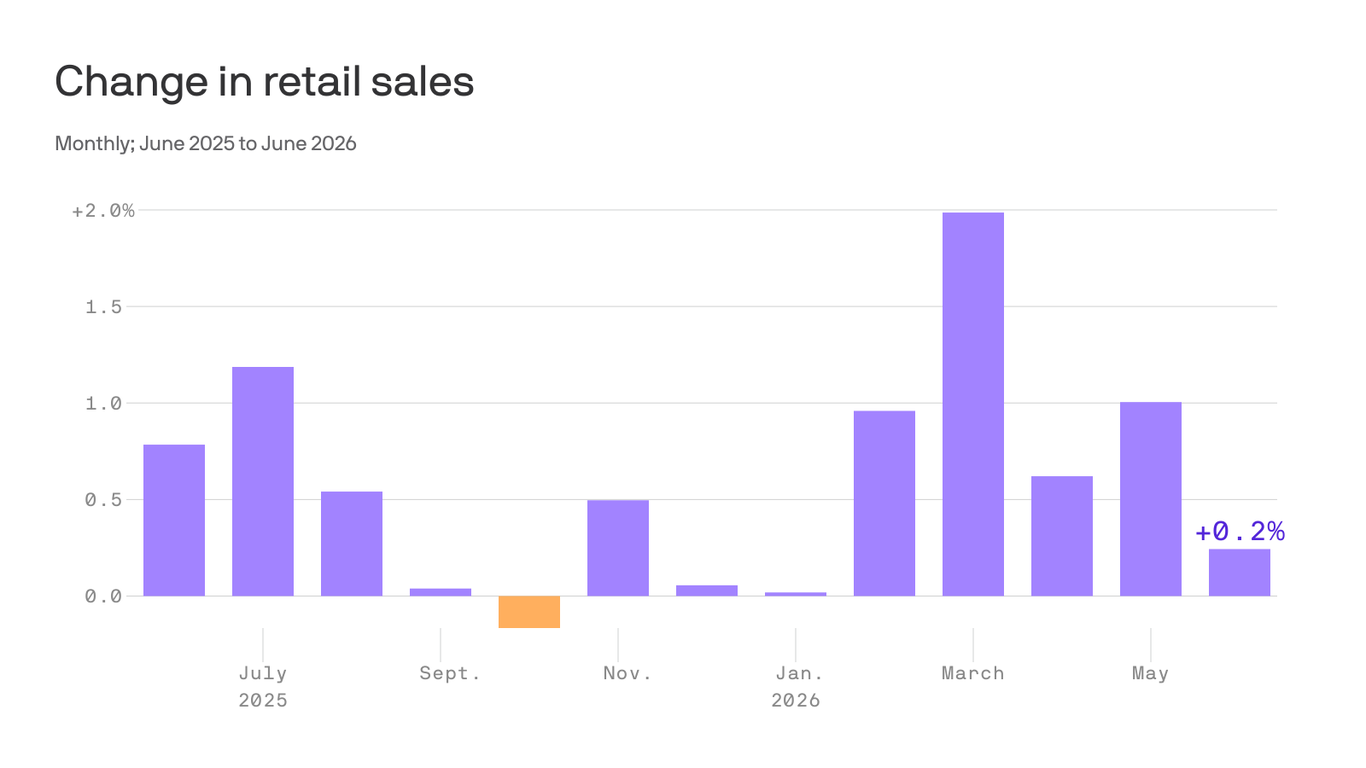
American consumers have been living beyond their paychecks for two straight years. Real disposable personal income growth has trailed real consumer spending for 24 consecutive months as of mid-2026, the longest such stretch on record dating back to the 1960s.
The previous record was roughly 23 months during the late 1970s, a period most economists remember fondly for its stagflation and general economic misery.
The numbers paint a grim picture
The personal saving rate dropped to 2.7% in June 2026. That’s down from 4.4% in January, a 1.7 percentage point decline in just six months.
To put that in perspective, the saving rate has only been lower during brief windows in 2022 and the mid-2000s, right before the financial crisis turned “subprime” into a household word.