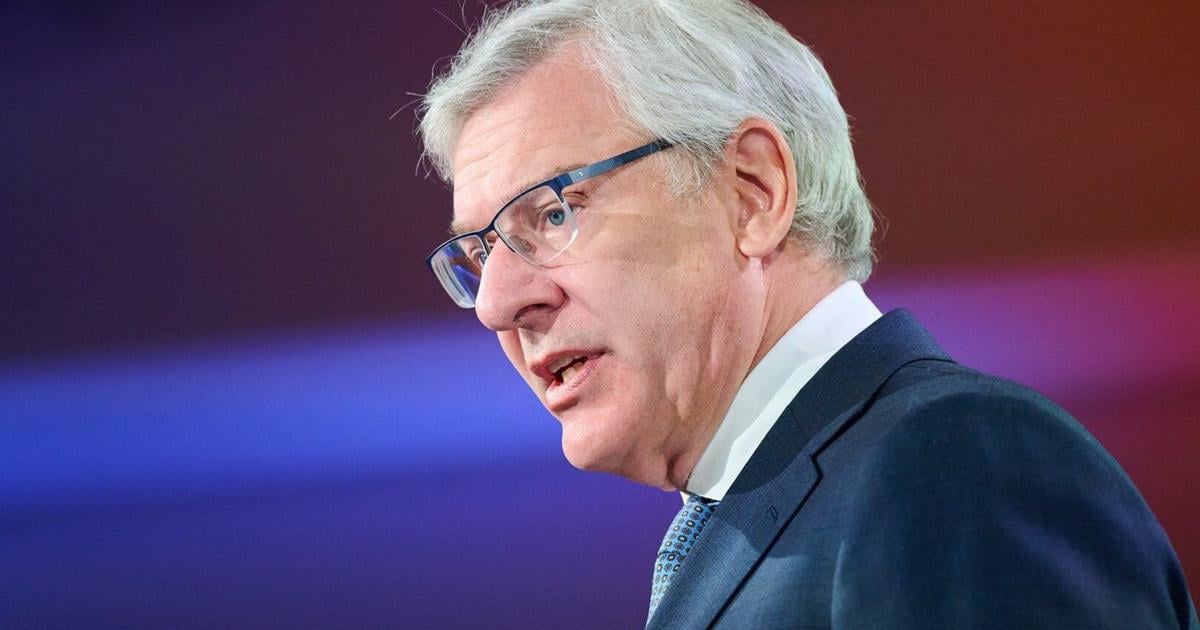
BusinessTop executives at the Bank of Montreal and Scotiabank separately referred to the Canada-U.S. trade situation as "manageable" on Tuesday.Bank of Montreal and Scotiabank were 1st to report Q3 financial results on TuesdayJeff Lagerquist · CBC News · Posted: Aug 25, 2026 3:35 PM EDT | Last Updated: 39 minutes agoListen to this articleEstimated 4 minutesThe audio version of this article is generated by AI-based technology. Mispronunciations can occur. We are working with our partners to continually review and improve the results.A Bay Street sign is shown in Toronto's financial district, home to Canada's big banks. The banks started reporting third-quarter financial results this week amid a heated trade war with the U.S. (Mark Blinch/Reuters)While Canada's big banks are insulated from direct tariff costs, their vast portfolios of consumer and business loans worth trillions of dollars are exposed to the economic fallout of the escalating trade war with the United States.But so far, top executives don't sound worried.Canada's largest lenders started reporting third-quarter financial results this week. Their latest earnings fall against a backdrop of politicians trading threats and, in Canada's case, rolling out financial aid to blunt the sting of American tariffs.Bank of Montreal and Scotiabank were first to report on Tuesday. National Bank issues its results on Wednesday, followed by the Royal Bank of Canada, Toronto-Dominion Bank and CIBC on Thursday.Speaking on a post-earnings conference call with stock market analysts, Scotiabank chief executive Scott Thomson called the recent trade volatility "manageable," as he spelled out bright spots in Canada's economy."The fundamentals in Canada are pretty good," Thomson said. "If you look at the job growth numbers, if you look at the fiscal capacity on the back of oil prices and if you look at some of the activity that's starting because of the prime minister's agenda, you actually have a backdrop that's pretty good."Over the weekend, U.S. President Donald Trump imposed 50 per cent tariffs on about $28 billion worth of Canadian products. Scotiabank says these new levies directly impact less than one per cent of the bank's total loan book.However, the banks are highly exposed to broad, macroeconomic weakness through consumer products like mortgages, automobile loans, credit cards and a host of other products they sell.Big banks see opportunities in trade war"I think this obviously creates uncertainty, but with the current tariffs, it is manageable," Thomson said."I think we should use this as a country, use this moment to accelerate further the prime minister's agenda, removing interprovincial trade barriers, reducing the timing of approvals, getting big things done and continuing to diversify our trade while also continuing the great trade relationship we have with the U.S."Bank of Montreal CEO Darryl White echoed his Scotiabank counterpart on BMO's conference call."I think it's absolutely manageable," he said on Tuesday. "I think we have to recognize that whatever impact this might have, has a very high chance of being mitigated in many ways."WATCH | What the Trump administration is targeting with new tariffs:What Canadian goods is Trump targeting with his latest 50% tariffs?3 hours ago|Duration 0:53U.S. President Donald Trump is imposing new 50 per cent tariffs on dozens of Canadian goods under section 338 of the U.S. Tariff Act. Some of these targeted items correspond with the dairy and alcohol grievances the U.S. is raising, but a swath of tariffed goods, mostly listed under the auto grievance, are seemingly unrelated.Like Thomson, White framed the current Canada-U.S. tensions as an opportunity for the federal and provincial governments to knock down internal trade barriers.BMO has a large presence in the U.S., where the bank invested $16.3 billion to grow its footprint south of the border through its purchase of Bank of the West, its largest-ever acquisition. White has estimated that 40 per cent of BMO's assets are currently allocated to the U.S. market.Last year, he said Trump's "America First" agenda is ultimately beneficial to Canada's economy."It might be America first, but it's not necessarily America alone," White told a business audience at the 2025 Toronto Global Forum. "If you're Canada second in an America first world, and then there is a whole bunch of people behind you ... this notion of advantage [for] North America starts to become real."Shares of Canada's largest banks are currently trading near all-time highs on the Toronto Stock Exchange. Scotiabank's stock rallied as much as seven per cent on Tuesday, while BMO shares gained about one per cent.John Zechner, chairman of Toronto-based investment management firm J Zechner Associates, said both Scotiabank and BMO booked lower-than-expected loan loss provisions in their latest quarters. This is money that banks set aside for defaults or unpaid loans."The economy up to this point has been relatively resilient in Canada," Zechner told CBC News, adding that things are "going to get tougher.""The Canadian banks ... can't help but be impacted by this."ABOUT THE AUTHORJeff Lagerquist is a senior writer with CBC News based in Toronto. Originally from Erin, Ont., he studied journalism at Toronto Metropolitan University. Jeff previously worked as a senior reporter for Yahoo Finance Canada. He was also a reporter and digital producer for CTV National News, BNN Bloomberg and The Financial Post. He was also a Columbia University energy journalism fellow for 2025.
What Canada's big banks are saying about Trump's trade war | CBC News
Top executives at the Bank of Montreal and Scotiabank separately referred to the Canada-U.S. trade situation as "manageable" on Tuesday.
864 words~4 min read