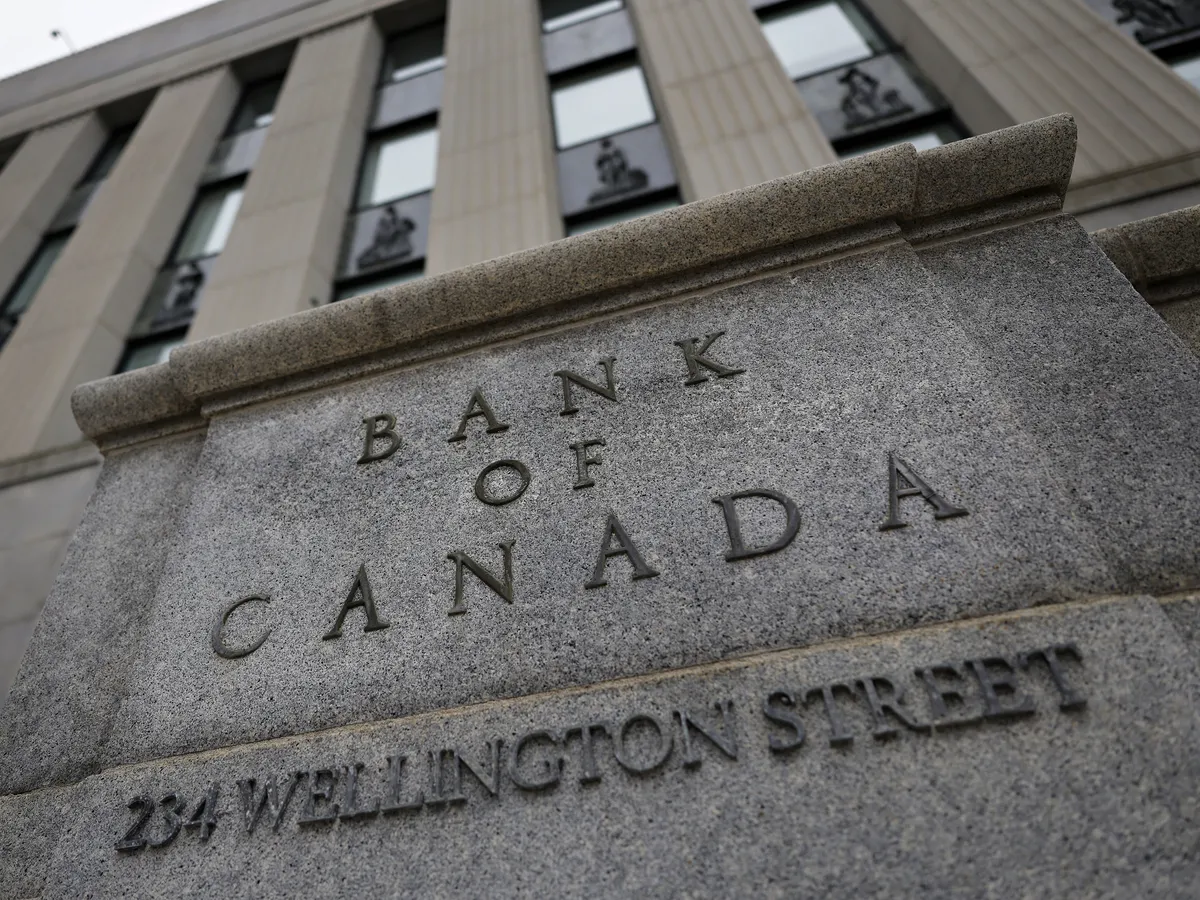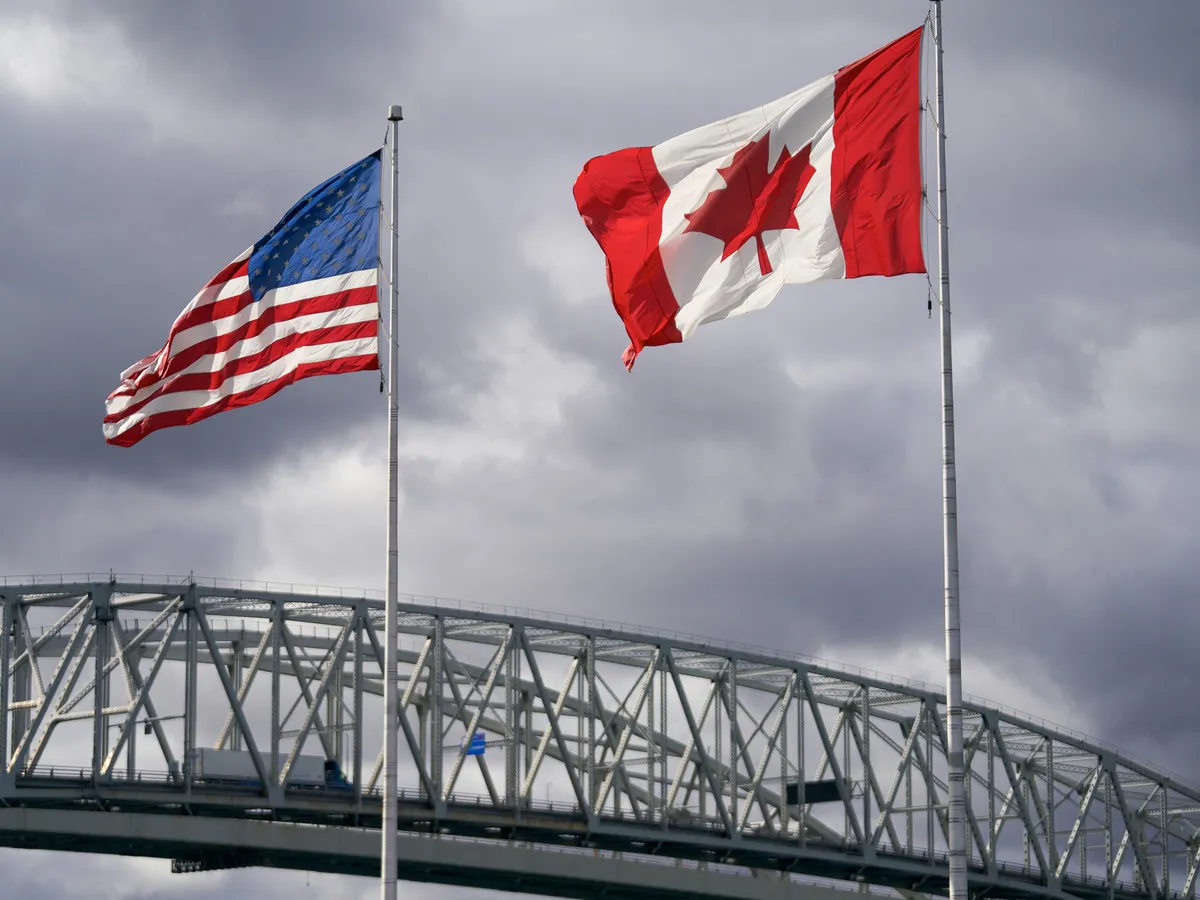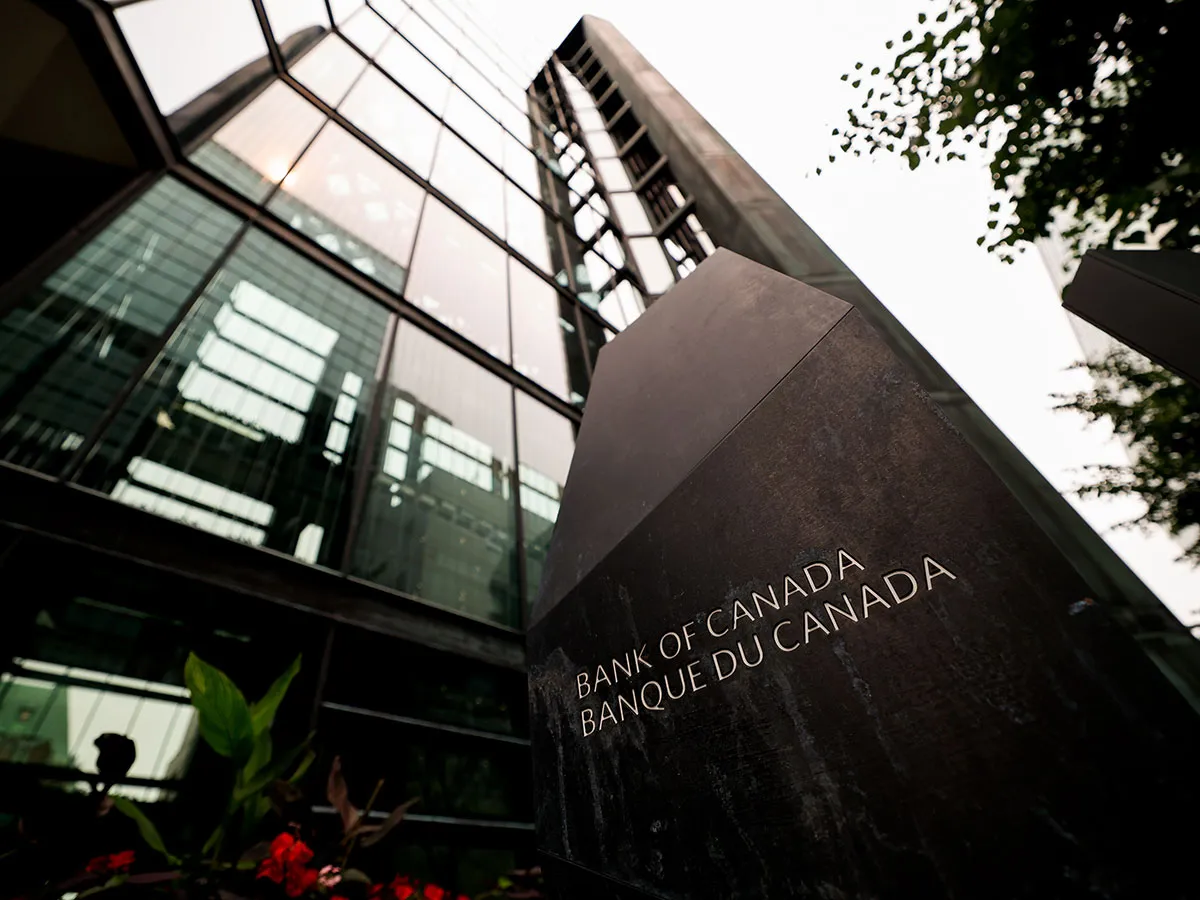
Skip to Content News Archives Economy Energy Oil & Gas Renewables Electric Vehicles Mining Commodities Agriculture Real Estate Mortgages Mortgage Rates Finance Banking Insurance Fintech Cryptocurrency Work Wealth Smart Money Wealth Management Investor Personal Finance Family Finance Retirement Taxes High Net Worth FP Comment Executive Women Puzzmo Newsletters Financial Times Business Essentials More Innovation Information Technology FP500 Podcasts Small Business Lives Told Tails Told Shopping Financial Post Store Obituaries Place a Notice Advertising Advertising With Us Advertising Solutions Postmedia Ad Manager Sponsorship Requests Classifieds Place a Classifieds ad Working Profile Settings My Subscriptions Saved Articles My Offers Newsletters Customer Service FAQ News Economy Energy Mining Real Estate Finance Work Wealth Investor FP Comment Executive Women Puzzmo Newsletters Financial Times Business Essentials HomeNewsEconomyBank of Canada survey tags Trump's trade tensions as top risk to economyLatest central bank survey of business and financial leaders came before 50% tariffsLast updated 1 hour ago You can save this article by registering for free here. Or sign-in if you have an account.The Bank of Canada’s Market Participants Survey for the second quarter, released on Monday, gauged the economic outlooks of 26 financial market participants. Photo by HYUNGCHEOL PARK/PostmediaBusiness and financial leaders across the country still expect some growth in the Canadian economy by the end of the year, despite listing trade tensions as a top downside risk.Subscribe now to read the latest news in your city and across Canada.Exclusive articles from Barbara Shecter, Joe O'Connor, Gabriel Friedman, and others.Daily content from Financial Times, the world's leading global business publication.Unlimited online access to read articles from Financial Post, National Post and 15 news sites across Canada with one account.National Post ePaper, an electronic replica of the print edition to view on any device, share and comment on.Daily puzzles, including the New York Times Crossword.Subscribe now to read the latest news in your city and across Canada.Exclusive articles from Barbara Shecter, Joe O'Connor, Gabriel Friedman and others.Daily content from Financial Times, the world's leading global business publication.Unlimited online access to read articles from Financial Post, National Post and 15 news sites across Canada with one account.National Post ePaper, an electronic replica of the print edition to view on any device, share and comment on.Daily puzzles, including the New York Times Crossword.Create an account or sign in to continue with your reading experience.Access articles from across Canada with one account.Share your thoughts and join the conversation in the comments.Enjoy additional articles per month.Get email updates from your favourite authors.Create an account or sign in to continue with your reading experience.Access articles from across Canada with one accountShare your thoughts and join the conversation in the commentsEnjoy additional articles per monthGet email updates from your favourite authorsSign In or Create an AccountorThe Bank of Canada’s Market Participants Survey for the second quarter, released on Monday, gauged the economic outlooks of 26 financial market participants from June 11 to June 18. Participants included dealers and banks, asset and pension fund managers, insurers and researchers.When asked to identify up to three downside risks to Canada’s economic growth, 96 per cent of respondents put an increase in trade tensions on their list. Sixty-five per cent of respondents listed tightening of global financial conditions while 42 per cent named increasing geopolitical risks.SUBSCRIBER EXCLUSIVE: FP West: Energy Insider brings you behind the oilpatch’s closed doors with exclusive insights from insiders every Wednesday morning.By signing up you consent to receive the above newsletter from Postmedia Network Inc.A welcome email is on its way. If you don't see it, please check your junk folder.The next issue of FP West: Energy Insider will soon be in your inbox.We encountered an issue signing you up. Please try againWhen asked about upside risks to the economy, 92 per cent of participants listed easing of trade tensions, 58 per cent said a larger-than-expected fiscal stimulus and 31 per cent said decreasing geopolitical risks, stronger consumer spending and a stronger housing market.The median real gross domestic product growth forecast in the survey was 1.3 per cent growth year-over-year in 2026 — 0.3 percentage points lower than the previous survey in May — and rising to 1.9 per cent by the end of 2027.June’s survey was conducted several weeks before the United States announced that it would not be renewing the Canada-U.S.-Mexico Agreement for another 16 years, triggering rolling annual reviews for up to a decade and adding significant uncertainty to the Canadian economy. It was also conducted more than a month before U.S. President Donald Trump announced a 50 per cent tariff on roughly $20 billion worth of Canadian goods, which is scheduled to take effect on Aug. 19.The central bank’s latest Monetary Policy Report (MPR), which was published on July 15, said Canada’s economy is showing signs of improvement after a year of weakness. The bank predicted GDP growth of 0.7 per cent in 2026, followed by 1.8 per cent growth in both 2027 and 2028.“Although the Canada-U.S.-Mexico-Agreement is now subject to annual reviews, more businesses report they are finding ways to navigate through the uncertainty. Government spending also contributes to higher economic activity over the projection,” Bank of Canada officials said in its July 15 statement.Market participants Monday put median expectations for inflation at 2.6 per cent by the end of 2026 before dropping to 2.1 per cent by the end of 2027. The most recent consumer price index report pegged inflation at 2.8 per cent in June.When asked to forecast the Bank of Canada’s policy interest rate, the median of responses expect the central bank to hold at 2.25 per cent until the end of the year and rising to 2.75 per cent by the end of 2027.While the latest MPR removed mention of the potential for consecutive rate hikes, Bank of Canada governor Tiff Macklem said it is still possible if oil prices remain high and start to bleed into other goods and services.Brent crude jumped to US$100 per barrel last Thursday after Iran-back Houthis in Yemen attacked two Saudi Arabian oil tankers in the Red Sea, the highest in nearly two months. Since then, prices have decreased slightly, with Brent crude trading at around US$90 per barrel on Monday.However, core inflation measures remained relatively stable in June, with trim and median hovering at just under two per cent on a yearly basis.“Uncertainty is high, and we’re prepared to adjust monetary policy as needed,” Macklem said at a press conference after the central bank’s rate announcement on July 15. Join the Conversation This website uses cookies to personalize your content (including ads), and allows us to analyze our traffic. Read more about cookies here. By continuing to use our site, you agree to our Terms of Use and Privacy Policy.
Bank of Canada survey tags Trump's trade tensions as top risk to economy
Bank of Canada survey reveals business and financial leaders still expect growth in the Canadian economy, despite trade tensions. Read on
TL;DRAI
Bank of Canada survey: 96% of financial leaders cite trade tensions as top risk; GDP growth forecast cut to 1.3% for 2026. Trump's 50% tariffs on C$20B Canadian goods (Aug 19) create procurement cost and supply chain pressure for North American tech businesses.
1,113 words~5 min read