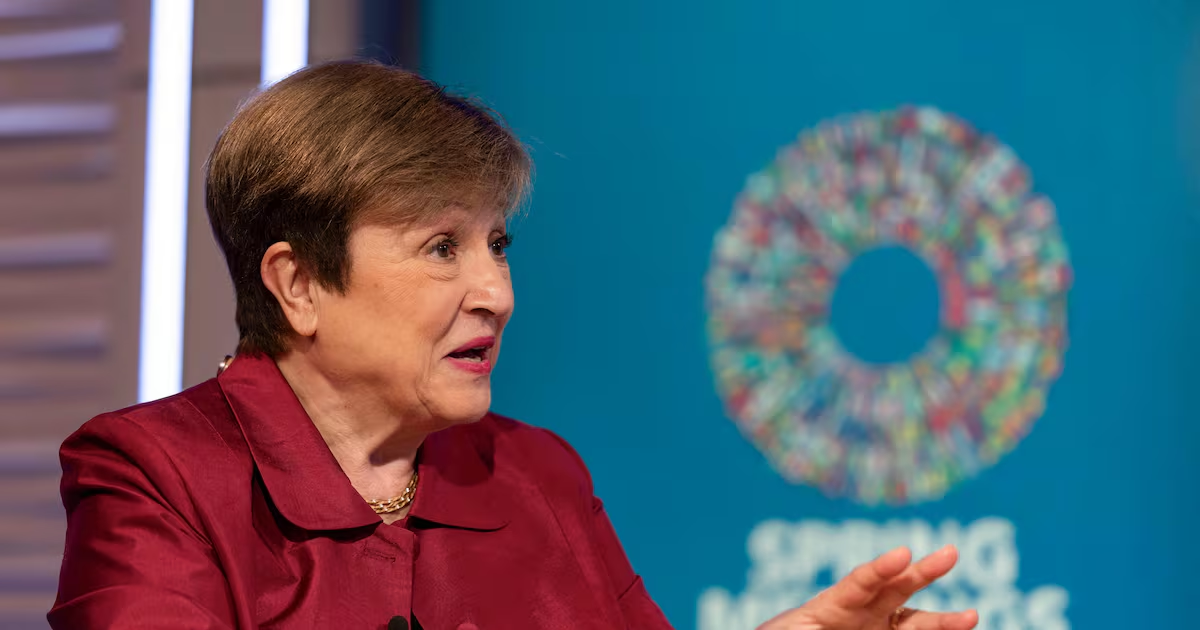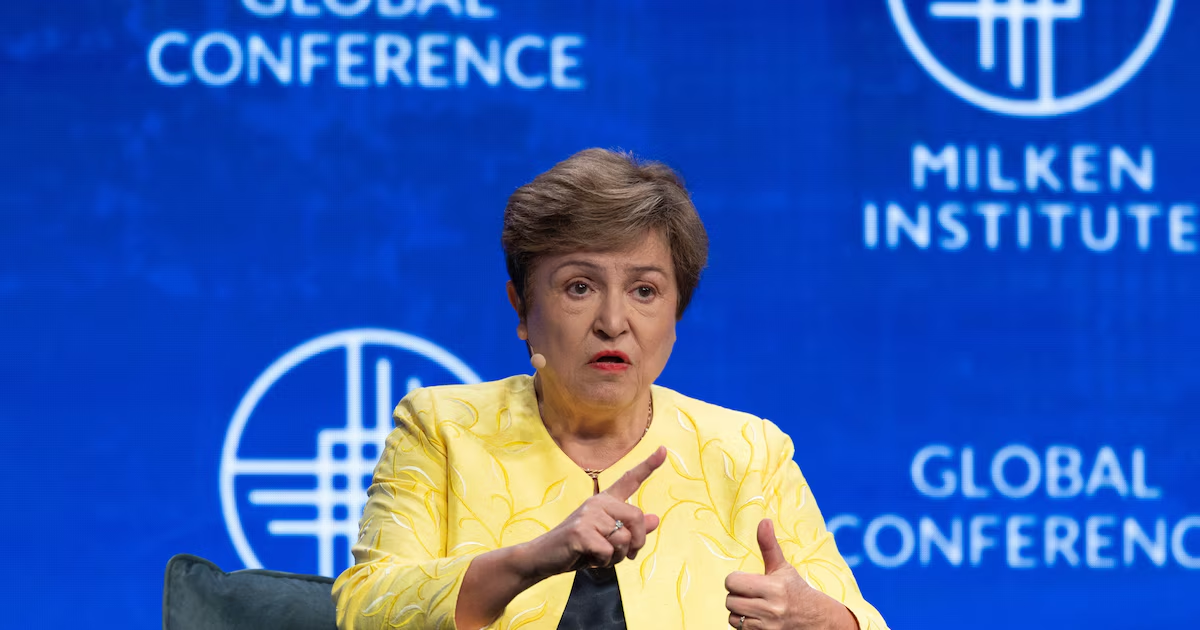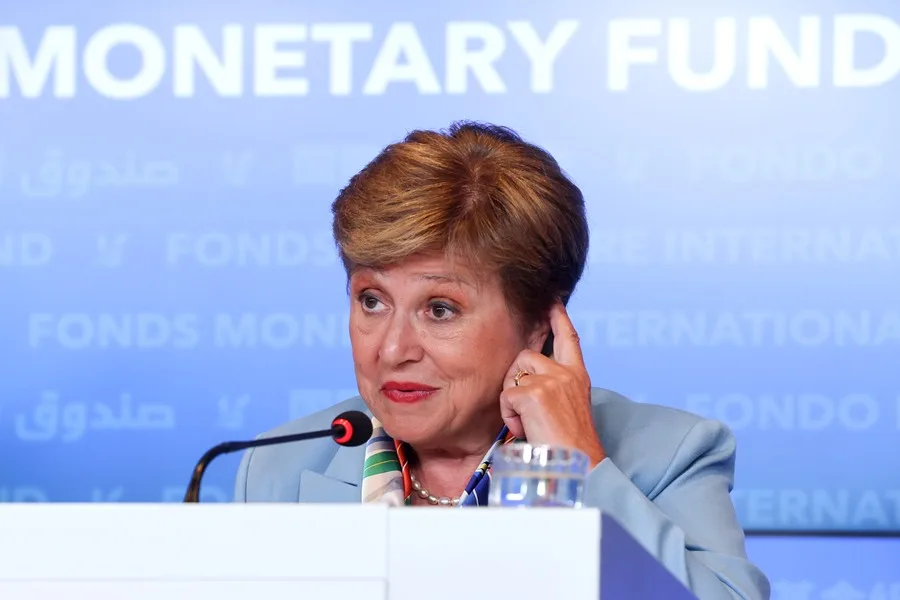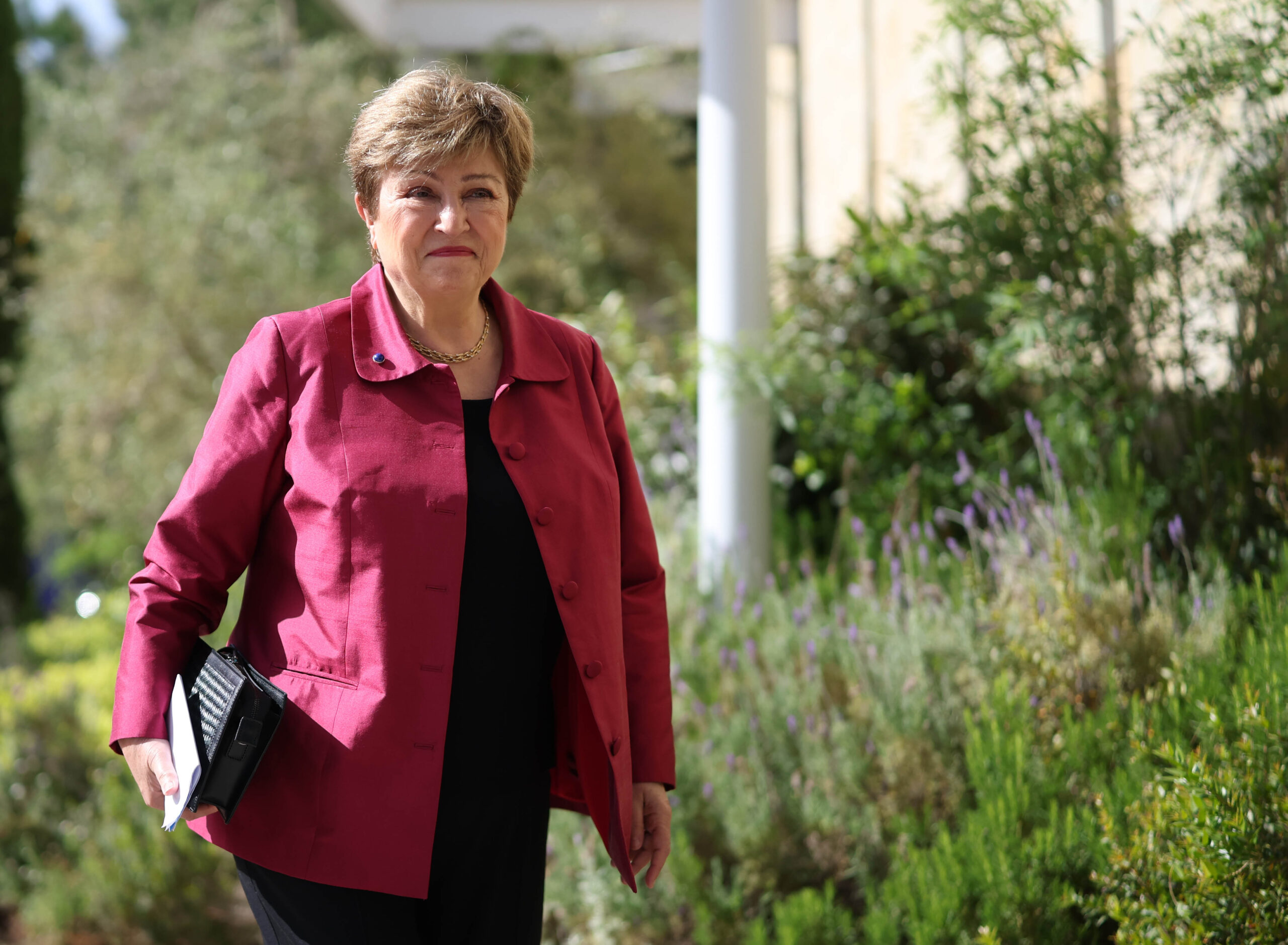
WASHINGTON - International Monetary Fund managing director Kristalina Georgieva said on Aug 25 that the global economy has weathered the Iran war energy shock better than feared, but she raised concerns about deteriorating fiscal conditions in some countries as evidenced by rising bond yields and a stalled disinflation process.Georgieva told reporters in a briefing ahead of next week’s Group of 20 finance leaders meeting in Asheville, North Carolina, that there was a “tug of war” between the negative Gulf energy supply shock and growth tailwinds from the artificial intelligence investment boom that was starting to spread beyond US borders.She said that risks to the global outlook were more balanced than in April, but still tilted to the downside, due to mounting fiscal pressures and the potential for central banks to maintain tight monetary policy to control inflation.Global growth is “resisting powerful headwinds from high debt levels, stubborn inflation, and trade tensions. Thus far, it has weathered the energy shock caused by the closure of the Strait of Hormuz better than we feared, thanks to a combination of factors,” Georgieva said.These factors include drawdowns of oil and gas reserves by many countries, increases in non-Gulf energy supplies, lower energy demand, increased renewable energy capacity and a shift back to coal power generation in some places.Artificial intelligence investment in the US is keeping corporate earnings and consumer spending strong, and other countries are ramping up data-centre construction and AI hardware supplies, she said. REUTERS
IMF’s Georgieva says global economy weathering energy shock, sees fiscal concerns
There is a “tug of war” between the negative Gulf energy supply shock and growth tailwinds from AI investment. Read more at straitstimes.com. Read more at straitstimes.com.
242 words~1 min read