(Image credit: Intel)
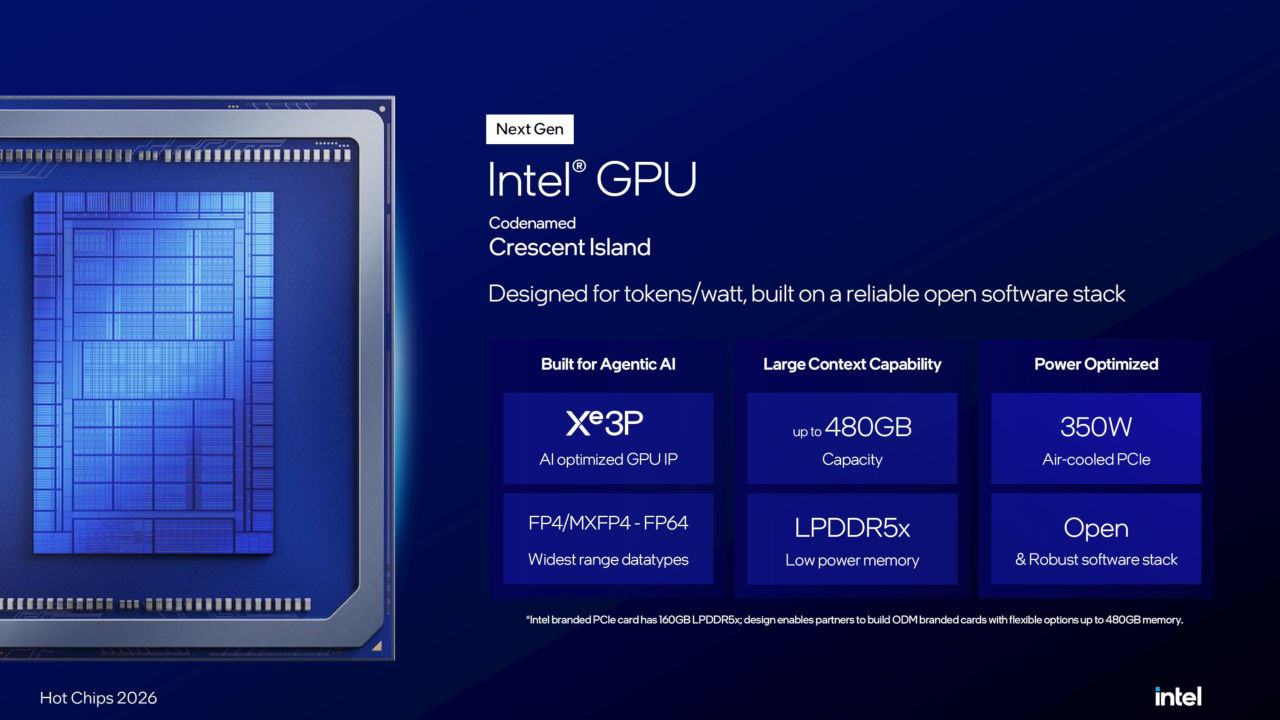
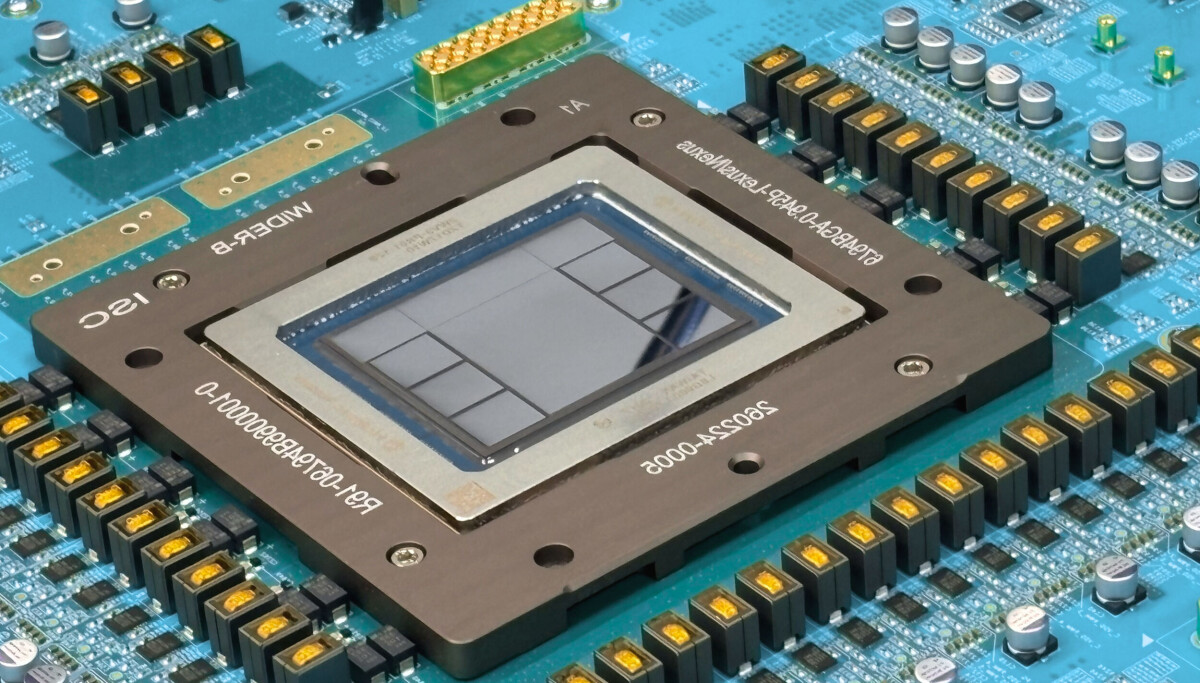
Intel shared more details of its Crescent Island AI accelerator, powered by the Xe3P architecture, at the Hot Chips symposium this week. Unlike Nvidia's Rubin and AMD's MI455X GPUs, which are high-power, exclusively liquid-cooled chips with massive pools of HBM4 memory that provide maximum performance across both AI training and inference workloads, Crescent Island is designed to fit into a lower-power, inference-first niche in the AI accelerator market.
(Image credit: Intel)As a refresher, Crescent Island is a 350W air-cooled PCIe card that uses up to 480 GB of LPDDR5X memory, meaning it can be deployed in traditional servers without exotic power and cooling requirements. We've already learned about some of Crescent Island's DNA from past disclosures, but Intel went deeper into the chip's architectural details at Hot Chips.
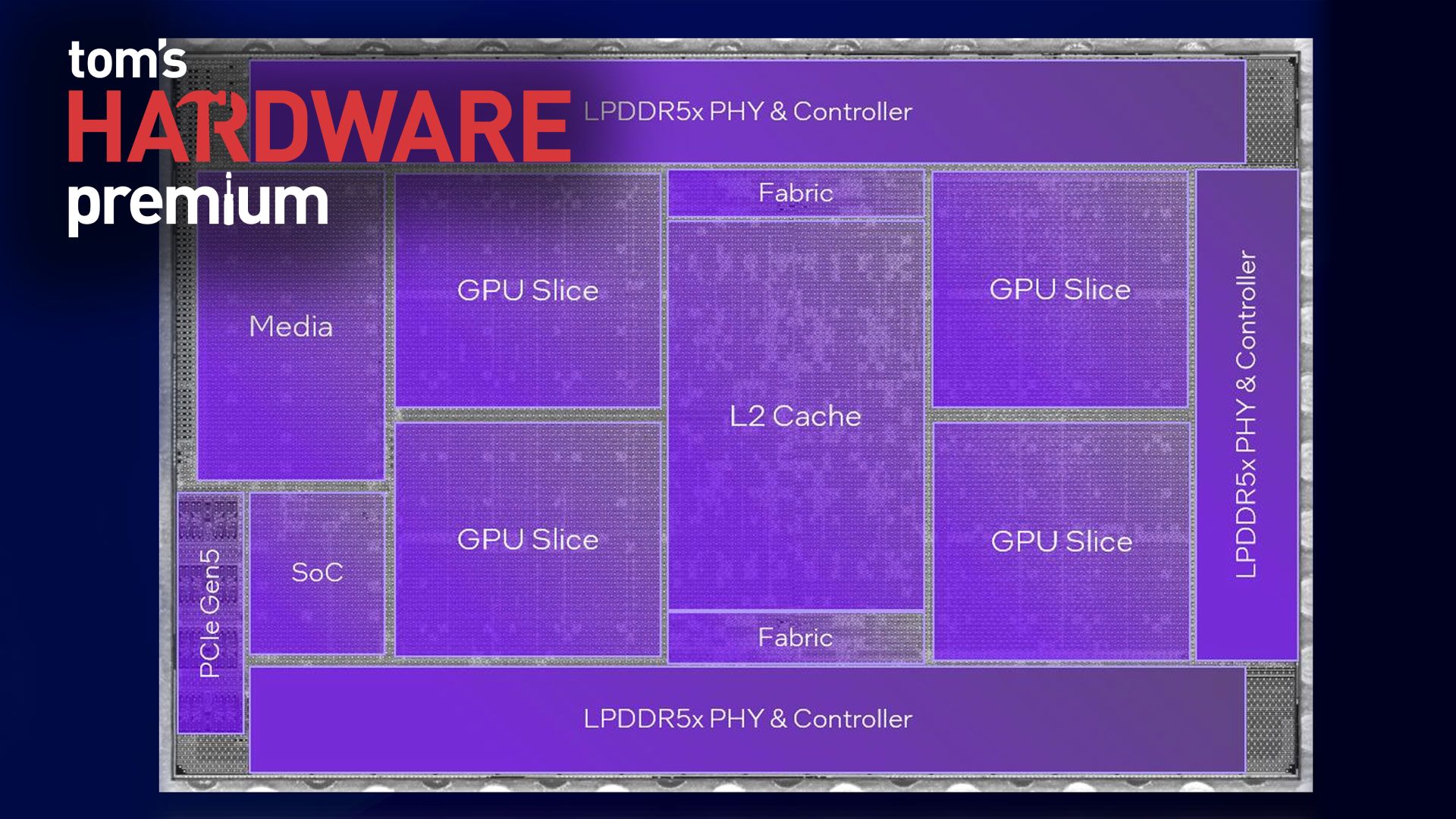
(Image credit: Intel)Crescent Island is built up from four Xe3P slices, each containing eight Xe Cores, for a total of 32. Each Xe Core has eight Xe Vector Engines and eight XMX matrix accelerators, for a total of 256 of each resource.The Xe3 graphics architecture, as seen on Intel's Panther Lake processors, already modified the capacity and flexibility of the GPU cache hierarchy to improve utilization and decrease performance-sapping register spills, and Xe3P further refines that hierarchy.