(Image credit: Intel)
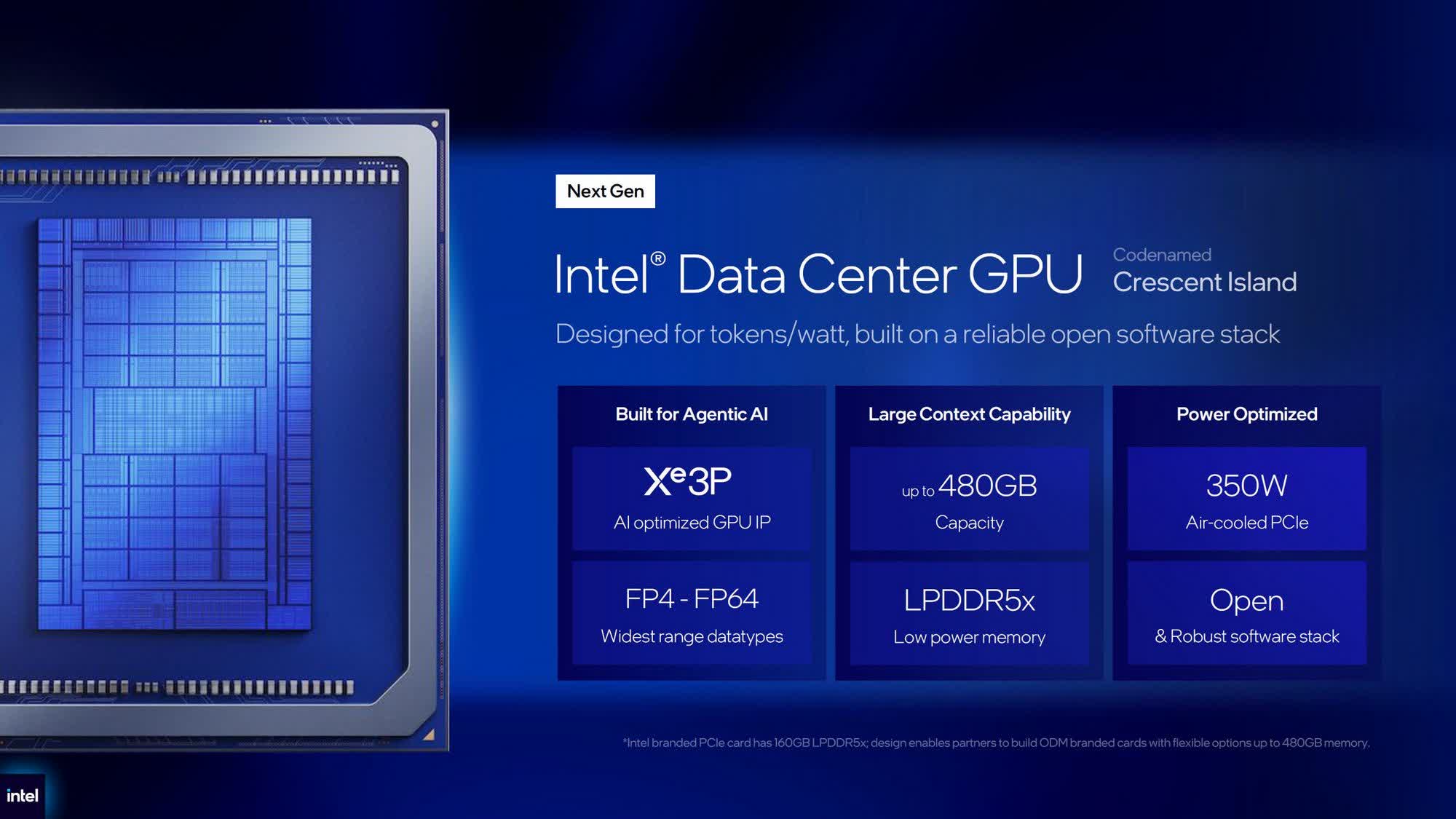
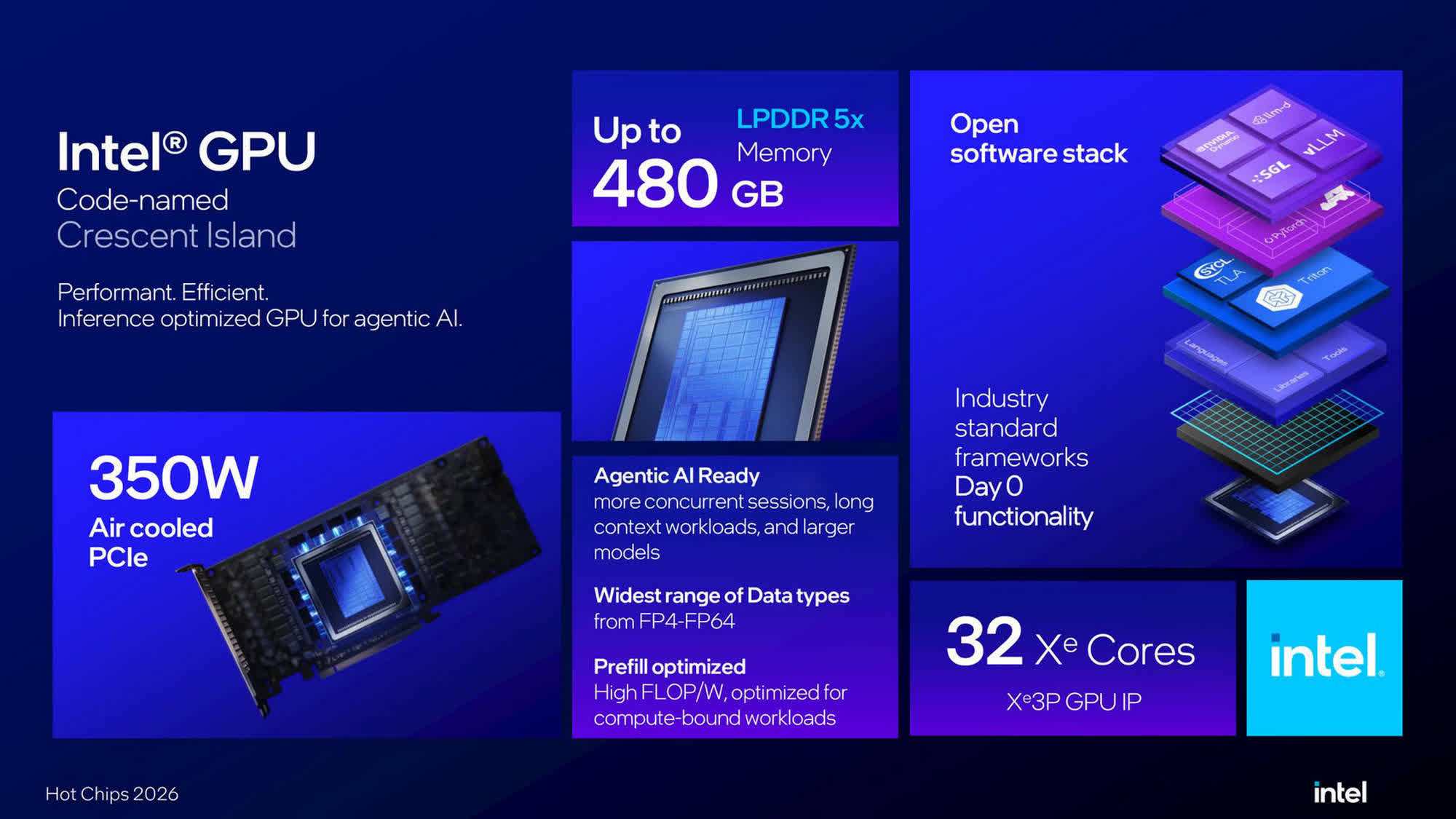
At Computex 2026, Intel is offering a few more details and updates for its next-generation Data Center GPU product, code-named Crescent Island. The Crescent Island GPU will be built on Intel's Xe3P GPU architecture. Intel says this architecture is "built for agentic AI," and it supports a broad range of potential data types, from FP4 for high-performance AI inference all the way up to FP64, potentially for scientific computing applications. Intel isn't providing any raw throughput specs at this stage of Crescent Island's development, so we can't make any guesses about its compute performance.
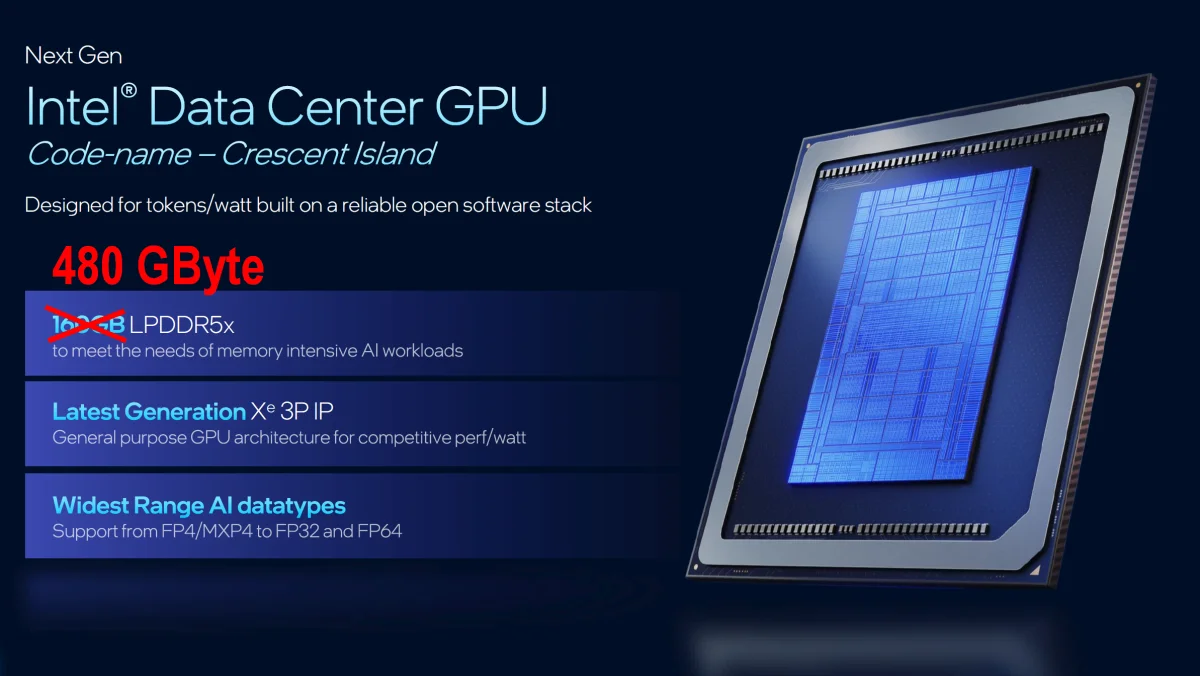
(Image credit: Intel)Crescent Island will be a PCI Express add-in card with a 350W power target, placing its power and thermal requirements close to products like Nvidia's RTX Pro 5000 Blackwell card. But Crescent Island's architecture is quite different from anything else on the market. It forgoes GDDR or HBM memory for LPDDR5X. Intel says its Crescent Island reference design will include 160GB of LPDDR5X, but that the chip is designed to allow partners the flexibility to build accelerators with up to 480GB of memory.Recent leaks and past analysis have suggested that Crescent Island will take a wide-and-slow approach with LPDDR5X, potentially using a 640-bit bus connecting 20 LPDDR5X devices, to achieve these high capacities. Some basic math suggests that partners would need to employ 24GB LPDDR5X modules to fully realize that memory capacity, and those modules are already available from sources like Samsung. With 10.7 Gbps LPDDR5X, Crescent Island would offer 684 GB/s of memory bandwidth.From a design standpoint, maximizing memory capacity while maintaining adequate bandwidth will help keep more AI data close to the GPU and require less data movement, potentially making Crescent Island a more efficient inference engine compared to GPUs built with lower-capacity GDDR devices.