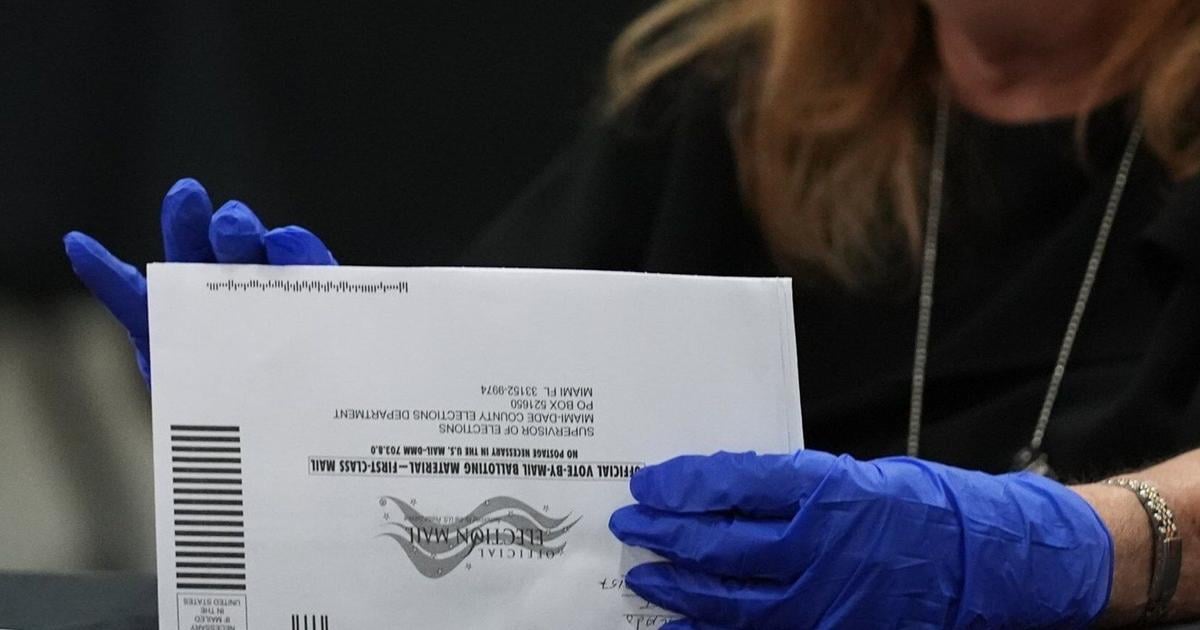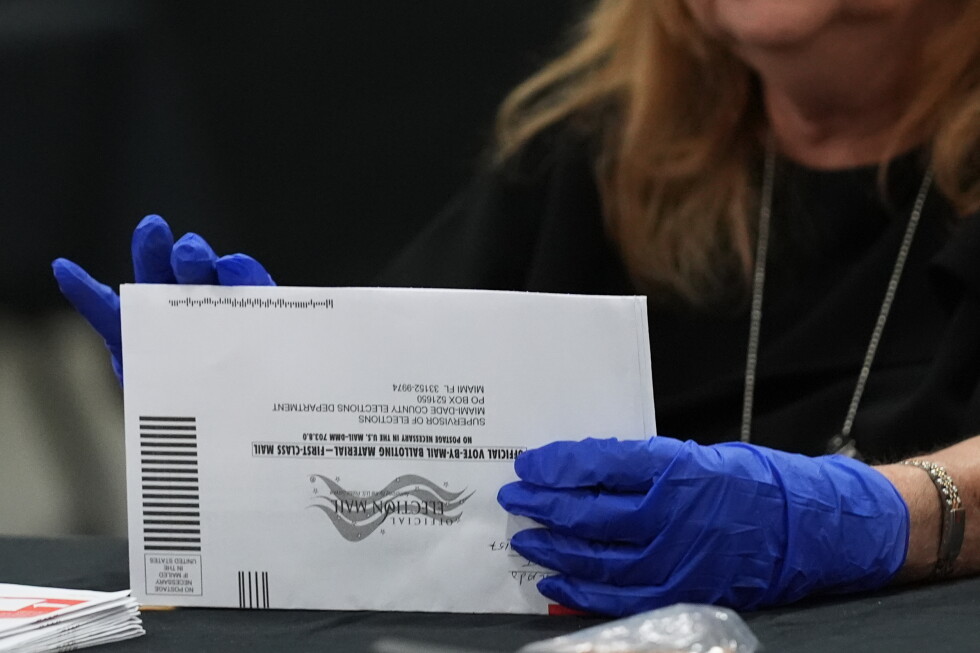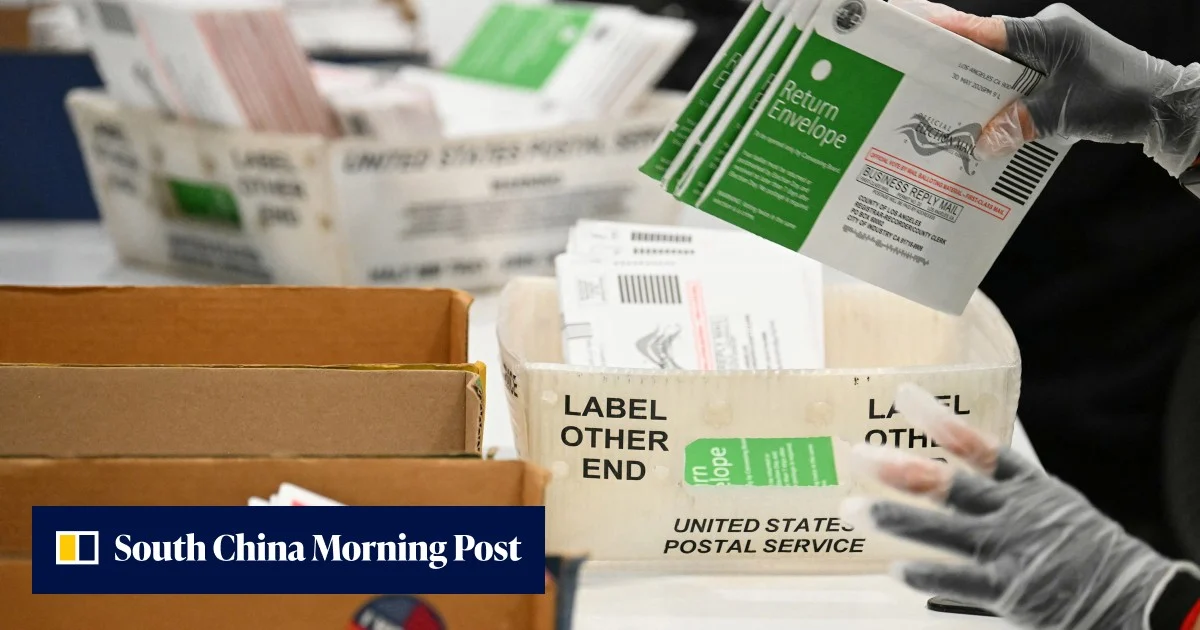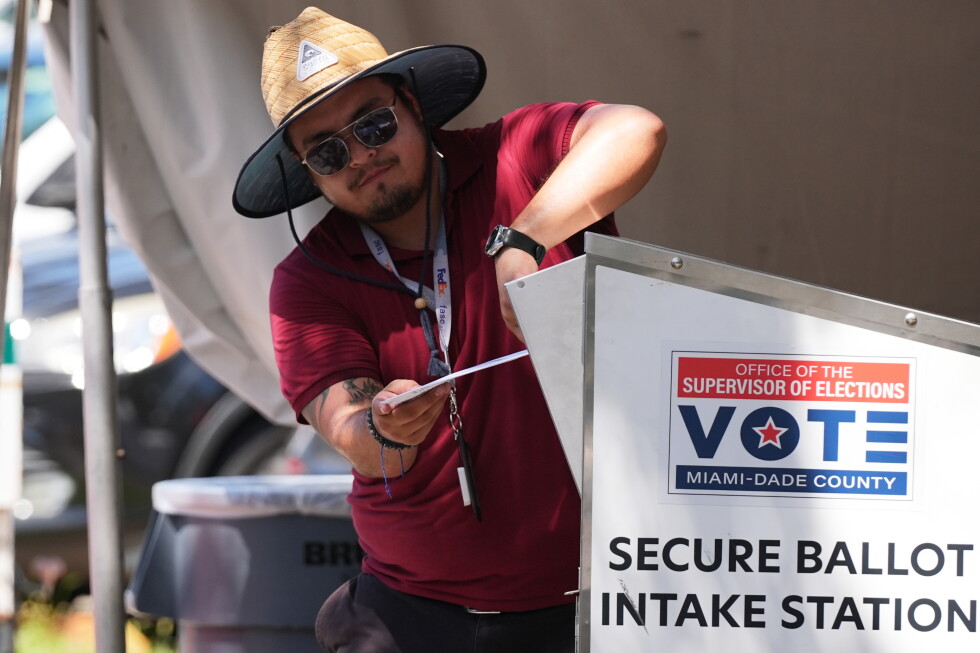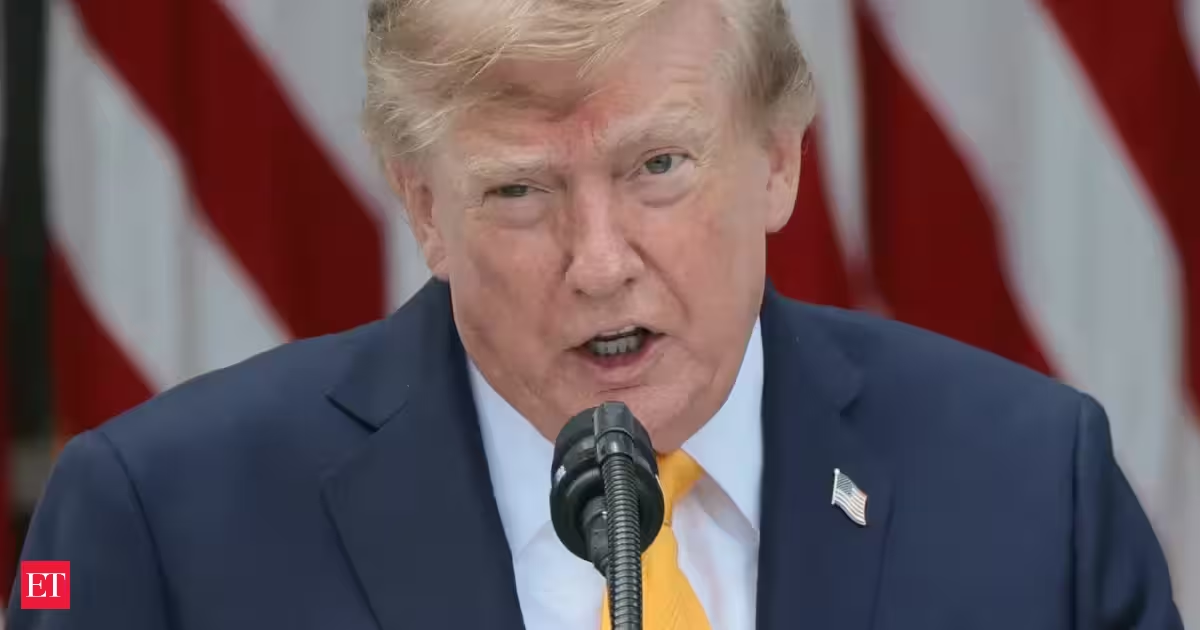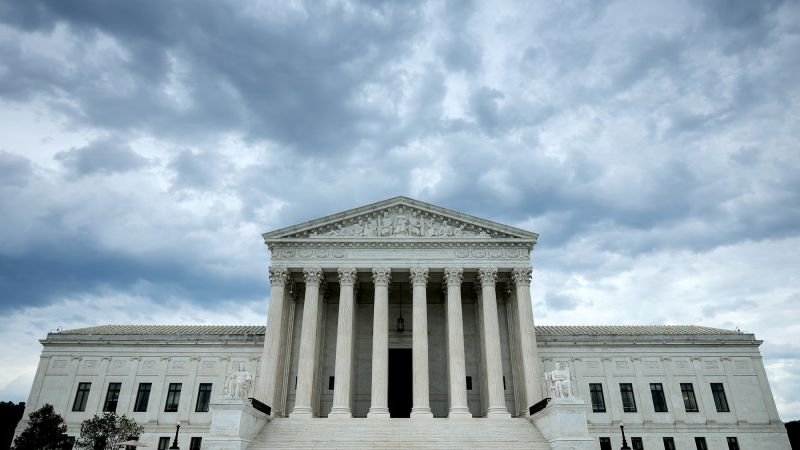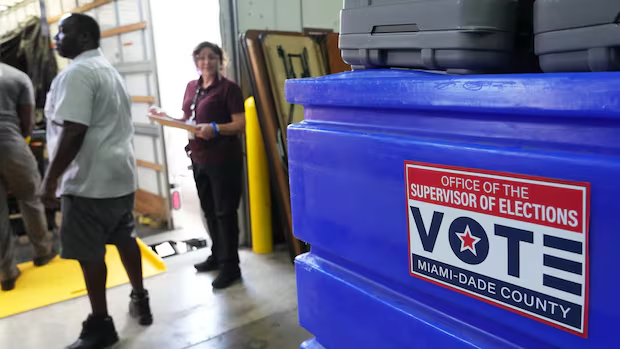
WorldThe U.S. Supreme Court's preliminary approval of President Donald Trump's restrictions on mail-in voting has already thrown into uncertainty the method that nearly one-third of the country uses to vote — even if it may not lead to a single procedural change during the November midterms.Election officials worry about changes that would be impractical, potentially chaotic ahead of Nov. 3 voteThe Associated Press · Posted: Aug 25, 2026 9:28 AM EDT | Last Updated: 1 hour agoListen to this articleEstimated 5 minutesThe audio version of this article is generated by AI-based technology. Mispronunciations can occur. We are working with our partners to continually review and improve the results.Employees prepare voting equipment at the Miami-Dade Supervisor of Elections Training and Support Center warehouse to be transported to voting precincts on Aug. 13 in Doral, Fla., ahead of the state's primary elections. Midterm elections take place across the U.S. on Nov. 3. (Lynne Sladky/The Associated Press)The U.S. Supreme Court's preliminary approval of President Donald Trump's restrictions on mail-in voting has already thrown into uncertainty the method that nearly one-third of the country uses to vote — even if it may not lead to a single procedural change during the November midterms. The high court's majority said Monday in an unsigned order that it hasn't determined whether Trump's order is constitutional, but that states that sued did not have the legal right to challenge it. But even the prospect of such a potential sweeping overhaul led to a dissent from Justice Ketanji Brown Jackson, who warned the decision "needlessly injects chaos and uncertainty" into the midterms.Trump’s executive order, signed in March, calls on his administration to create lists of eligible voters and orders the U.S. Postal Service to deliver mail ballots only to people on those lists. A second injunction barring the postal service from making changes to comply with that order remains in effect. Still, the administration late Monday filed a motion asking that the second hold be removed, and has posted new regulations that would go into effect Tuesday if the legal pathway is fully cleared. Those rules require specific formatting for envelopes containing mail ballots — which may force some jurisdictions to completely revise theirs — and makes states use an electronic system to identify to the postal service who is voting by mail. If states don't comply, their mail ballots won't get sent. Michelle Curtis, left, and Angela McDonald, right, demonstrate against proposed changes to the handling of mail-in ballots, on July 28 in Miami Gardens, Fla. (Marta Lavandier/The Associated Press)'I just don't see it'U.S. elections are run by local officials in thousands of scattered offices, many of which don't even have a full-time employee. Tammy Patrick, chief program officer at the Elections Center, an association of 2,500 election officers, warned that it would be impossible for any state to comply with the new rules and that no one she talked to has tried."There isn't a single state that does their elections [this] way," Patrick said in an interview. "There has been this assumption that this is not going to happen because it could not happen the way it's laid out, because no one does it this way." Earlier this year, the Trump administration gutted the Federal Election Assistance Commission, a traditionally bipartisan body that assists election officials across the U.S. and which has maintained the national mail voter registration form. The commission found that 29 per cent of Americans cast ballots by mail in 2024 midterms.Jesse Salinas, the registrar of Yolo County in California and president of that state's association of election officers, noted that ballots in his state start going out in 11 days and that his county has already printed its envelopes. WATCH | Trump speech slammed by critics:'Literally crazy': Critics slam Trump over election interference claimsJuly 17|Duration 2:02Top Democrats fiercely criticized U.S. President Donald Trump's national address on voting security and his claims of widespread Chinese election interference as an attempt to rig the midterms.He dismissed the idea of a last-minute revision in procedures. "The capacity to do that, I just don't see it," Salinas said. Sustained White House effortsJudges blocked Trump from creating new voting restrictions by executive order last year. This year, a bill to revamp voting procedures, the Save America Act, stalled in the Senate, with Republicans advising the White House it was likely not close to the 60 votes it would need to pass, even after Trump made a prime-time address to stress its importance.Trump's administration also suffered a defeat earlier this year when the Supreme Court ruled 5-4 that states can count ballots that arrive after election day. That case came a few weeks after Trump raised false allegations about elections in California, in which the lead changed in some races as more ballots were counted hours and days after polls closed.As well, the administration has hit legal roadblocks in its efforts to get voter roll information from multiple states, with federal judges denying multiple attempts. Election officials have said those attempts are counter to federal and state privacy laws. Front BurnerThe end of the Voting Rights Act?Trump has prevailed in two of the three presidential elections to feature the highest percentage of mail-in or absentee ballots, but has consistently railed against the practice, saying it is ripe for potential fraud. As a result, Democrats are now more likely to use mail voting than Republicans, a partisan split that wasn't as clear before Trump entered national politics.Voter fraud does exist, but is usually individualistic in nature. There has been no evidence to support widespread or systematic fraud to back up Trump claims that millions of unauthorized U.S. residents voted for his Democratic rival in the 2016 election, or that his election loss four years later to Joe Biden was rigged.LISTEN | Trump's efforts to change midterm voting:Front Burner26:24Trump’s ‘big lie’ in prime-timeWith files from CBC News
Supreme Court rejects challenge to Trump order on mail-in ballots, but more legal battles are expected | CBC News
The U.S. Supreme Court's preliminary approval of President Donald Trump's restrictions on mail-in voting has already thrown into uncertainty the method that nearly one-third of the country uses to vote — even if it may not lead to a single procedural change during the November midterms.
976 words~4 min read