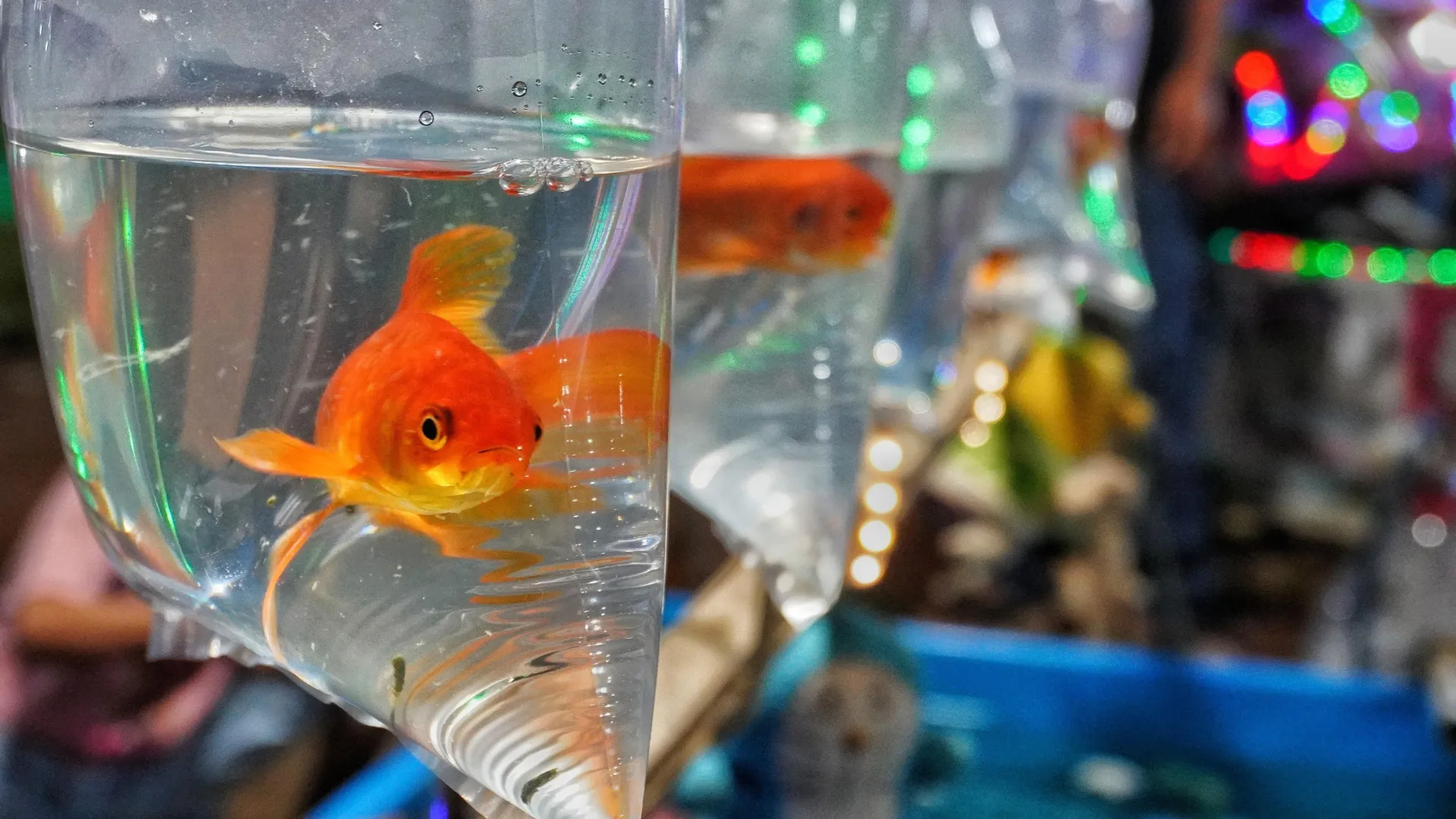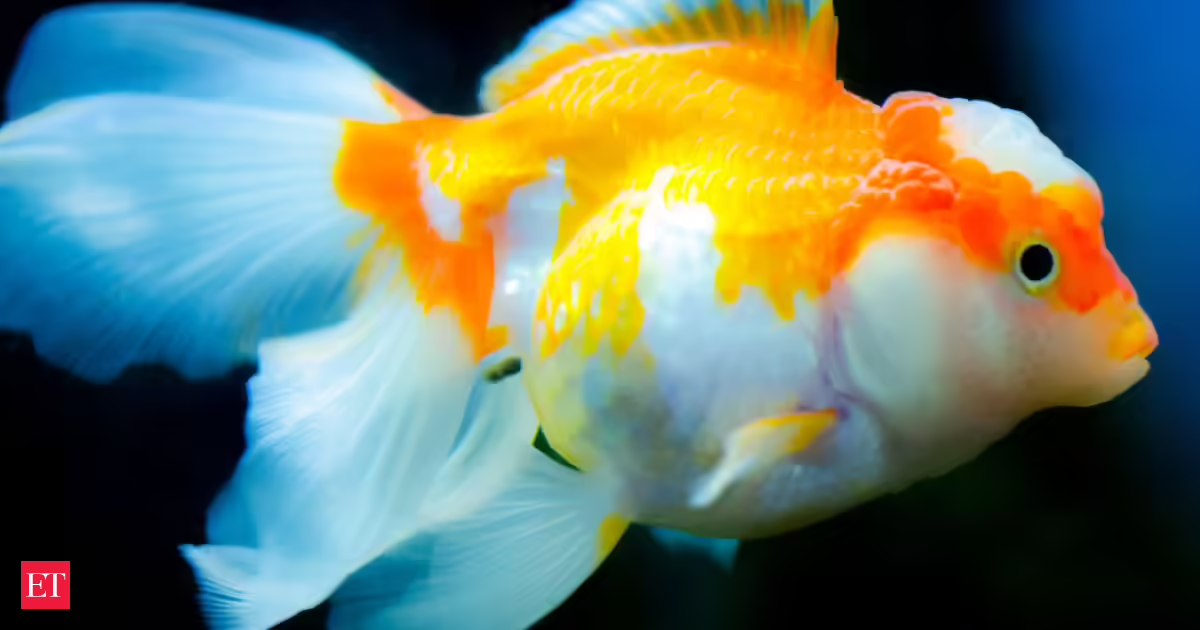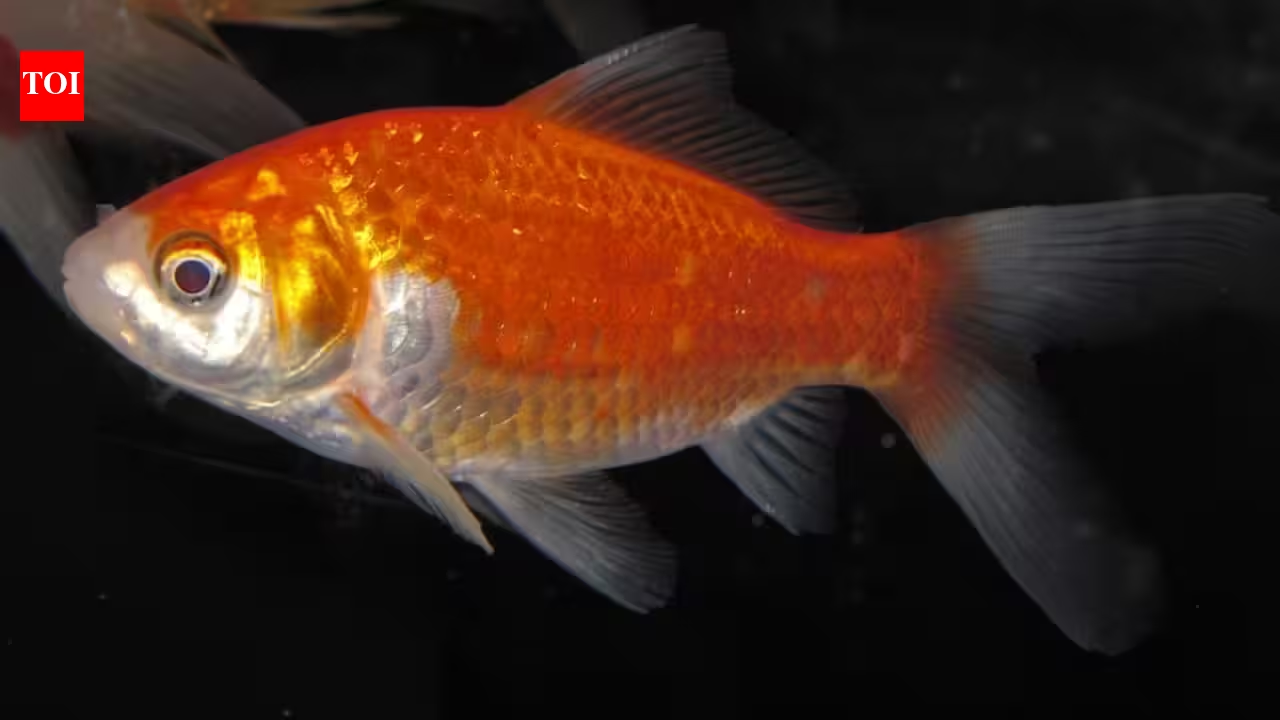
A goldfish (Carassius auratus) swimming. Credits: Wikimedia CommonsScientists who fitted acoustic tags onto adult goldfish living wild in Hamilton Harbour on Lake Ontario have found that the fish are creatures of habit. Tracked over two full years, the surviving goldfish returned to the same overwintering grounds and the same spawning sites every single season, a pattern that helps explain why this ornamental pet turned invasive species has become so difficult to remove from the Great Lakes.The project, led by biologist Christine Boston of Fisheries and Oceans Canada's Great Lakes Laboratory for Fisheries and Aquatic Sciences in Burlington, Ontario, was published in the Journal of Great Lakes Research and began when the team captured 19 large adult goldfish from the harbour between June 2017 and October 2018, each at least a foot long. Boston's group surgically implanted transmitters into the fish, which then sent out unique acoustic signals to a network of underwater receivers already installed in the bay to monitor stocked walleye. That existing infrastructure let the biologists track where the goldfish went and when, without needing to build a fresh tracking system from scratch.How the tracking revealed a seasonal patternEight of the tagged fish died over the course of the project, but the data collected from the eleven survivors was consistent enough to reveal a clear seasonal rhythm. According to Boston, the fish overwintered in the same areas each year and returned to the same spawning habitat each spring. Only one fish broke from the pattern, leaving the harbour for a short period of about two weeks during the winter of 2018 and 2019 to visit the open waters of Lake Ontario before returning.That predictability turned out to matter a great deal for how the fish use the harbour. Goldfish showed a strong pull toward the western end of the harbour during winter and spring, a preference linked to how scarce suitable spawning ground (shallow water with plenty of underwater vegetation) actually is elsewhere in the bay. The fish were also detected repeatedly at the mouth of Grindstone Creek during their spawning window, and this behaviour recurred every year of the tracking period, pointing to a high degree of spawning site loyalty within the population.This is where the story shifts from curious animal behaviour to a genuine management headache. Hamilton Harbour is already heavily degraded by decades of industrial activity, and its goldfish population has grown in recent years, maybe filling a niche left by declining common carp numbers nearby.Why predictable fish are still hard to removeKnowing exactly where and when goldfish gather might sound like it should make control efforts easier, and in some ways it does. A follow-up study published in the Canadian Journal of Fisheries and Aquatic Sciences built directly on this tracking data to design a removal programme. It used the fish's predictable spring aggregations to run four targeted sampling events over a single April, pulling 642 adult goldfish out of the harbour in one season alone. Those aggregations tended to form in a small, sheltered area where a major tributary drains into the harbour during the evening and into the night, letting crews plan their efforts with far more precision than blind netting would ever allow.Yet knowing where goldfish gather helps with catching the fish already there. It does little to slow how fast the population replaces them. Goldfish are voracious and adaptable eaters; they uproot aquatic vegetation as they forage, and their rapid growth and reproduction rate leave few natural predators capable of keeping numbers in check once a population becomes established. A related habitat modelling study, published in the Journal of Fish Biology, used telemetry data from the same harbour to map habitat use across several fish species and found that the goldfish's strong seasonal preferences make it one of the more predictable species to model, even as the harbour's overall ecosystem remains under significant strain from decades of industrial disturbance.A goldfish with flowing fins swimming alongside other goldfish. Credits - Wikimedia CommonsA warning wrapped inside a pet store purchaseThe bigger message from those studying Hamilton Harbour is aimed less at fellow scientists and more at ordinary pet owners. What begins as a small orange fish in a home aquarium can, within a few years, grow into a foot-long invader capable of reshaping the ecology of an entire harbour, uprooting vegetation and outcompeting native species for space and food. The 642 fish pulled from the harbour in a single season show the tracking data can drive real removal numbers. Whether that pace is enough to meaningfully shrink the population over time remains to be seen and will likely depend as much on stopping new releases as on removing the fish already there.
Scientists tracked 19 adult goldfish in Lake Ontario’s Hamilton Harbour: 2 years later, survivors still overwintered in the same areas and returned each spring
Scientists who fitted acoustic tags onto adult goldfish living wild in Hamilton Harbour on Lake Ontario have found that the fish are creatures of habit. Tracked over two full years, the surviving goldfish returned to the same overwintering grounds and the same spawning sites every single season, a pattern that helps explain why this ornamental pet turned invasive species has become so difficult to remove from the Great Lakes.
780 words~4 min read