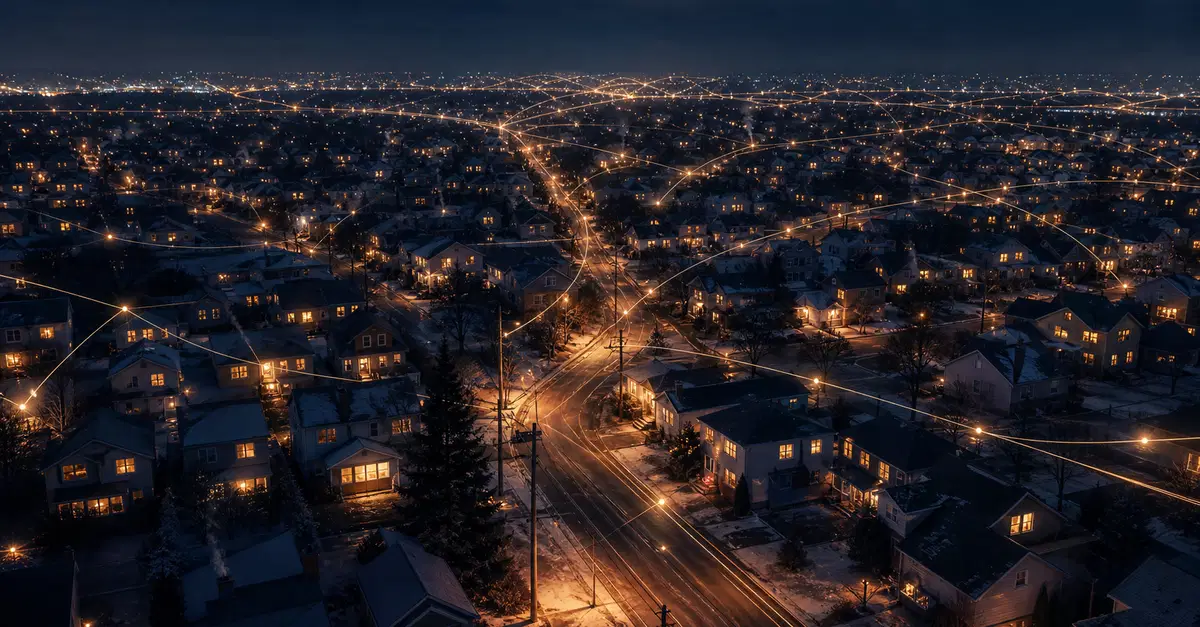
I modeled an AI inference fleet distributed across ordinary homes. What survived was narrower—and more plausible—than what I started with.
Picture a detached house on a cold evening. On one garage wall, an operator-owned compute appliance draws about five kilowatts—electrically comparable to an EV charger, though it runs much longer. It serves small AI models. In winter its waste heat can warm the house; in summer that heat must be carried away. The family bought nothing. They are paid to host it.
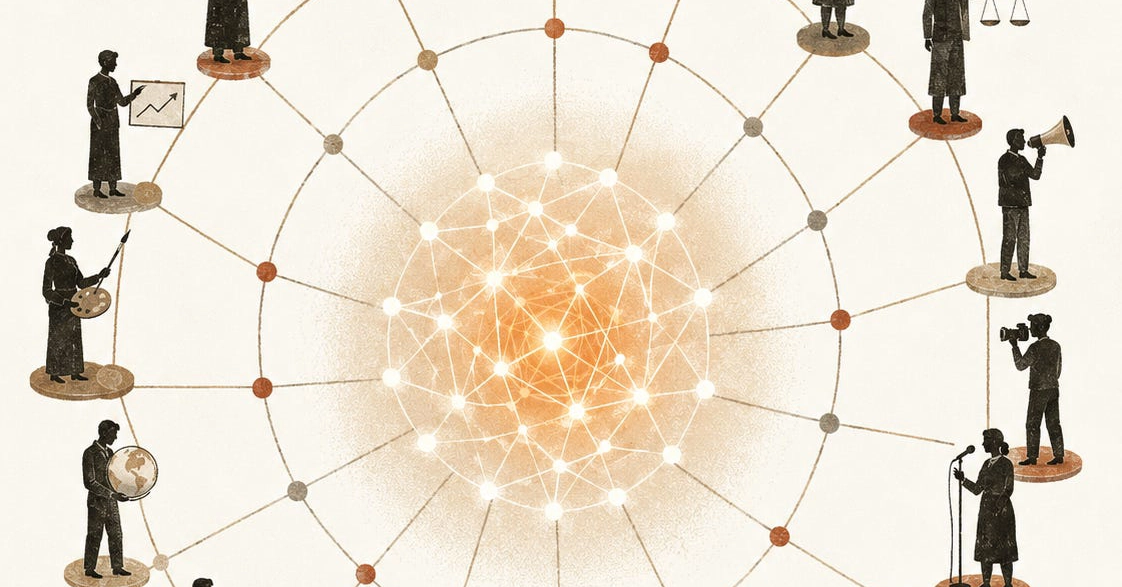
Now repeat that arrangement across a neighborhood, then a state, then millions of homes—not to assemble one enormous computer, but to create millions of independent inference workers. Each keeps a small model resident in GPU memory. New requests route around homes that are offline. The network grows by adding locations that were already built and connected to the grid.
That network does not exist. I call the idea HEARTH. Almost none of its physical pieces are exotic; the experiment is whether they can be arranged and scheduled as one system. Not a bigger computer. A wider one.
To make the appliance less abstract, I developed three concept form factors: a wall unit, a floor-standing thermal tower, and a duct-integrated mechanical-room unit. They are appearance and installation studies, not engineered products; their job is to expose the questions that a real prototype must answer.