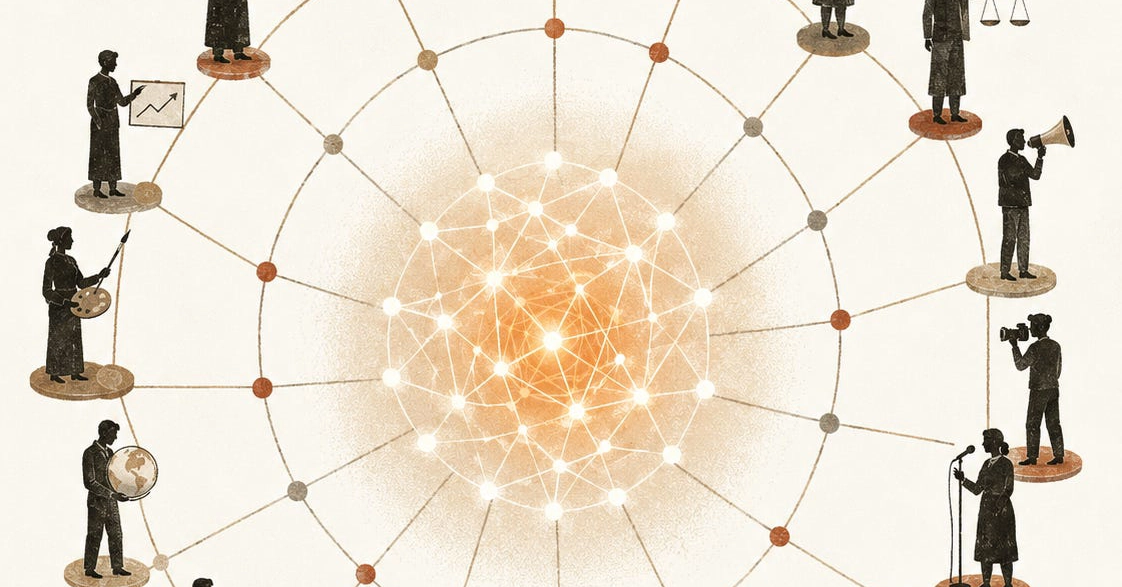
Most teams are chasing a better model. I went the other way and built a better system around the model: a 21-role AI setup that persists context, plays defined roles, and pushes back when I'm avoiding the work. This is how it works, and why the scaffolding ended up mattering more than the model itself.
I'd planned to ship a homelab piece. Hit some blockers (separate post coming), and the energy went where it could actually land: meta. So I pivoted to refining how I work with Claude on these writings. The framework that came out of that pivot is what this article is about. It's going to drive my homelab work next, then expand into the agent-network build I want to deploy on local infrastructure. The same rigor will apply to finances and investments, health and fitness, home improvement, operations and maintenance, and pretty much everything else I touch as a long-arc project.
I. The frame
The problem with how most people use AI
Most knowledge workers treat AI like an expensive search engine with better grammar. Ask a question, get an answer, move on. Each conversation starts cold. Each output is judged on its own. The system never gets smarter about the person using it, the work they're doing, or the patterns in how they get stuck.