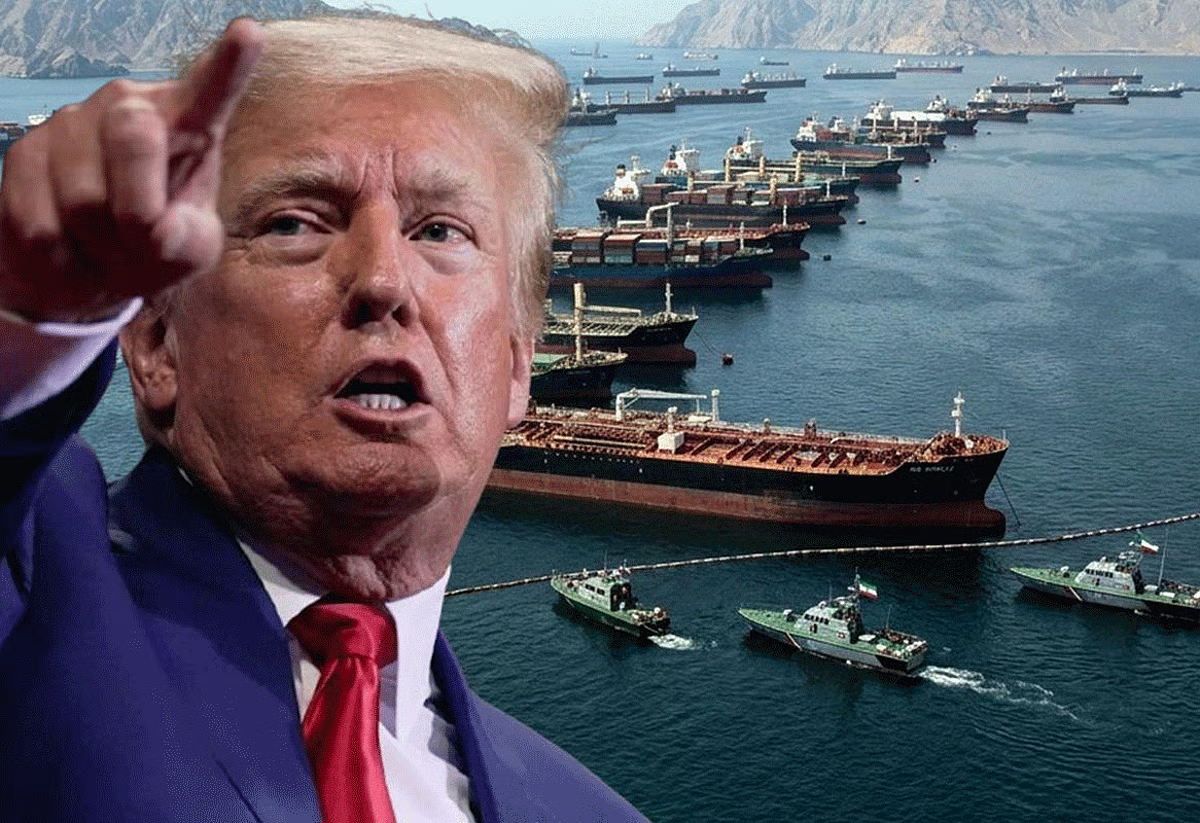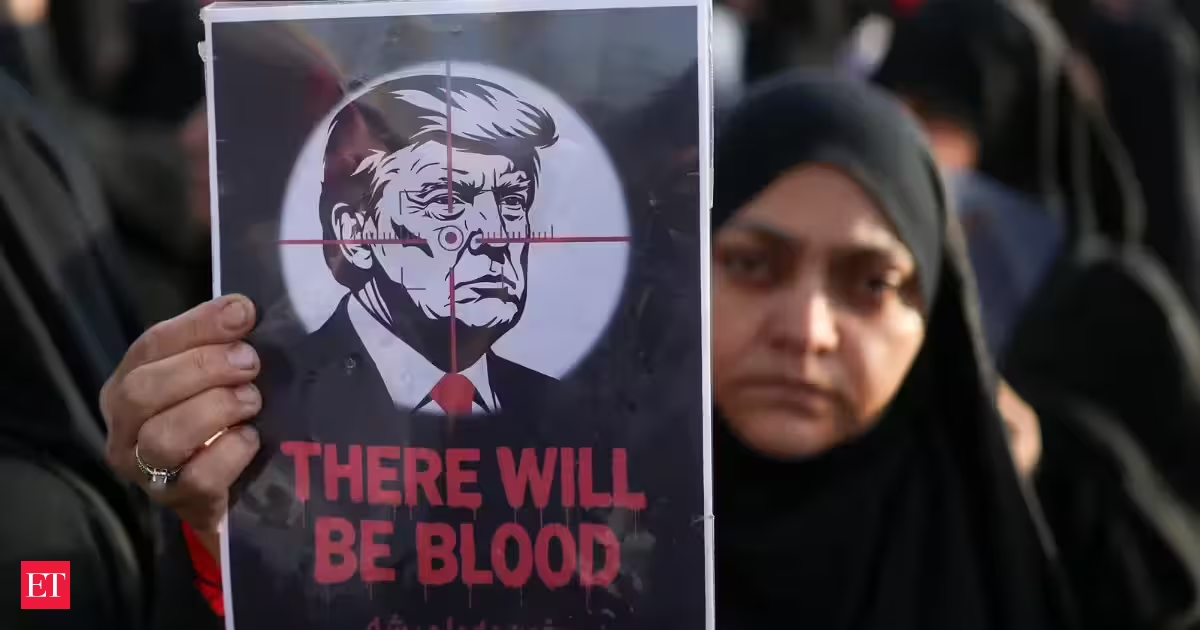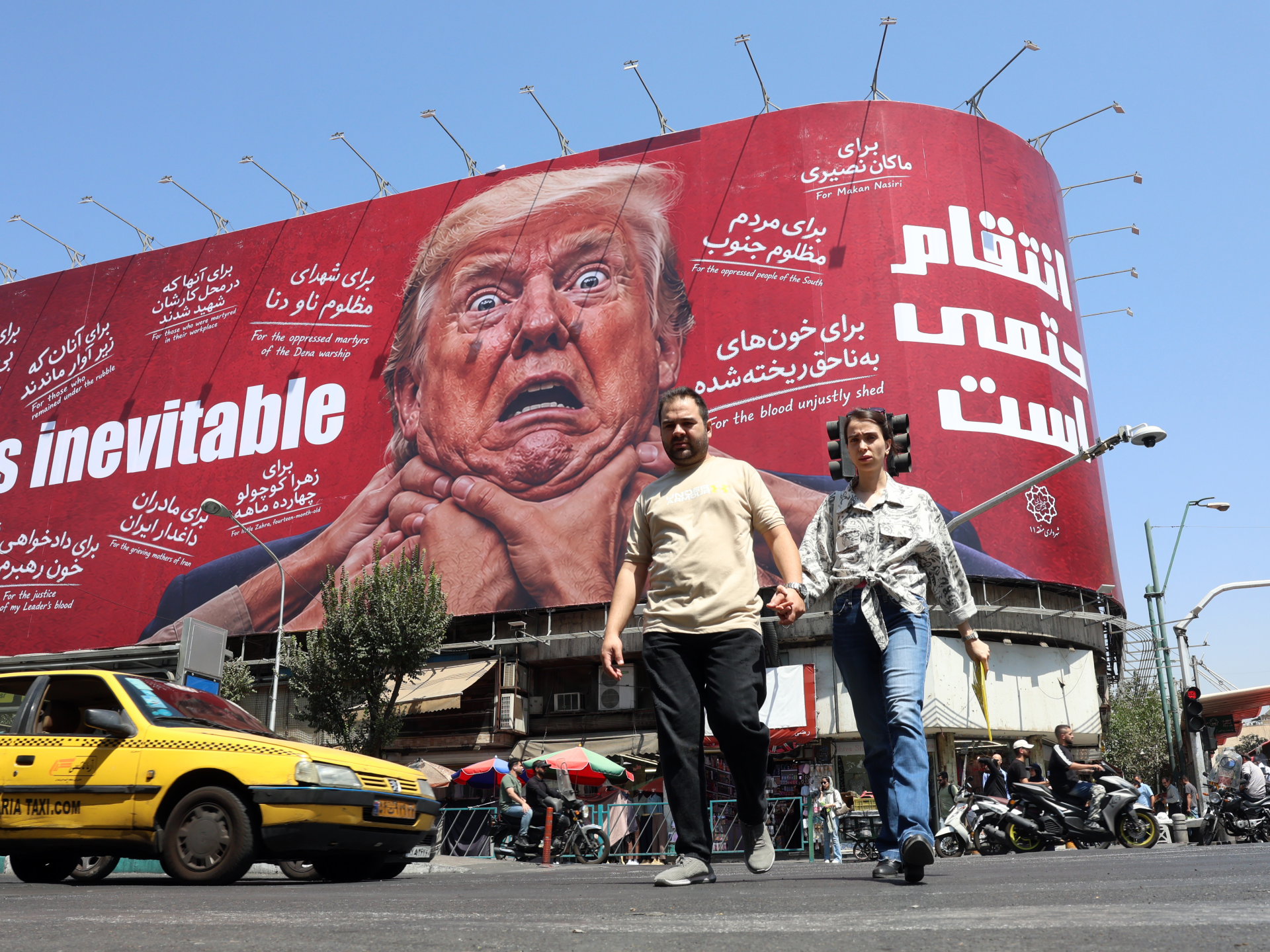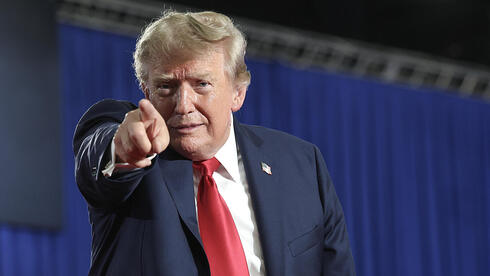
Opinion: Washington’s threatened secondary sanctions could deepen Iran’s economic crisis, but targeting countries that trade with Tehran risks widening the conflict into a global economic confrontationEven after discounting the bombastic rhetoric that accompanies nearly every move by U.S. President Donald Trump, particularly when Iran is involved, the expansion of the economic sanctions mechanism announced by Trump and Treasury Secretary Scott Bessent marks a fundamental shift in the rules of the U.S.-Iran confrontation.The strategy is straightforward: strike Iranian infrastructure from the outside while tightening the economic noose from within.Can Trump’s economic siege force Iran to change course? (Photo: Win McNamee/Getty Images)The change has been needed for some time and was delayed unnecessarily. It is not unprecedented, however, and history offers no guarantee that it will succeed.The central feature of this new phase in Washington’s economic campaign is the threatened use of what are known as secondary sanctions, a cumbersome mechanism that goes considerably further than the primary restrictions already imposed on Iran.As Bessent put it, the United States is now explicitly threatening to “punish any country that tries to maintain direct or indirect economic, trade or financial channels with the Islamic Republic.”Under such a policy, heavy economic penalties could be imposed, beginning on a date that has yet to be announced, on any entity that buys Iranian goods, sells products to Iran, conducts transactions with Iranian financial institutions, invests in the Iranian economy or extends credit to Iranian entities, whether through cash, goods or digital currencies.In other words, Washington’s economic fist would no longer be aimed only at the government in Tehran. It would also be directed at Iran’s trading partners.And that is where the policy becomes far more complicated.Those partners include China, Russia, Malaysia, Pakistan, Turkey and Qatar, among others. The list is long, diverse and politically difficult for the Trump administration.What begins as an economic war against Iran could therefore spiral into something much broader: an international economic confrontation in which retaliatory measures spread from one country to another.That is a chilling prospect.Iranian officials, echoed by many Western commentators, often boast about the Islamic Republic’s ability to withstand repeated waves of international sanctions over the past two decades. But that supposed economic resilience is greatly exaggerated.According to the figures cited here, Iran’s per capita gross domestic product fell from about $8,000 in 2012 to roughly $5,000 in 2022 and has since dropped to around $3,500, about 6% of Israel’s per capita GDP.The economic record of the Iranian regime has pushed the country toward the ranks of deeply distressed economies such as Sudan, Afghanistan and Cuba.In recent weeks, Iran’s economic deterioration has accelerated further as a result of the maritime and aviation blockade imposed by the United States.Inflation is running at what this analysis estimates to be an annual rate of roughly 200%, far above the official figures. The local currency has lost much of its value, the black market is flourishing and an estimated 40% of the workforce is either unemployed or has given up looking for work.Shortages are worsening in electricity, fuel, water, health care, transportation and subsidized basic goods.The forced halt in oil exports is costing Iran an estimated $440 million in lost revenue every day, amounting to tens of billions of dollars over six months.Another sign of the depth of the crisis is increasingly visible on the streets: ordinary families have begun selling whatever they can simply to survive.Sever Plocker Photo: Yaron BrenerThe larger question, however, is whether secondary sanctions designed to isolate the Islamic Republic almost completely from global trade and finance can achieve what the United States and Israel have struggled to accomplish through military force.A sober reading of economic history suggests caution.Brutal, isolated authoritarian regimes have repeatedly survived even extreme sanctions. There are many examples, and very few such governments simply raise their hands and surrender.That does not mean Washington’s economic campaign against Iran has no chance of succeeding.It may have a meaningful chance of shifting the balance inside Iran itself, strengthening more pragmatic and nationally minded elements of the establishment at the expense of its most ideological and militant factions, and perhaps opening a path toward an agreement.But success would depend on several factors at once: close international cooperation, the willingness of key countries to comply with Washington’s demands and, above all, persistence and patience.Those last two qualities may prove decisive.Does the volatile Trump administration possess them? Does an Israeli government drawn repeatedly toward force and chaos?For now, those remain open questions.
Can Trump’s economic siege on Iran succeed where force has failed?
Opinion: Washington’s threatened secondary sanctions could deepen Iran’s economic crisis, but targeting countries that trade with Tehran risks widening the conflict into a global economic confrontation
740 words~3 min read