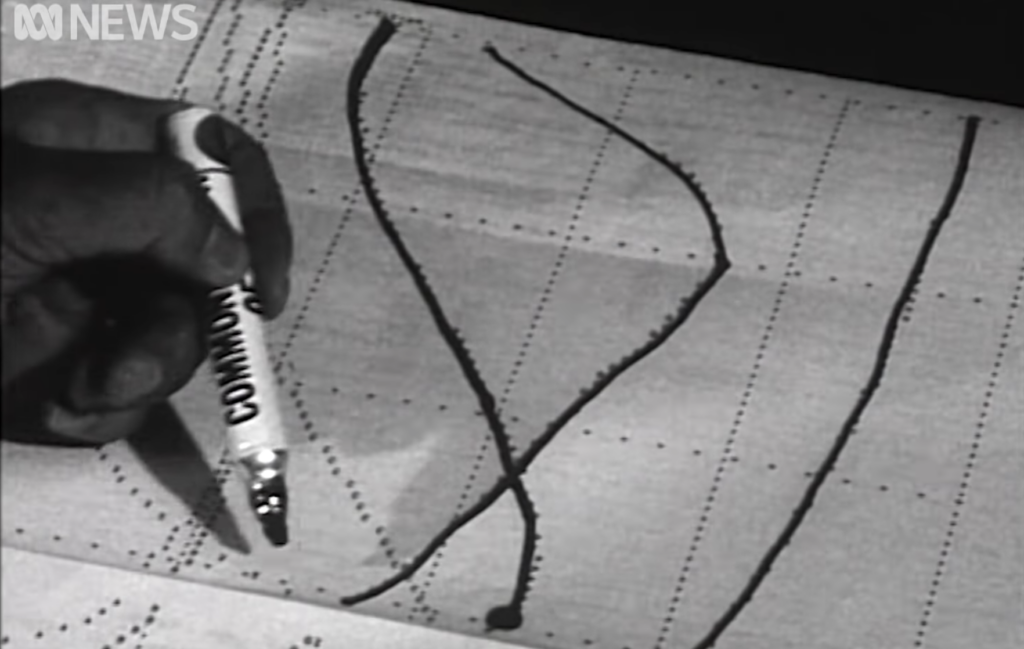
Authored by Milan Adams via Preppgroup,The Mathematical Warning That Refused to FadeFifty-four years ago, a team of researchers at MIT fed population data, resource consumption curves, and pollution metrics into a mainframe computer the size of a shipping container. The machine whirred through calculations and spat out a trajectory that ended in sharp decline. The 1972 Limits to Growth report predicted that without drastic course corrections, industrial civilization would hit terminal constraints by mid-century. At the time, critics dismissed the findings as Malthusian paranoia, pointing to the green revolution and technological optimism as proof that human ingenuity would always outpace scarcity. They were wrong. The variables aligned with terrifying precision.A reassessment published by KPMG in January 2026 confirmed what the original MIT model suggested: we are not merely on track for the 2040 collapse - we are eighteen months ahead of the worst-case scenario. The report analyzed thirty key indicators including arable land depletion, aquifer drawdown, atmospheric carbon concentrations, and debt-to-GDP ratios across OECD nations. Twenty-seven of those indicators exceeded the 1972 projections. The remaining three—global shipping volume, semiconductor production, and satellite launches - mask underlying fragility by measuring activity rather than resilience. The study concluded that the “business as usual” trajectory now points to systemic rupture between 2032 and 2038, with cascading failures likely to begin manifesting visibly by late 2027.The mathematics does not care about human optimism. Exponential curves have a way of appearing flat until they go vertical. The MIT model tracked five variables: population, food production, industrial output, pollution, and non-renewable resource depletion. In 2026, global population stands at 8.2 billion, having added the last billion in just twelve years. Food production plateaued in 2023 despite increased fertilizer application, indicating diminishing returns on agricultural intensification. Industrial output continues to rise, but energy return on investment - the amount of usable energy extracted versus the energy required to extract it—has fallen below the critical threshold of 15:1 for most fossil fuel sources. Pollution, measured in particulate matter, oceanic plastic density, and atmospheric methane, exceeds the model’s “pollution crisis” scenario by forty percent. The curves converge toward a singularity of scarcity and toxicity.The Nine Fractures Already Spiderwebbing Through the FoundationEconomic architecture is not collapsing in a dramatic thunderclap. Instead, it is dissolving like limestone in acid rain—slowly, invisibly, until the cavern opens beneath your feet. Global debt reached $307 trillion in early 2026, representing 333% of global GDP. This is not a number that resolves through growth. It resolves through devaluation, default, or dissolution. Central banks in thirty-seven countries are currently piloting Central Bank Digital Currencies (CBDCs), programmable money that carries expiration dates and usage restrictions. The Bank for International Settlements openly discusses “financial repression” as a necessary tool for managing sovereign debt loads. Translation: your savings will be harvested to keep institutions solvent, and you will have no recourse because the money will be code, not cash.The banking crisis of 2023 never truly ended; it merely entered a chemically-induced coma. Regional banks in the United States continue to hemorrhage deposits as savers flee to money market funds and Treasury bills. Commercial real estate—office towers built in the 1980s and 1990s—trades at sixty percent below 2019 valuations. Pension funds that loaded up on these “stable” assets face insolvency by 2028. The derivatives market, that opaque web of interconnected obligations, now notionalizes at over one quadrillion dollars. When—not if—a major counterparty fails, the unwind will not be orderly. It will be a stampede toward exits that no longer exist.Climate systems are not changing. They are destabilizing. The summer of 2026 broke records that had stood for mere months. Phoenix recorded thirty-one consecutive days above 115°F. The wet-bulb temperature in Mumbai exceeded 35°C for six hours on August 3rd, 2026, crossing the threshold for human survivability without air conditioning. The Arctic ice minimum this September will likely establish a new record low, with some models suggesting the first “blue ocean event”—ice-free Arctic waters—could occur as early as 2027, decades ahead of previous estimates. The permafrost in Siberia is not merely thawing; it is exploding. Methane craters half a kilometer wide now pockmark the Yamal Peninsula, releasing ancient greenhouse gases at rates that render human emission reductions irrelevant.Water is not becoming scarce. It is being weaponized. The Colorado River, which irrigates fifteen percent of American agricultural output, has reached critically low levels that trigger mandatory cutbacks under the 2026 Compact renegotiations. Farmers in Arizona are already bulldozing orchards that took decades to establish. The Ogallala Aquifer, which underlies the American breadbasket, drops an average of two feet annually. It will not recharge within any human timescale. In India, the groundwater beneath the Punjab region—India’s wheat basket—will be economically inaccessible by 2028. Pakistan and India have exchanged fire across the Line of Control three times this year over water rights to the Indus River basin. The first water war of the 21st century is not coming. It is already here, dressed in the rhetoric of territorial sovereignty.Migration patterns have shifted from streams to torrents. The UN estimates that 1.2 billion people currently live in regions that will become uninhabitable within two decades due to heat, drought, or sea level rise. In 2026 alone, 340,000 people crossed the Darién Gap between Colombia and Panama, heading north. These are not economic migrants seeking opportunity; they are climate refugees fleeing agricultural collapse. The Sahel region of Africa is emptying into Europe at rates that exceed the 2015 crisis by factors of three. Bangladesh, where 160 million people live on a delta that rises one centimeter annually while seas rise three times faster, is negotiating “managed retreat” agreements that will relocate twenty million citizens by 2030. Borders are hardening. Camps are swelling. The infrastructure of compassion is fracturing under the weight of mathematical impossibility.Food systems operate on margins so thin they resemble tightropes. The world maintains approximately seventy days of grain reserves. When Ukraine’s exports were disrupted in 2022, wheat prices spiked forty percent. When the Mississippi River dropped to historic lows in 2023, barge traffic backed up for months. These were warnings, not aberrations. In 2026, rice prices hit fourteen-year highs due to El Niño-induced droughts across Southeast Asia. The “green revolution” that fed the population boom relied on fossil fuel inputs—natural gas for fertilizer, diesel for tractors, petroleum for pesticides. As energy costs rise, food costs follow with mathematical inevitability. The bread riots that began in Sri Lanka in 2022 and spread to Pakistan, Peru, and Kenya were previews, not finales.Disease is evolving faster than our defenses. Antibiotic resistance now kills 1.27 million people annually, a figure projected to reach ten million by 2035. Gonorrhea, tuberculosis, and staphylococcus infections are emerging that respond to no known pharmaceutical treatment. The post-antibiotic era means surgery returns to being a life-threatening gamble, childbirth becomes dangerous, and minor wounds can kill. Meanwhile, viral zoonotic spillover events have increased threefold since 2010. The H5N1 avian influenza has achieved mammal-to-mammal transmission in cattle populations across the American Midwest. Virologists give it a forty percent probability of achieving efficient human-to-human transmission within eighteen months. When—not if—it does, mortality rates could exceed those of the 1918 Spanish Flu.Demographics are inverting with terrifying speed. The global fertility rate has fallen to 2.3 children per woman, barely above replacement level. In South Korea, it is 0.72. In Italy, 1.24. In China, 1.09. The inverted age pyramid—few young supporting many old—creates fiscal impossibilities. Japan is currently spending forty percent of its budget on elderly care and debt service. By 2030, that figure reaches sixty percent. Pension systems are not underfunded; they are unfundable. Simultaneously, youth unemployment in the developing world has reached forty percent in regions where seventy percent of the population is under thirty. The combination of idle young men and resource scarcity produces the historical precursor conditions for war.Social cohesion is unraveling into constituent threads. Political polarization has reached levels where seventy percent of Americans view members of the opposing party as existential threats. Trust in institutions—media, government, academia, medicine—has fallen below twenty percent across Western democracies. Conspiracy theories move faster than facts because they offer narrative coherence in a world of chaotic complexity. When the official story loses credibility, people construct their own realities. The result is a population that cannot agree on basic facts, rendering collective problem-solving impossible. The public sphere has become a battlefield of competing hallucinations.The Cascade Mechanics Nobody Modeled CorrectlyThese nine factors do not operate in isolation. They are coupled oscillators, feeding energy into each other with terrifying efficiency. Climate stress triggers migration. Migration triggers political backlash and border militarization. Resource nationalism disrupts trade. Trade disruption causes economic shock. Economic shock triggers currency crises. Currency crises prevent importation of food and energy. Food and energy shortages trigger social unrest. Social unrest disrupts supply chains further. The feedback loops are not linear; they are exponential.The 2022 energy crisis in Europe demonstrated this coupling. Sanctions on Russian natural gas triggered price spikes. Price spikes forced industrial shutdowns. Shutdowns reduced fertilizer production. Reduced fertilizer production lowered grain yields. Lower yields increased food prices. High food prices triggered protests in developing nations that imported European wheat. The disruption traveled from pipelines to plazas in six months. Now imagine this cascade occurring simultaneously across water, food, energy, and financial systems. The models suggest that once three critical systems fail, the remaining seven follow within months, not years.The concept of “resilience” has been strip-mined by corporate consultants who use it to sell software solutions. True resilience is biological, not digital. It is the redundancy of multiple seed varieties, not data backups. It is the muscle memory of manual labor, not cloud storage. It is the trust between neighbors, not blockchain verification. Industrial civilization has optimized for efficiency at the expense of redundancy, creating systems that are “lean” in the same way a razor blade is lean—sharp, but prone to snapping under pressure.What the Breaking Point Actually Looks LikeThe collapse will not announce itself with cinematic flair. There will be no single day when the president declares martial law over a montage of burning cities. Instead, the degradation will be granular, personal, and unevenly distributed. It will arrive as the day your debit card stops working at the grocery store, not because you lack funds, but because the payment processor is down. It will arrive as the week the pharmacy cannot refill your prescription because the supply chain fractured somewhere in a factory district you have never heard of. It will arrive as the month when the water coming from your tap runs brown, then stops running entirely.Infrastructure does not fail catastrophically at first. It fails in brownouts. The electrical grid, that marvel of twentieth-century engineering, currently operates with less than three percent spare capacity in most developed nations. During the August 2026 heat dome, rolling blackouts affected forty million Americans. Hospitals ran on backup generators. Traffic lights went dark. Refrigerators warmed. The meat in freezers spoiled. These were not third-world conditions; they were suburbs of Dallas and Sacramento. When the grid finally fails completely—and physicists give it a sixty percent chance of major continental failure by 2030—it will not return quickly. Transformers take eighteen months to manufacture. High-voltage cables require specialized ships to lay. The knowledge to repair these systems resides in aging engineers who are not being replaced.Water scarcity does not mean the taps run dry everywhere at once. It means the price triples. It means the municipal supply is restricted to four hours daily. It means those with private wells become targets. It means the wealthy install reverse-osmosis systems while the poor queue at distribution points with plastic jugs. It means hospitals cancel surgeries because they cannot sterilize instruments. It means the sewage system backs up because there is insufficient water pressure to maintain flow. It means cholera and typhoid return to cities that have not seen them in a century.Food shortages do not manifest as empty shelves immediately. They manifest as the substitution of fresh produce with processed carbohydrates. They manifest as “meatless Mondays” becoming meatless weeks. They manifest as portion sizes shrinking while prices remain static. They manifest as the disappearance of imported goods—coffee, chocolate, bananas—replaced by local substitutes that taste like memory. They manifest as weight loss that doctors attribute to diet trends rather than caloric deficit. They manifest as the reappearance of “victory gardens” in suburban yards, not as hobbies, but as necessities.Crime does not explode into Mad Max theatrics. It metastasizes. Petty theft becomes normalized because the police no longer respond to non-violent calls. Home invasions increase because desperation outpaces deterrence. Organized looting of cargo trains and delivery trucks becomes so common that insurance companies stop covering transported goods. Vigilante patrols form in neighborhoods that previously considered themselves progressive. The law does not disappear; it fragments into private security, gang justice, and mob violence. The state retains the capacity for overwhelming force but loses the capacity for consistent order.Disease spreads not as plague pits but as chronic burden. Hospitals operate at 140% capacity year-round. Elective surgeries are canceled indefinitely. Cancer treatments are rationed by age. Antibiotics are reserved for the wealthy who can pay black market prices. Routine infections kill because the drugs no longer work. Mental health crises spike as anxiety becomes the baseline emotional state. The medical system does not collapse in a day; it erodes like coastal cliffs, losing a meter of capacity annually until the foundation undermines the structure.Economic collapse does not look like hyperinflation in Weimar Germany, with wheelbarrows of cash. It looks like the cashless society the technocrats dreamed of, but as a prison rather than a convenience. CBDCs arrive as “financial inclusion” and become social control. Your money expires if not spent within thirty days. Your purchases are restricted based on carbon scores. Your accounts are frozen if you violate speech codes or exceed travel allowances. The wealthy move assets into land, precious metals, and cryptocurrency, leaving the masses holding programmable tokens that lose value algorithmically. The stock market does not crash; it is suspended “temporarily” to prevent panic selling, then reopened under capital controls.The Survival Imperative Beyond StockpilingPreparation is not paranoia when the threat is mathematical. However, the survivalist aesthetic of canned goods and bunker construction misses the point. Three months of stored food will not carry you through a decade of decline. The lone wolf dies; the pack survives. The critical resource is not ammunition or freeze-dried rations; it is social capital. Trust is the currency that retains value when fiat fails. Skills are the assets that appreciate when markets crash.Water security means more than bottled reserves. It means knowing how to purify rainfall, how to access aquifers, how to build solar stills. It means understanding your local watershed, the sources upstream, the contaminants likely downstream. It means community-level infrastructure—cisterns, filtration, distribution networks—that functions when municipal systems fail.Food security means regenerative agriculture, not industrial agriculture. It means learning to grow calories, not Instagram aesthetics. It means heritage seeds that reproduce true, not hybrids that require annual purchase. It means composting, foraging, preserving, fermenting. It means small livestock—rabbits, chickens, goats—that convert inedible biomass into protein. It means knowing your neighbors’ skills and bartering labor for produce.Energy security means redundancy. Solar panels with battery backup for when the grid falters. Wood stoves for when the gas lines freeze. Hand tools for when the power tools have no electrons to consume. The ability to repair rather than replace. The knowledge to maintain engines, to wire circuits, to improvise solutions from salvaged materials.Medical security means primitive skills. Knowing how to set bones, suture wounds, identify medicinal plants. Stockpiling antibiotics while they still work, learning to use veterinary equivalents when human grades become unavailable. Understanding sanitation—proper latrine construction, water purification, waste disposal—to prevent disease rather than merely treat it.Security means community defense, not individual armament. A fortress mentality invites siege. Mutual aid pacts, neighborhood watches, communication networks that function when cell towers fail. The ability to de-escalate conflict because every bullet fired invites retaliation. The wisdom to share surplus because hoarding invites theft.Psychological resilience may prove the rarest commodity. The ability to adapt to lower standards of living without despair. The capacity to find meaning outside of consumption and status. The mental flexibility to abandon plans when circumstances change. The emotional stability to witness suffering without becoming numb or broken. The spiritual fortitude to maintain ethics when systems of enforcement dissolve.The Horizon We Are Actually Walking TowardThe 2040 prediction was not wrong; it was conservative. The KPMG reassessment suggests we are witnessing not a sudden cliff but a steepening slope that began around 2020 and accelerates annually. The collapse is not an event in the future. It is a process we are currently inhabiting. The question is not whether you will live to see societal collapse. You are already living within it. The question is where on the curve you will find yourself when your personal trajectory intersects with the systemic breakdown.The Roman Empire did not fall in a day. It experienced centuries of decline during which life continued, markets operated, and culture flourished—until they didn’t. The Mayans did not vanish; they abandoned their cities when the agricultural basis could no longer support the population density. The Bronze Age collapse of 1177 BCE saw multiple interconnected civilizations fail within decades due to climate change, seismic disruptions, and invasion. The survivors were those who decentralized, who maintained oral traditions when writing disappeared, who shifted from complexity to resilience.We face a similar inflection. The next fifteen years will not resemble the last fifteen. The assumptions of perpetual progress, of technological salvation, of infinite growth on a finite planet, are being ground against the whetstone of physical reality. The pain will be unevenly distributed, as it always is. The wealthy will buy islands, citizenships, and security details. The poor will suffer first and most. The middle class will discover that their credentials and retirement accounts are abstractions that dissolve when the infrastructure supporting them fails.But within this darkness, there is a strange liberation. When the impossible burden of maintaining industrial civilization is lifted by its own weight, space opens for other ways of being. Not utopia, certainly. Hardship, definitely. But also proximity, skill, meaning, and connection that the digital age promised but failed to deliver. The future is not uniformly bleak; it is textured, varied, and still undetermined.The MIT model offered a choice in 1972. We made it, collectively, through action and inaction. Now we navigate the consequences. The 2040 horizon approaches not as prophecy, but as physics. Those who see it coming, who prepare bodies and minds and communities, will not escape the storm. But they might build boats sturdy enough to reach the other side of it.
Society Collapse 2040: The Year The World Stops Working And Starts Dying
The models predicted collapse by 2040. New data says we’re already running ahead of schedule...
3,103 words~14 min read