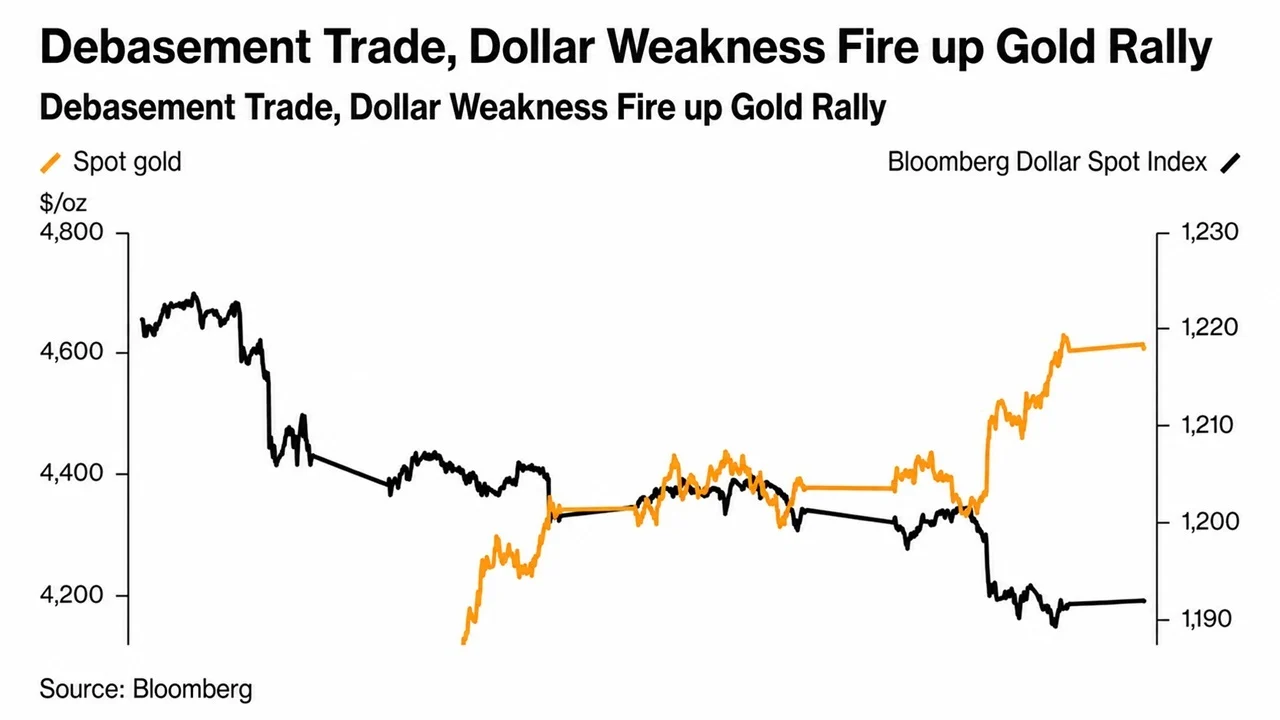
The U.S. dollar continues to face challenges in gaining traction as markets assess the implications of sanctions on Iran and the Treasury’s debt buyback strategies. Recent reports highlight that the dollar index is hovering near multi-month lows, influenced by the Treasury’s increased bond buybacks, which have temporarily lowered long-end yields. The geopolitical tension stemming from the Trump administration’s expansion of sanctions on Iran further adds to the pressure on the dollar. This multifaceted pressure suggests continued volatility in currency markets, with potential ripple effects on commodities and geopolitical negotiations.
Key Takeaways
Market behavior suggests that the dollar’s weakness is consistent with increased geopolitical risk, which is often supportive of higher gold prices.
The expanding sanctions on Iran appear to be reducing the likelihood of a successful U.S.-Iran nuclear deal, as reflected in market pricing for such an outcome.
Observations indicate that the sanctions could lead to constraints in oil supply, increasing the potential for crude oil prices to reach new highs.