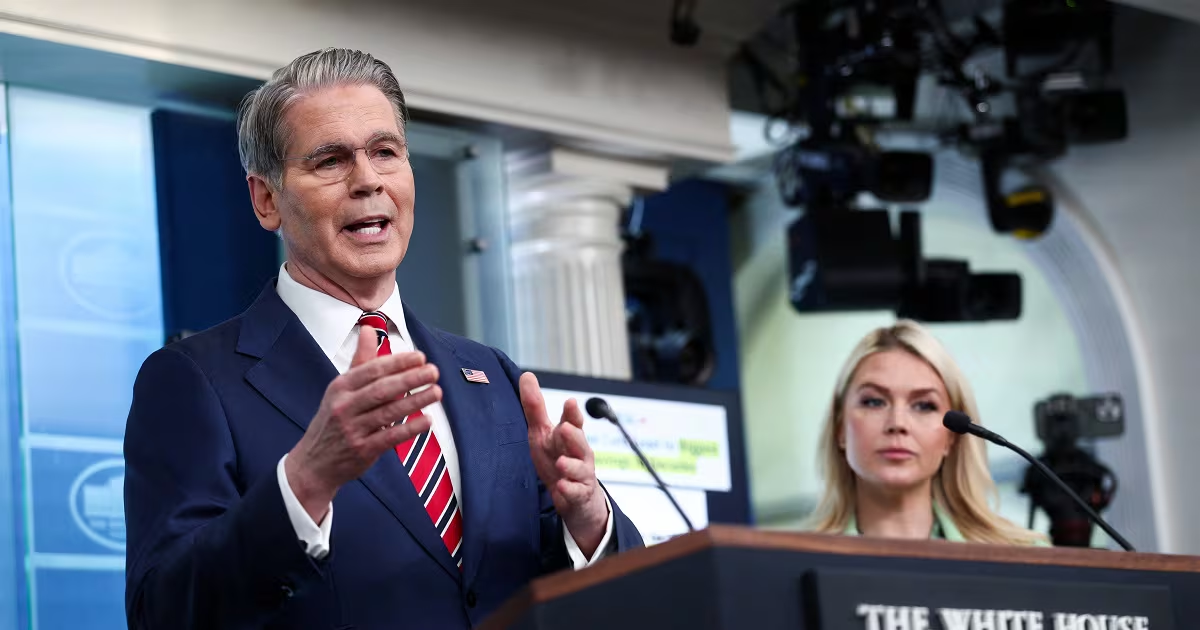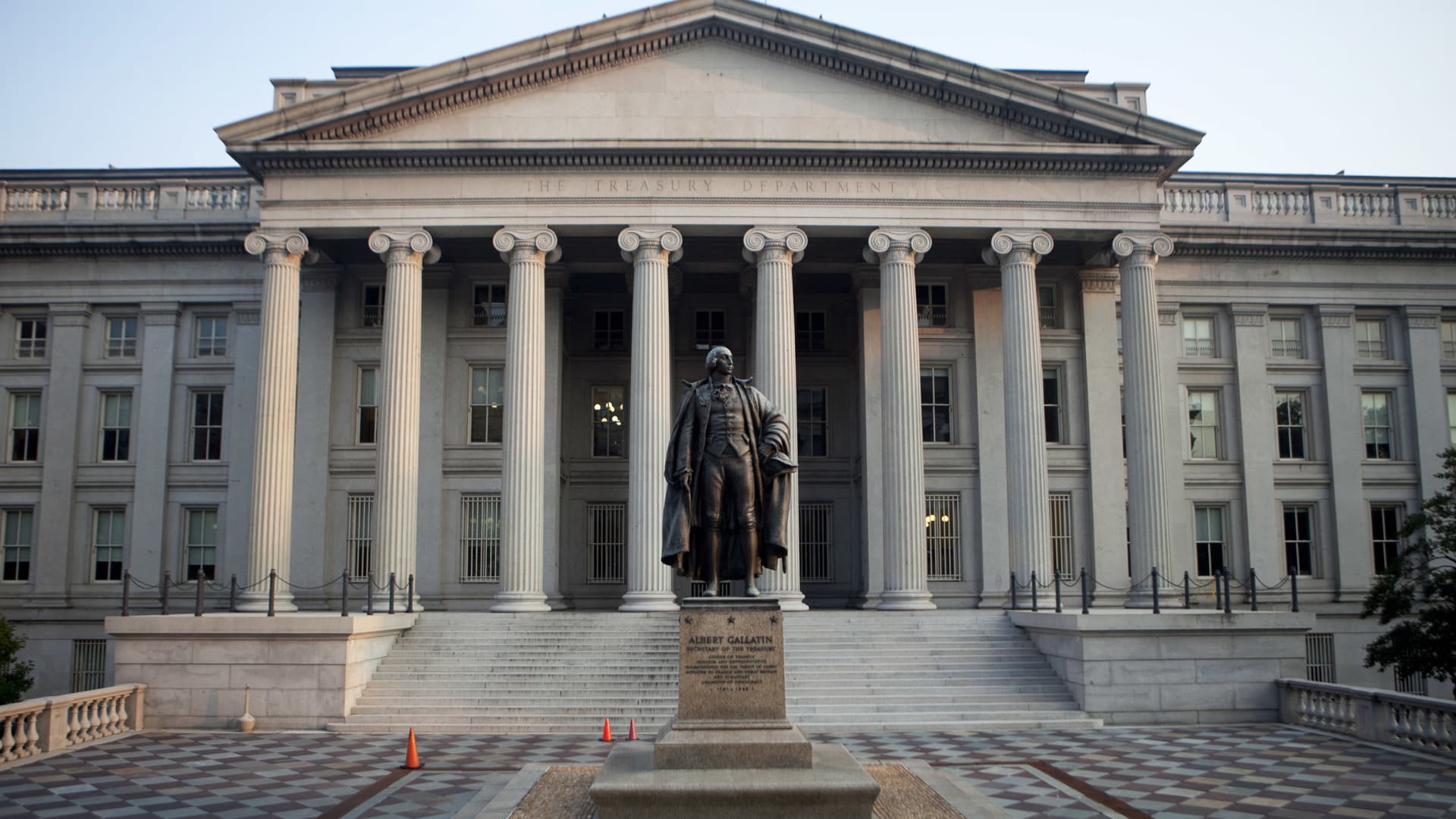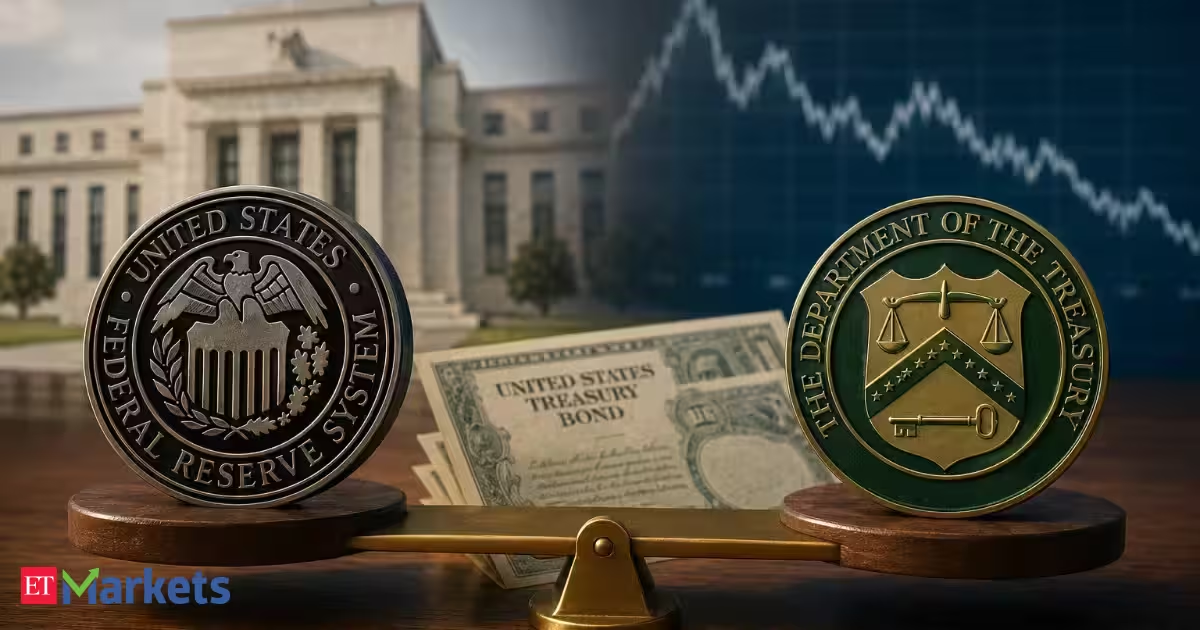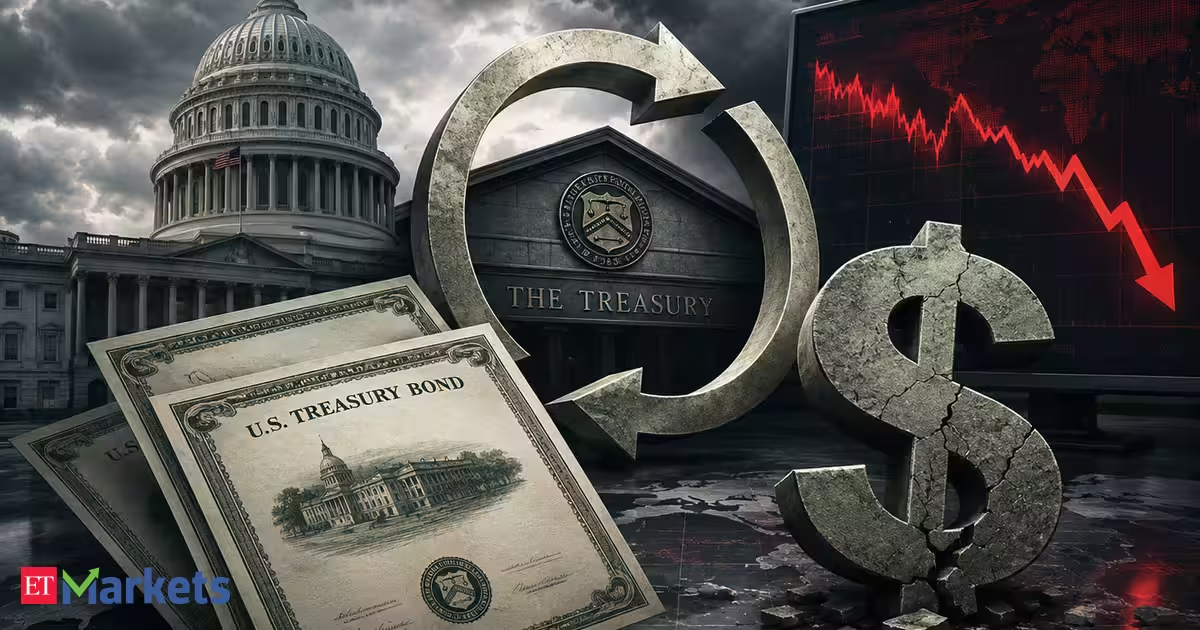
The US Treasury’s decision to expand purchases of older long-dated government bonds has reignited concerns in foreign-exchange markets that efforts to contain rising borrowing costs could eventually shift pressure onto the dollar, according to a report by Reuters.On Wednesday, the Treasury said it would at least double the maximum size of certain buyback operations to $4 billion. The purchases are aimed at older, less-liquid Treasury securities that have come under heavy selling pressure since late June. Treasury Secretary Scott Bessent subsequently indicated that the buyback could exceed $4 billion, while suggesting that the recent bond selloff had moved too far.According to the report, the move has prompted investors to question whether U.S. policymakers are prepared to allow long-term borrowing costs to rise to levels demanded by markets or whether they will increasingly intervene to limit the increase.Also Read | Global Market: KOSPI gains on chip boost; foreigners turn net buyersTreasury Intervention Comes Amid Rising Long-Term YieldsThe Treasury revived its bond-buyback programme in 2024 primarily as a tool for improving liquidity in older Treasury securities. However, the latest announcement has attracted greater attention because of its timing and expanded scale.The decision came outside the Treasury’s regular quarterly refunding schedule and shortly before a 20-year Treasury auction. That has led some investors to interpret the move as an effort to ease pressure on longer-term yields at a time when the U.S. bond market is facing several headwinds.Long-dated Treasury yields have climbed amid concerns over the U.S. fiscal outlook, heavy government debt issuance, geopolitical risks and uncertainty over the Federal Reserve’s future interest-rate path. The 30-year Treasury yield recently reached its highest level since 2007 as the Iran conflict intensified, while total U.S. public debt surpassed $40 trillion.The development has created a difficult policy choice. If authorities allow yields to rise freely, the government could face significantly higher borrowing and debt-servicing costs. But if policymakers take steps to suppress long-term yields, investors may demand compensation elsewhere, potentially putting pressure on the dollar.Dollar Faces New PressureSome currency investors are increasingly discussing the possibility that measures designed to keep Treasury yields contained could eventually weaken the U.S. currency.The concern is not necessarily about outright monetary financing, in which a central bank creates money to fund government spending. Instead, investors are focused on the possibility that policymakers could use bond buybacks, a greater reliance on shorter-maturity debt or other measures to reduce the amount of long-duration Treasury securities that private investors need to absorb.Such policies could shift part of the adjustment away from bond yields and toward the currency.The reaction in alternative assets has reinforced those concerns. Gold gained more than 3% following the Treasury announcement, while Bitcoin advanced sharply over a two-day period, reflecting increased interest in assets viewed by some investors as alternatives to traditional government debt and fiat currencies.Echoes of Earlier Market InterventionSome investors have compared the Treasury’s latest actions with previous attempts by U.S. policymakers to influence the shape of the government bond market.Deutsche Bank strategist George Saravelos has likened the potential impact to the Federal Reserve’s Operation Twist in 2011-12, when the central bank bought longer-dated securities while selling shorter-term debt in an effort to reduce longer-term borrowing costs.Reuters reported that Saravelos views the combination of Treasury buybacks and efforts to encourage foreign central banks to use Federal Reserve liquidity facilities rather than sell Treasury securities outright as a form of softer financial repression aimed at containing long-term yields.Other analysts have taken a less dramatic view. CIBC Capital Markets has characterized the latest episode as a relatively limited version of previous periods of dollar stress, arguing that the market reaction does not yet represent a major challenge to U.S. policymakers.Political Timing Adds to Market SpeculationThe timing of the Treasury’s intervention has also generated political speculation, particularly as the U.S. midterm elections approach.Lower long-term yields could help ease borrowing costs for households and businesses, including mortgage rates. That could provide political benefits for the Trump administration if elevated borrowing costs remain a concern for voters.Policymakers, however, face a delicate balancing act. An aggressive attempt to push yields lower could stimulate economic activity and potentially add to inflationary pressure, forcing the Federal Reserve to maintain or even raise interest rates.That outcome could undermine the administration’s efforts to achieve lower borrowing costs.Fiscal Concerns Remain the Bigger ProblemDespite the market debate over Treasury intervention, some strategists argue that the underlying fundamentals have not changed.The U.S. government continues to face a large fiscal deficit and a rapidly expanding debt burden, creating substantial financing requirements for the Treasury. At the same time, the U.S. economy continues to benefit from relatively strong productivity and corporate earnings growth.The report by Reuters stated that Standard Chartered’s Steve Englander believes those underlying economic strengths could continue to support the dollar despite concerns about fiscal policy and Treasury market intervention.The broader challenge for Washington is therefore becoming increasingly clear. Attempts to prevent long-term Treasury yields from rising too far could reduce immediate pressure in the bond market, but they may also raise questions about the attractiveness of U.S. assets and the future direction of the dollar.For currency and bond investors, the key issue is whether the Treasury’s expanded buyback programme remains primarily a liquidity-management tool or evolves into a broader effort to restrain long-term borrowing costs. The answer could determine whether the adjustment occurs through higher Treasury yields, a weaker dollar or some combination of the two.
US Treasury bond buybacks spark fresh fears over dollar weakness
The US Treasurys expanded bond-buyback programme has raised concerns that efforts to contain long-term borrowing costs could pressure the dollar. Rising yields, fiscal deficits and heavy debt issuance are intensifying market scrutiny. While some investors see echoes of earlier interventions, others view the move as limited. The policys longer-term currency impact remains uncertain.
895 words~4 min read