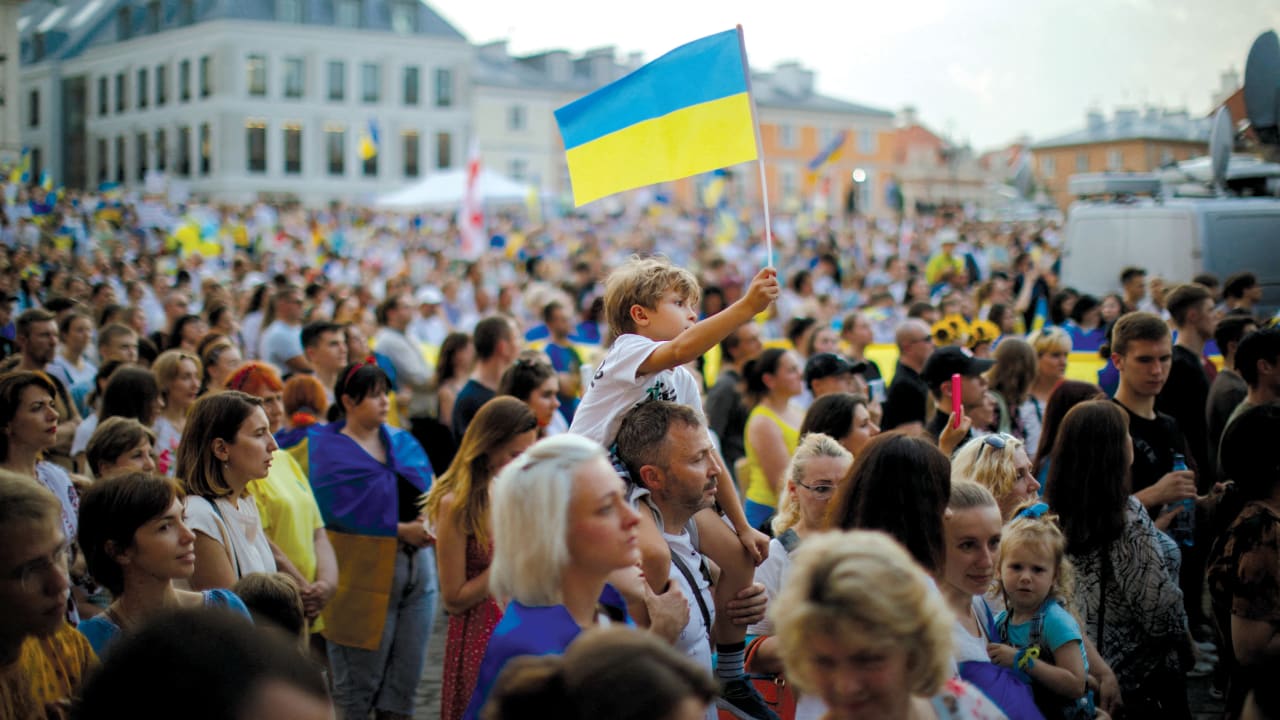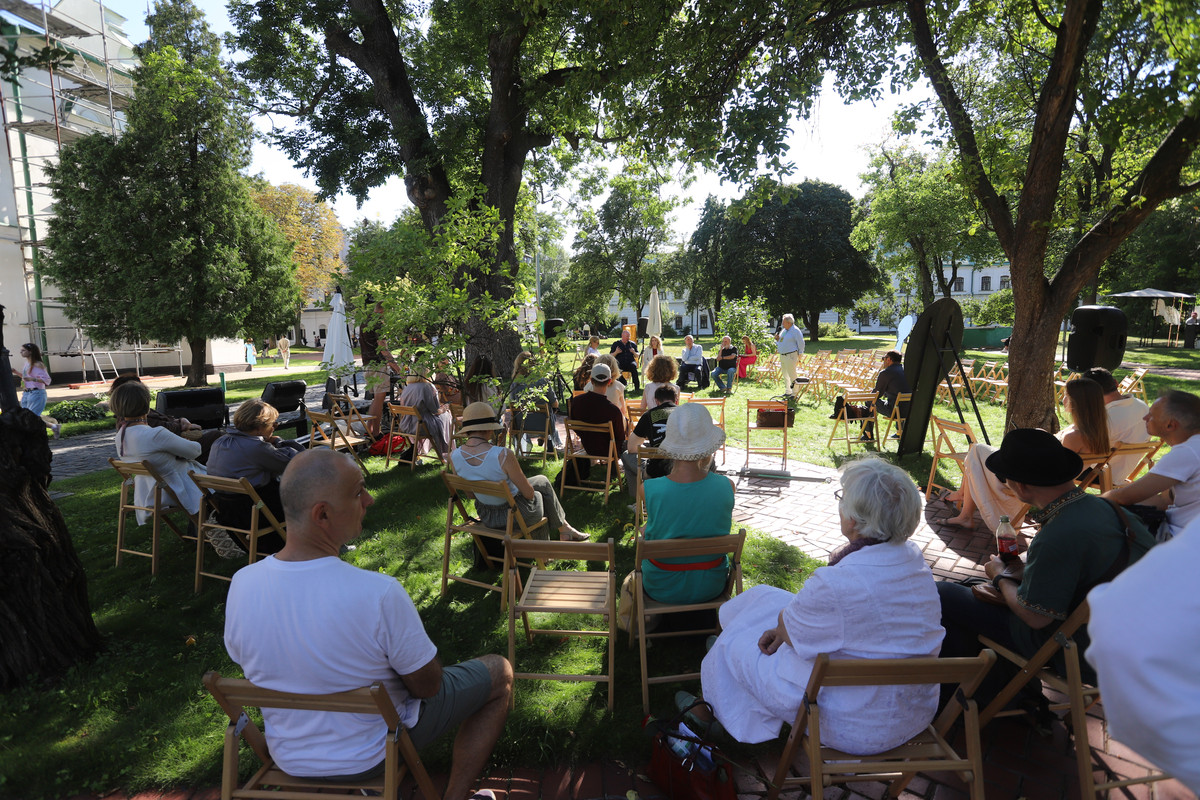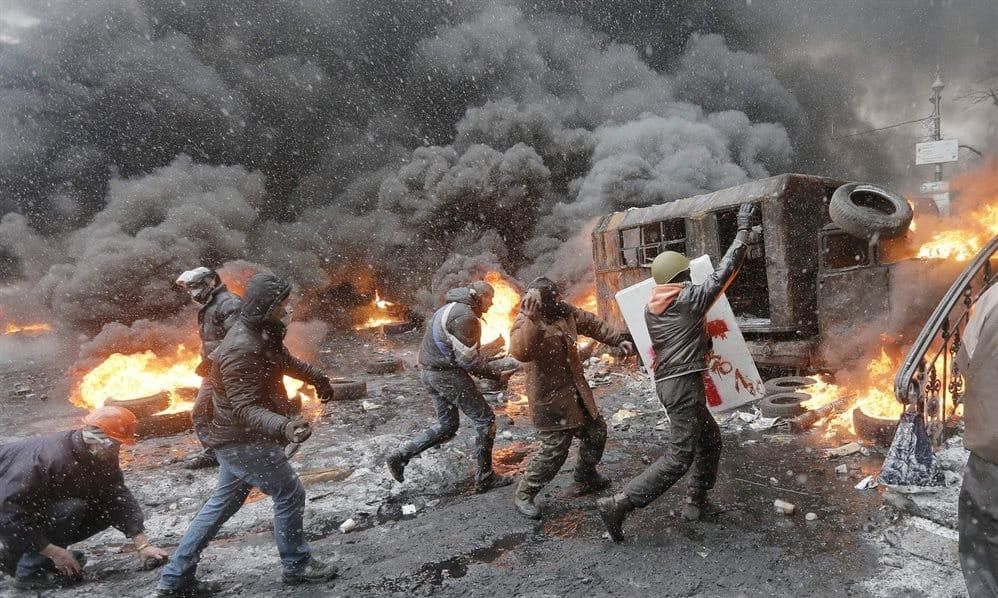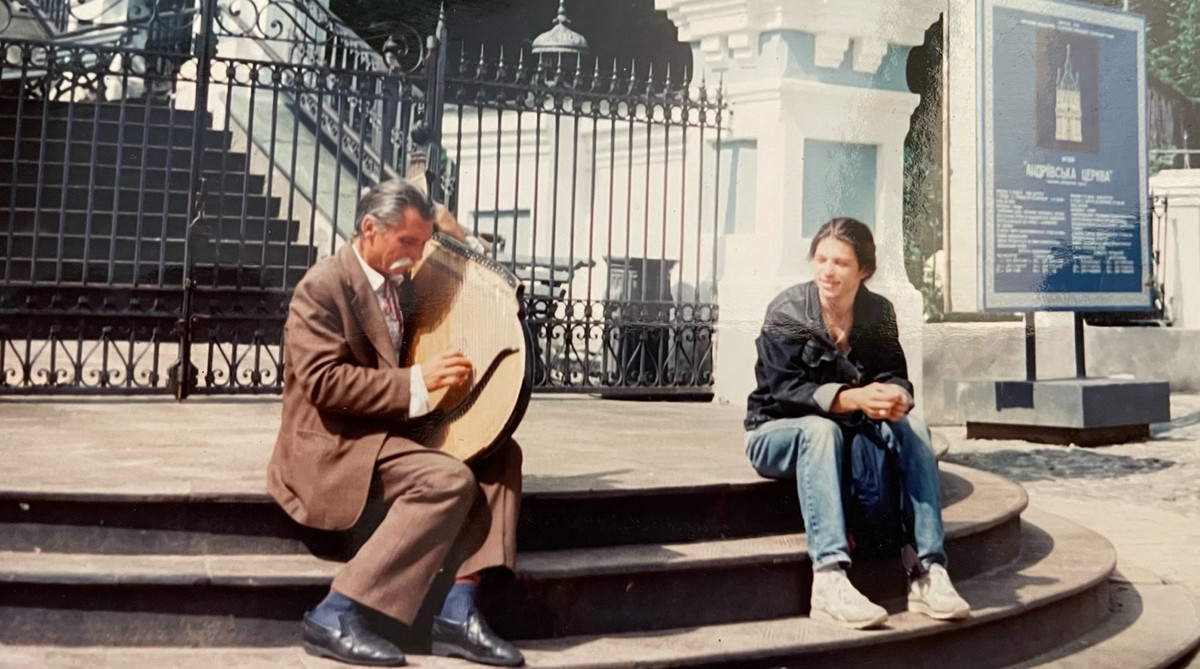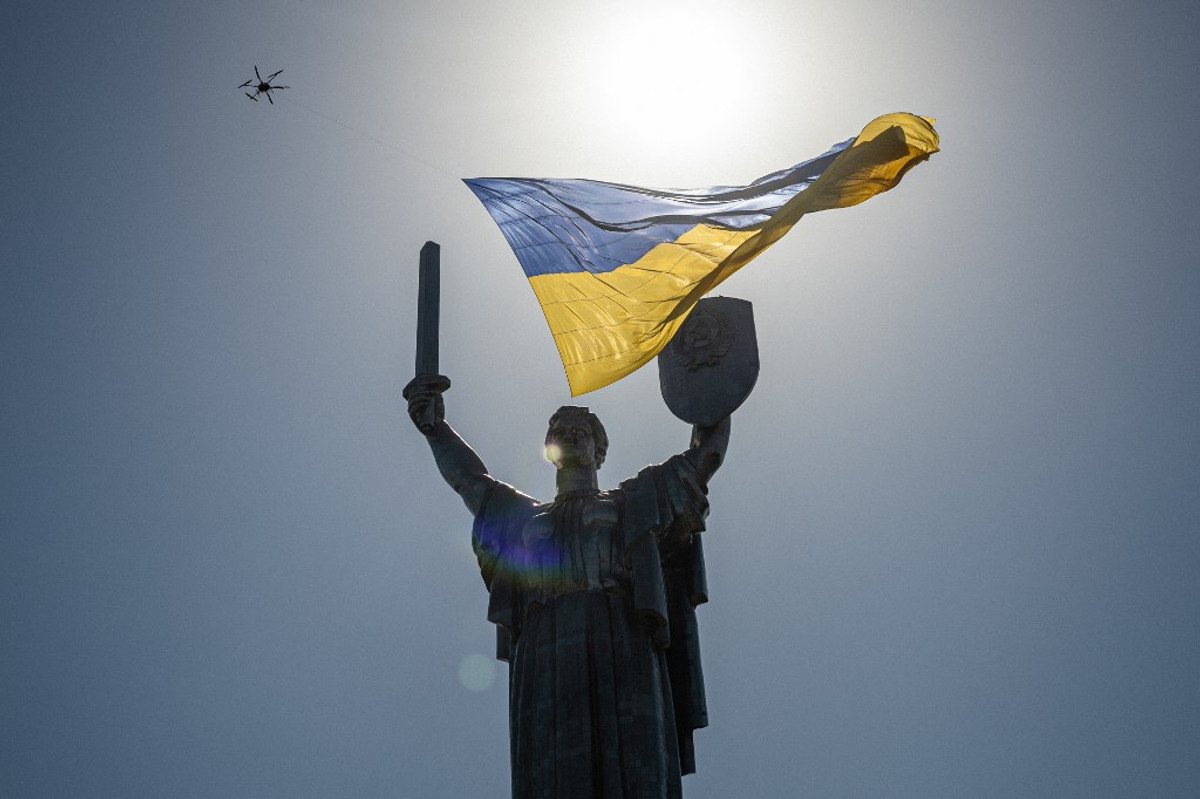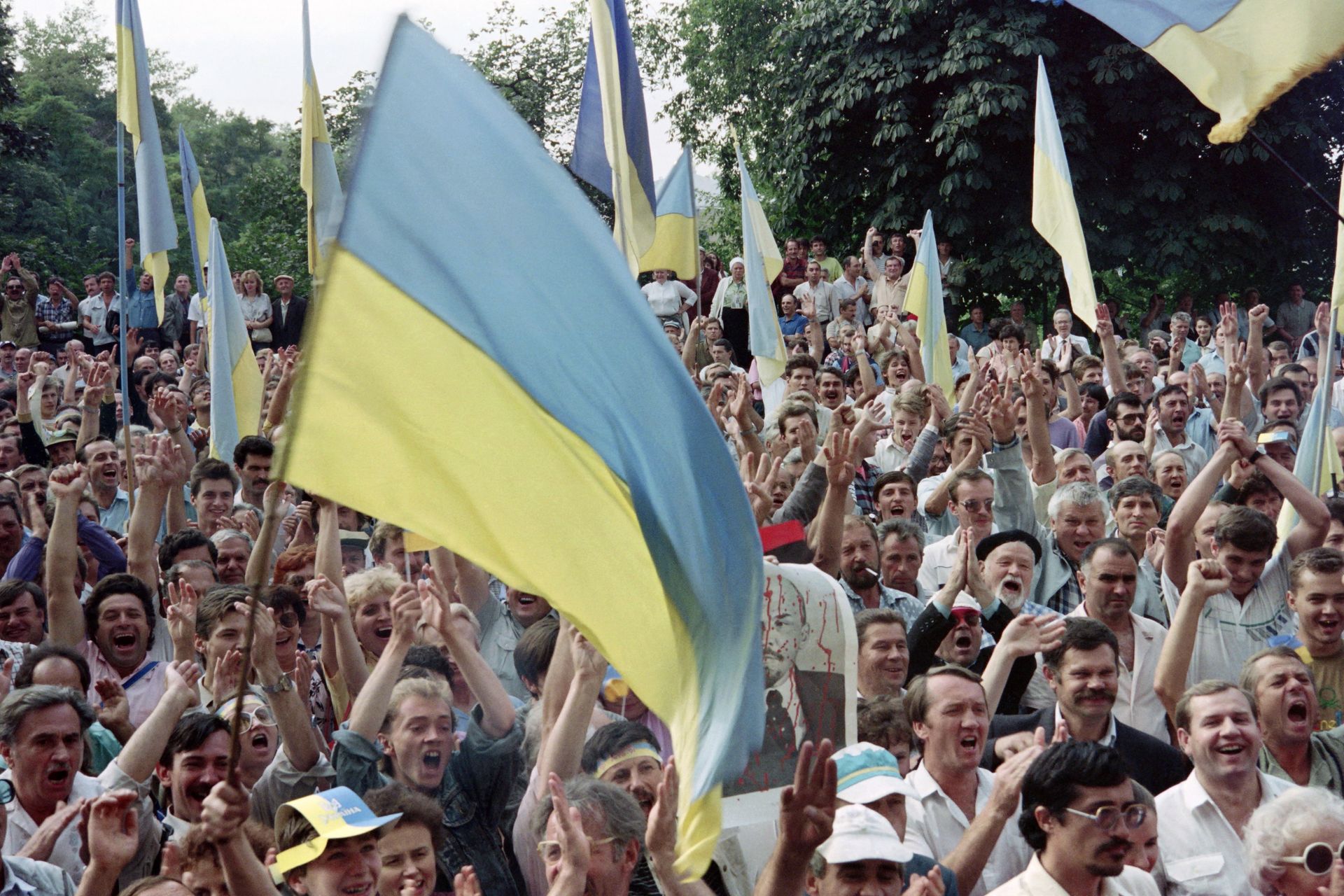
Ukrainians wave Ukrainian flags and celebrate Ukrainian independence in front of the Communist Party's central committee headquarters in Kyiv, Ukraine, on Aug. 25, 1991. (Anatoly Sapronenkov / AFP / Getty Images)Editor's note: Because both authors were direct participants in the events described, they are referred to by their first names — Nadia and Robert — throughout, to distinguish their individual roles and recollections.Neither the United States nor any other country recognized Ukrainian independence when, on Aug. 24, 1991, the Verkhovna Rada adopted its Act of the Declaration of the Independence of Ukraine.That fact is worth remembering. Why? Because passage of the Declaration reflected a shared calculation between Rukh (the Ukrainian democratic movement, not the political party formed later) and the Communist members who made up the majority of the Rada: Rukh wanted the political legitimacy that a popular vote would provide, while the Communists wanted a way out if the political winds in Moscow shifted in the months ahead.Since Dec. 1 had already been set as the date for Ukraine's first presidential election, the two votes were merged onto the same day. Thus, the Rada conditioned actual independence on a vote of the people of Ukraine on Dec. 1, 1991.On Wednesday, Nov. 27, five days before the referendum, President George H. W. Bush hosted a meeting in the Roosevelt Room of the White House with leaders of Ukrainian American organizations and Ukrainian churches; Robert, along with senior White House staff, was also in the room.At one point, the President said, "If Ukraine votes for independence, there are things I will want before we recognize Ukraine's independence."He then listed the conditions he would want from Ukraine: commitment to the principles of the Helsinki Final Act (CSCE); non-nuclear status and a commitment to nuclear nonproliferation — commitments already made in Ukraine's 1991 Declaration of Sovereignty, its Declaration of Independence, and the text of the December referendum itself; and Ukraine's adherence to the Conventional Forces in Europe Treaty and other military agreements.A meeting hosted by then-U.S. President George H. W. Bush with leaders of Ukrainian American organizations and Ukrainian churches in the Roosevelt Room of the White House, Washington, D.C., U.S., on Nov. 27, 1991. (Robert McConnell / Personal Archive)At one point, as Robert was taking notes on the President's pre-conditions to recognition of Ukraine's independence, Bush — who knew Robert from their years together in the Reagan Administration — turned to him and asked, "Bob, are you getting all this?"The President then turned to his National Security Advisor, Brent Scowcroft, and asked if anything else would be needed from Ukraine before the United States would recognize Ukraine's independence, to which Scowcroft replied, "No."Robert was shocked — the President had said, "If Ukraine votes for independence?" He had doubts?We certainly had no doubt that the referendum would pass overwhelmingly, as did many others who were following events on the ground in Ukraine.Among the reasons for our certainty was that we had been privileged to be eyewitnesses to and engaged in several key moments in events preceding Ukraine's declaration of independence and setting the date for the referendum.Nadia was in Ukraine on Jan. 21, 1990, and, along with the leadership of Rukh, participated in the incredibly successful, unbroken Human Chain that was an unbroken line of people standing together for 550 kilometers from Lviv to Kyiv.Members of the Ukrainian Youth Association carry a coffin bearing the USSR coat of arms and a poster reading "Kyiv against Moscow" during a rally in Kyiv, Ukraine, on Sept. 30, 1990. (Andrii Nesterenko / Global Images Ukraine / Getty Images)At the time, the Ukrainian flag was still illegal, but supporters had managed to smuggle enough fabric into Ukraine to sew hundreds upon hundreds of Ukrainian flags to cover the full length of the chain.When Nadia stepped out of the hotel Lebed in downtown Kyiv, she saw buses from Ivano-Frankivsk with people dressed in vyshyvanky and carrying the blue and yellow flags of Ukraine. They ensured Ukrainian flags were displayed along the entire Human Chain and throughout the city of Kyiv.Rukh's leadership had negotiated with the local authorities and the KGB to hold this rally.Several days after the Human Chain, Nadia met with Maria Drach, wife of Rukh's chairman, Ivan Drach, in their apartment.When Ivan Drach arrived, Maria reported a message he had received from the authorities that, in summary, was something like, "You have had your rally, it was time to take down the Ukrainian flag," which hung in front of Rukh's building.Drach's response was, "We'll think about it," and, eventually, the flag never came down.Both of us were in Kyiv in March 1990 for the first Verkhovna Rada elections under Soviet rule, in which candidates from outside the Communist Party were permitted to run.The day after the election, we were invited to take part in the meeting of the Executive Council of Rukh, comprised of Members of the Communist Party, like Rukh's chairman, Ivan Drach, and one of Rukh's founders, Dmytro Pavlychko, as well as Mykhailo Horyn, Head of the Secretariat, and a member of the Helsinki Group who endured years of imprisonment in the Soviet Gulag.Ukrainians demonstrate in front of the Communist Party's central committee headquarters in Kyiv, Ukraine, on Aug. 25, 1991. (Anatoly Sapronenko / AFP / Getty Images)The Executive Council decided to issue a statement blaming the Communist Party for a litany of wrongs committed against the people of Ukraine, and to include the formal resignation from the Communist Party of all the Council's members who still belonged to it.We watched as one by one they came forward to affix their signatures to the statement. Among the statement's concluding comments were "We can only serve the truth by leaving the Communist Party" and the claim that "imperialist chauvinism remains the soul of the Communist Party of the Soviet Union."Several days later, after members of the Executive Council who had been voting in distant oblasts returned and signed the statement, it was presented and read at a press conference.This was dramatic — this was still the Soviet Union. As those signatures were placed on the document, no one knew what the consequences might be.In 1990 and 1991, we both made multiple trips to Ukraine and attended meetings with several key organizations that helped secure the referendum vote, including Mothers of Children of Chornobyl, Mothers of Afghan Veterans, youth and Jewish organizations, and Church leaders.However, the most important of these meetings was with the incredibly strategic Rukh leadership. During these travels, Robert gave a nationally televised keynote speech at the Second Conference of Rukh in September 1990.Participants of a Rukh Movement rally carry Ukrainian flags and a portrait of poet Taras Shevchenko as they march from the Republican Stadium to the Verkhovna Rada building in Kyiv, Ukraine, on Sept. 30, 1990. (Andrii Nesterenko / Global Images Ukraine / Getty Images)Nadia participated in several meetings of the Rukh women from Kyiv who were gathering humanitarian supplies and traveling to villages across Ukraine to prepare for the changes that were coming, including the referendum vote.Rukh ran a large, deliberate get-out-the-vote effort ahead of the December 1, 1991, referendum — mobilizing an estimated 10,000 to 20,000 activists, who went door-to-door and held town-hall-style meetings with those still skeptical.Rukh strategically used the time between the Proclamation of Independence and the Referendum to travel across Ukraine, speaking with people and answering their questions, promoting the democracy and freedom that would come with such independence.However, let us return to President Bush's doubts about the December referendum receiving majority support for independence.We — the U.S.-Ukraine Foundation — had opened an office in Kyiv in 1990 and not only were we confident the referendum would pass overwhelmingly, but we were also in close communication with Irene Jarosevich — with whom Nadia had worked on the Commemoration of Millenium of Christianity in Ukraine in 1988, and who was then serving as Rukh's international media representative — and with Jon Gunderson, who had arrived to serve as Consul General for the United States in Kyiv (later Charge d'Affaires ad interim with Ukrainian independence).Both saw things the same way we did. How could the President have doubts?
Drama, determination, and risk: Remembering how Ukraine's independence unfolded
Editor's note: Because both authors were direct participants in the events described, they are referred to by their first names — Nadia and Robert — throughout, to distinguish their individual roles and recollections. Neither the United States nor any other country recognized Ukrainian independence when, on Aug. 24, 1991, the Verkhovna Rada adopted its Act of the Declaration of the Independence of Ukraine. That fact is worth remembering. Why? Because passage of the Declaration reflected a shar
1,944 words~9 min read