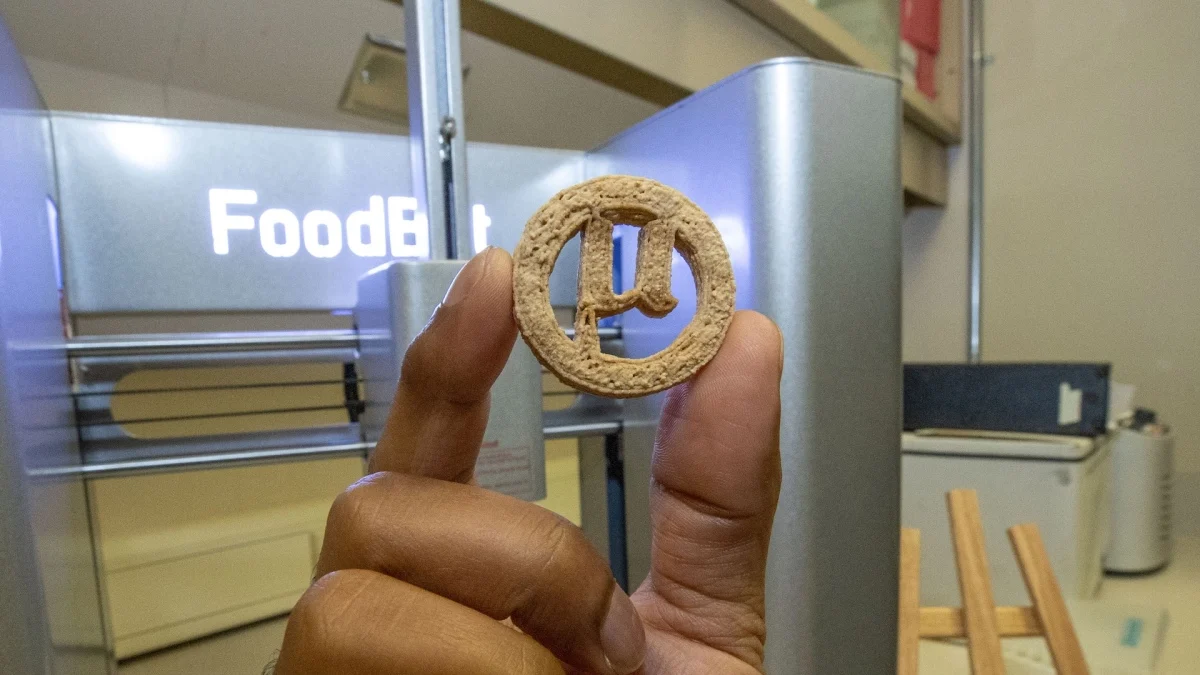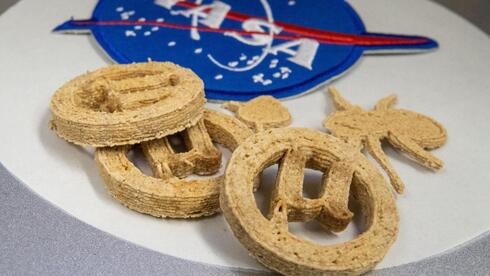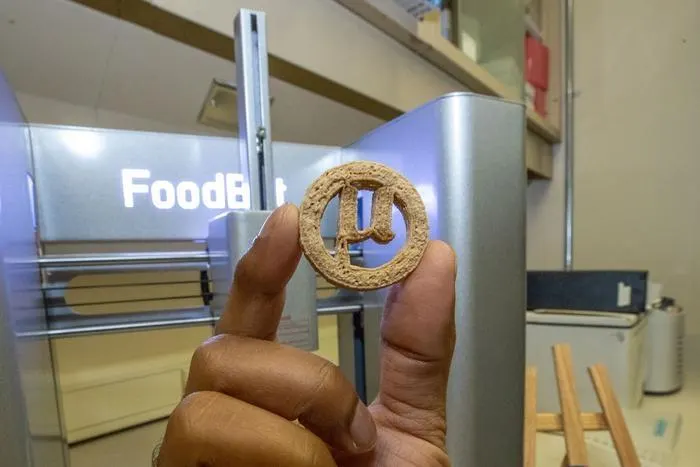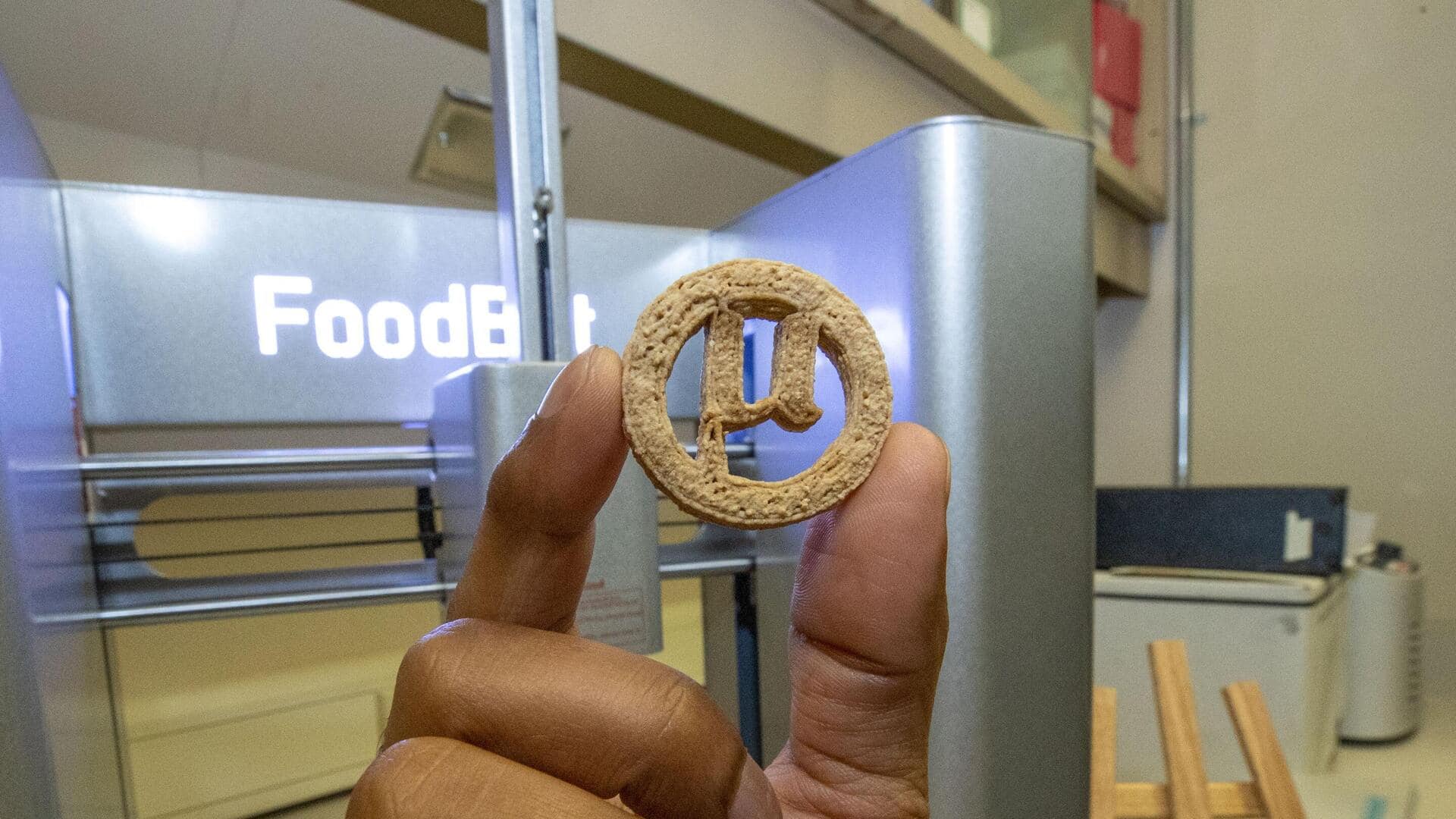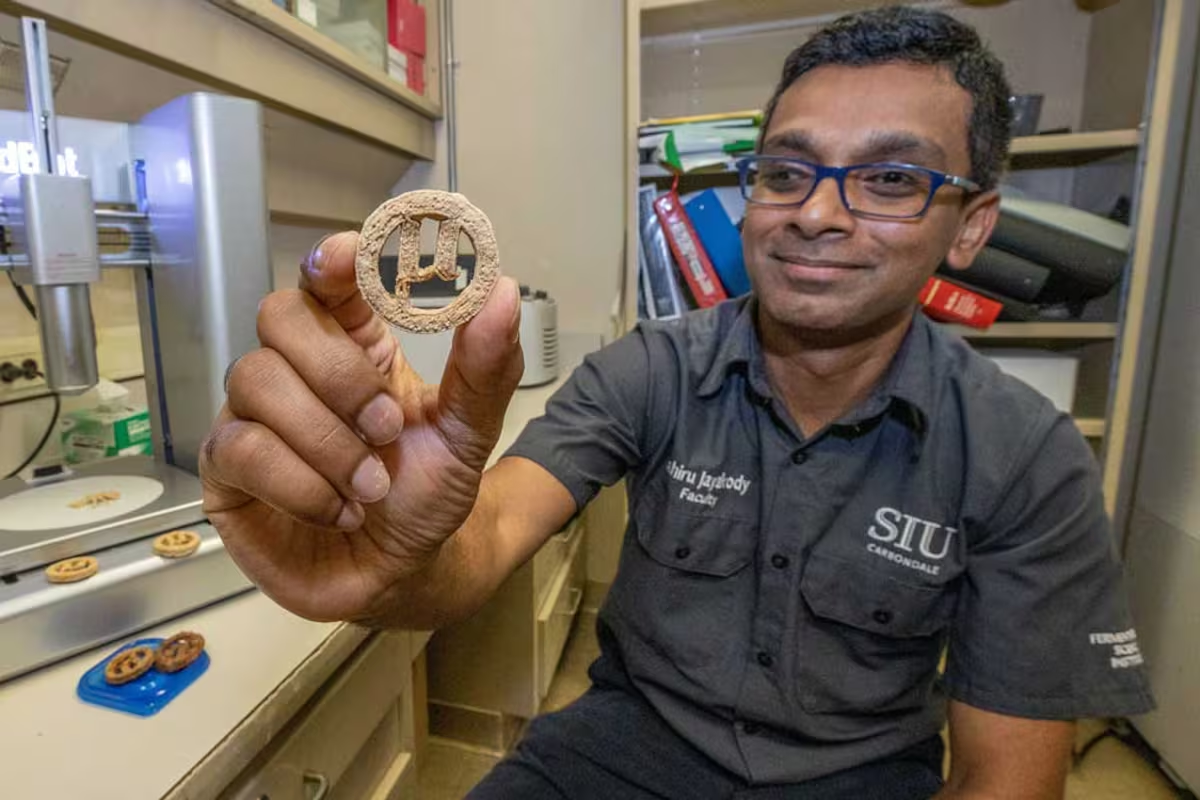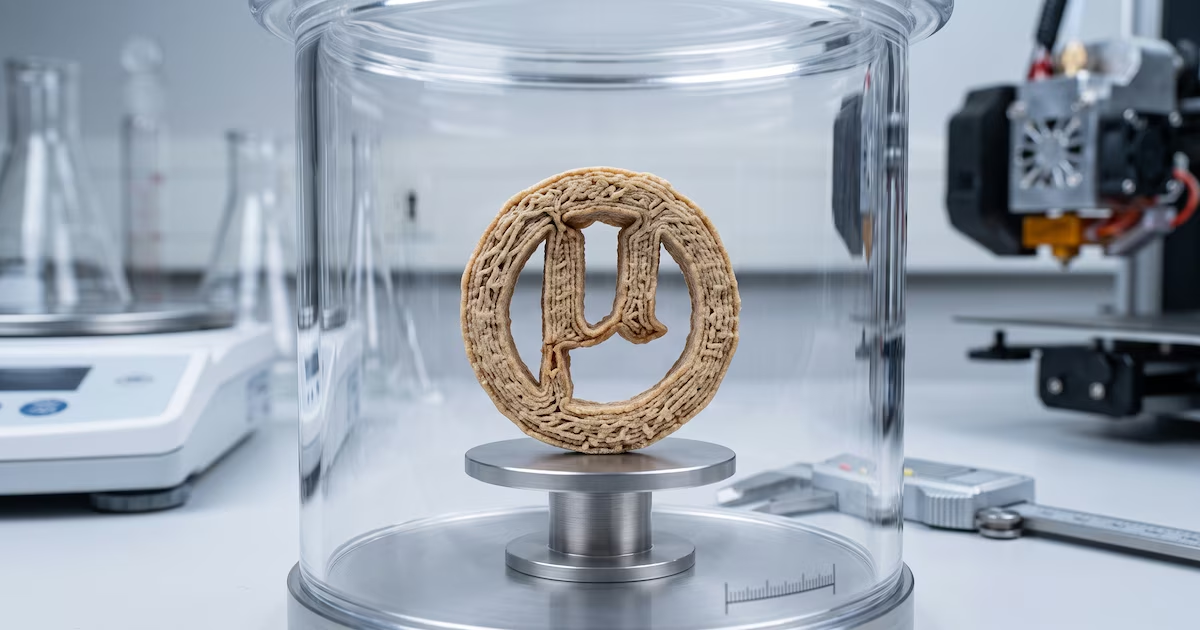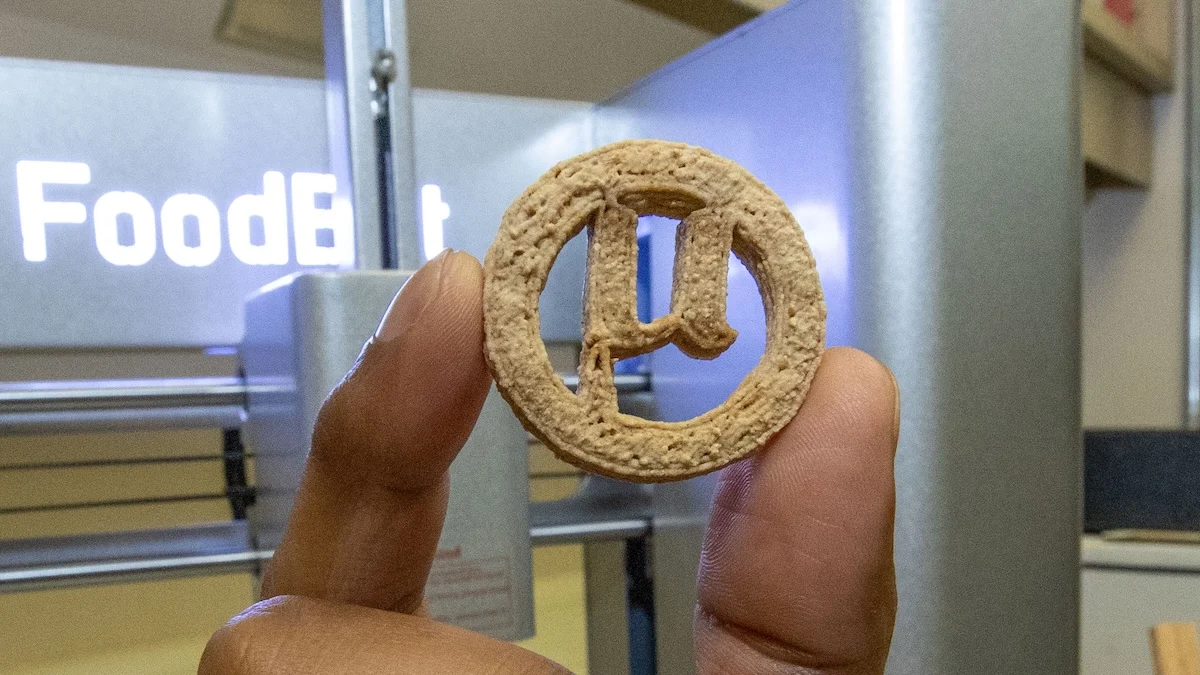
Would you eat a cookie that was made from plastic?Technically, we're all ingesting an ungodly amount of plastic already, in the form of micro- and nanoscopic particles in our food.But now, researchers from Southern Illinois University (SIU) Carbondale are trying to get us to eat the stuff on purpose. It takes the form of cookies they call µBites, which, if you know your scientific notation symbols, is pronounced "microbites".They may sound even less appetizing than all the bugs we might have to eat in the future, but these cookies have undergone a whole lot of processing to make them (theoretically) safe to eat, nutritious, and hopefully tasty.The research started as part of NASA's Deep Space Food Challenge, and the team has just presented it at a symposium organized by the American Chemical Society."Converting (biodegradable) food-grade plastic into food is feasible," Lahiru Jayakody, microbiologist at SIU, told ScienceAlert."The µBites system is a tunable and portable device that integrates all necessary components… These units could be deployed in submarines or disaster relief vehicles to produce on-demand, on-site food. "The process is particularly suited for using carbon waste in extreme environments such as deserts, the Arctic, or the Antarctic to make food – and yes, potentially one day on Mars or the lunar surface."
Scientists Just Made A Cookie Out of Recycled Plastic 'Slurry'. Welcome to 2026
Would you eat a cookie that was made from plastic? Technically, we're all ingesting an ungodly amount of plastic already, in the form of micro- and nanoscopic particles in our food.
930 words~4 min read