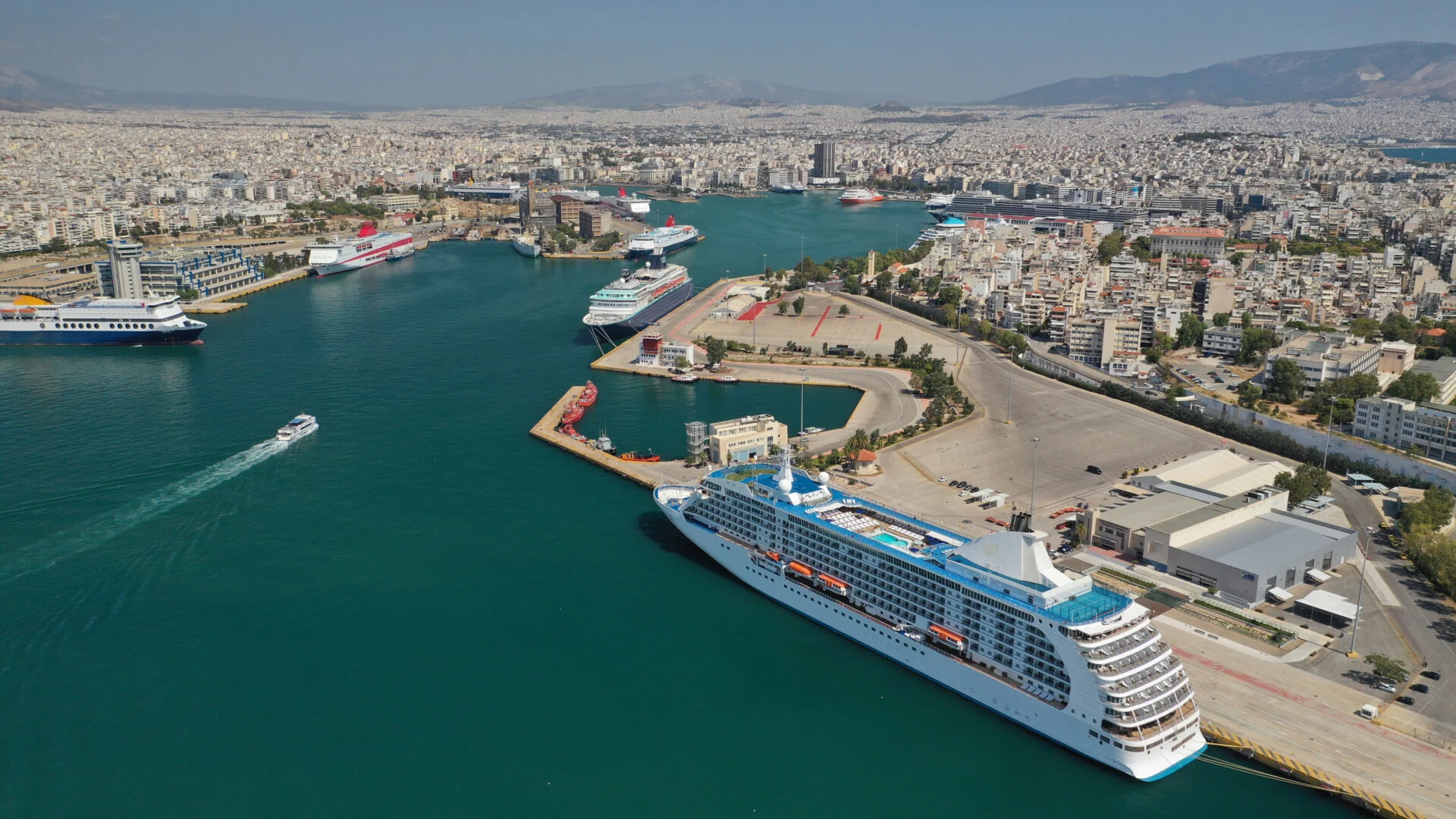
The decline in cruise passenger traffic in the first half of 2026 is raising concerns, with industry executives linking the drop to higher passenger fees and, more broadly, the way the sector’s growth is being managed.The picture is particularly revealing at the port of Piraeus, which acts as a catalyst for the development of cruise tourism at other Greek destinations as well. Greece’s largest port recorded a double-digit decline in both cruise ship calls and passenger traffic, as well as in homeporting activity.As market executives told Naftemporiki, this is the first time this year that a decline in cruise passenger arrivals has been recorded, as higher costs are ultimately being passed on to passengers, with cruise packages now being offered at higher prices. The conflict that erupted in parts of the Arabian Gulf following the start of the confrontation between Iran and the United States does not appear to have benefited Greece. A significant share of cruise passengers diverted from those destinations and expected to visit Greece ultimately headed to Turkey and Western Mediterranean countries instead. Some cruise companies are also reassessing their itineraries and turning to alternative destinations, as the cost of calling at and disembarking passengers at high-demand islands such as Mykonos and Santorini has increased. It is recalled that in Mykonos and Santorini, the cruise passenger fee stands at 20 euros per passenger per port of disembarkation during the summer season, from June 1 to September 30. In April, May and October, the fee stands at 12 euros, while from November through March it is reduced to 4 euros per passenger.The picture in PiraeusData available to Naftemporiki show a notable decline in cruise activity at the port of Piraeus during the first half of 2026. Cruise ship calls fell to 369, from 449 in the corresponding period of 2025, a decrease of 80 calls, or 17.8%. A similar trend was recorded in passenger traffic. Cruise passengers passing through the port of Piraeus totaled 341,080 in the first half of 2026, compared with 405,766 in the same period of 2025. This represents a loss of 64,686 passengers, or a 15.9% decline. The decline was even sharper in homeporting, meaning the use of Piraeus as the base port and the starting and ending point of a cruise.The number of passengers embarking on cruise ships in Piraeus fell to 226,902 in the first half of 2026, from 283,793 a year earlier. The difference amounts to 56,891 passengers, representing a 20.0% decline. A similar picture emerged in disembarkations. Passengers who completed their cruise in Piraeus and disembarked, including to continue their journey by air to their home countries, totaled 220,297 in the first half of 2026, compared with 274,742 in 2025. This represents a decline of 54,445 passengers, or 19.8%.Industry executives have expressed concern over the trend, stressing that the decline at Piraeus extends beyond the boundaries of Greece’s largest port. In their assessment, homeporting at Piraeus can act as a driving force for the further development of cruise tourism at other Greek destinations, as a significant share of itineraries that begin or end in Attica subsequently include calls at Greek island ports.
Cruise passenger traffic falls in first half of 2026, raising industry concerns
The picture is particularly revealing at the port of Piraeus, which acts as a catalyst for the development of cruise tourism at other Greek destinations as
554 words~3 min read