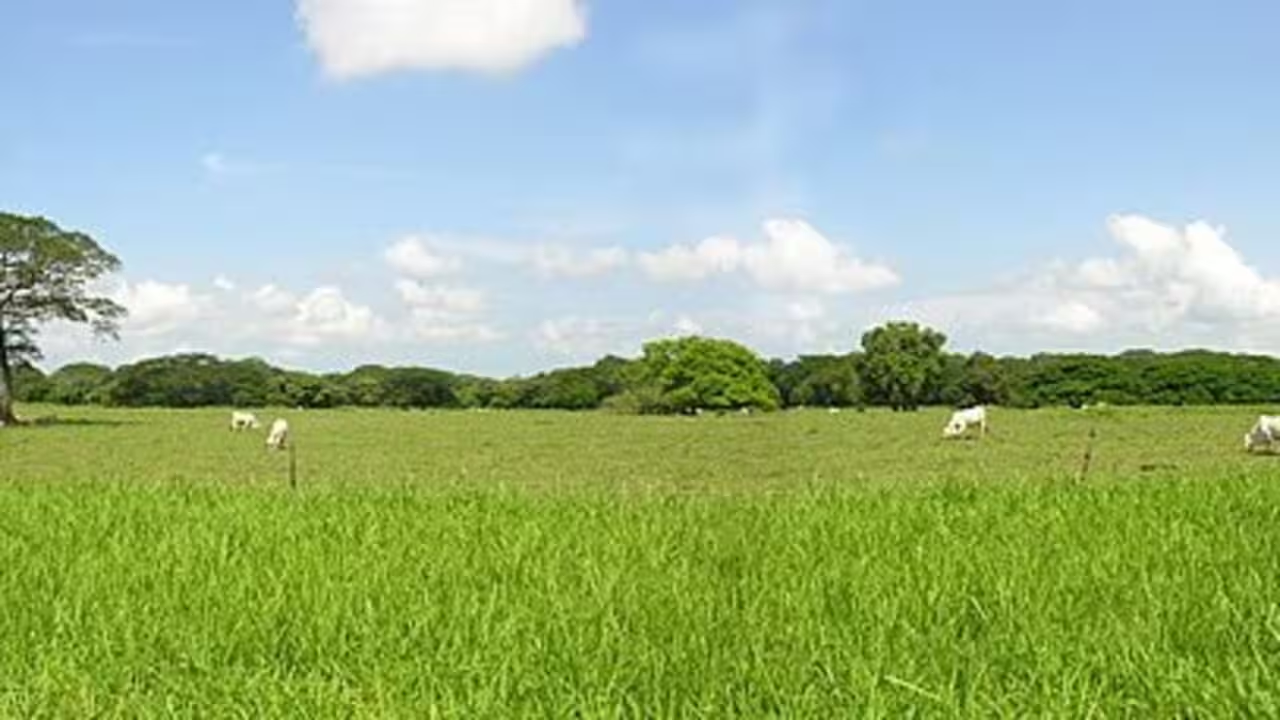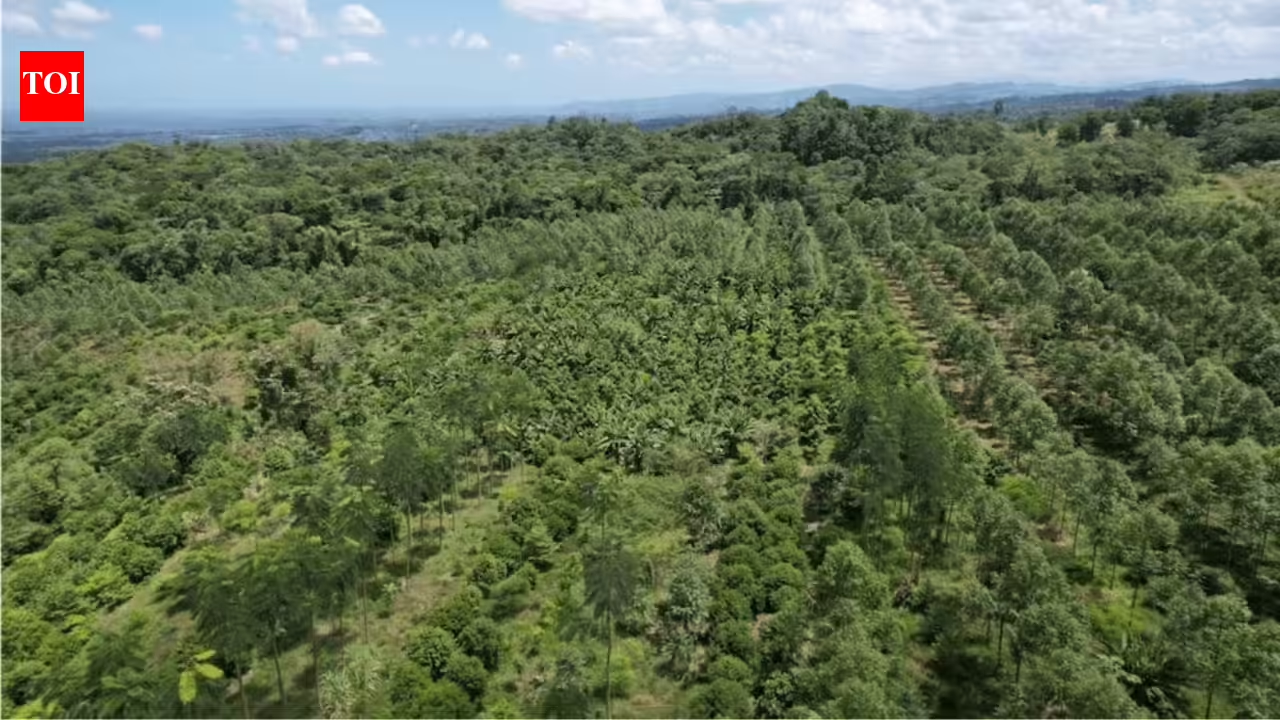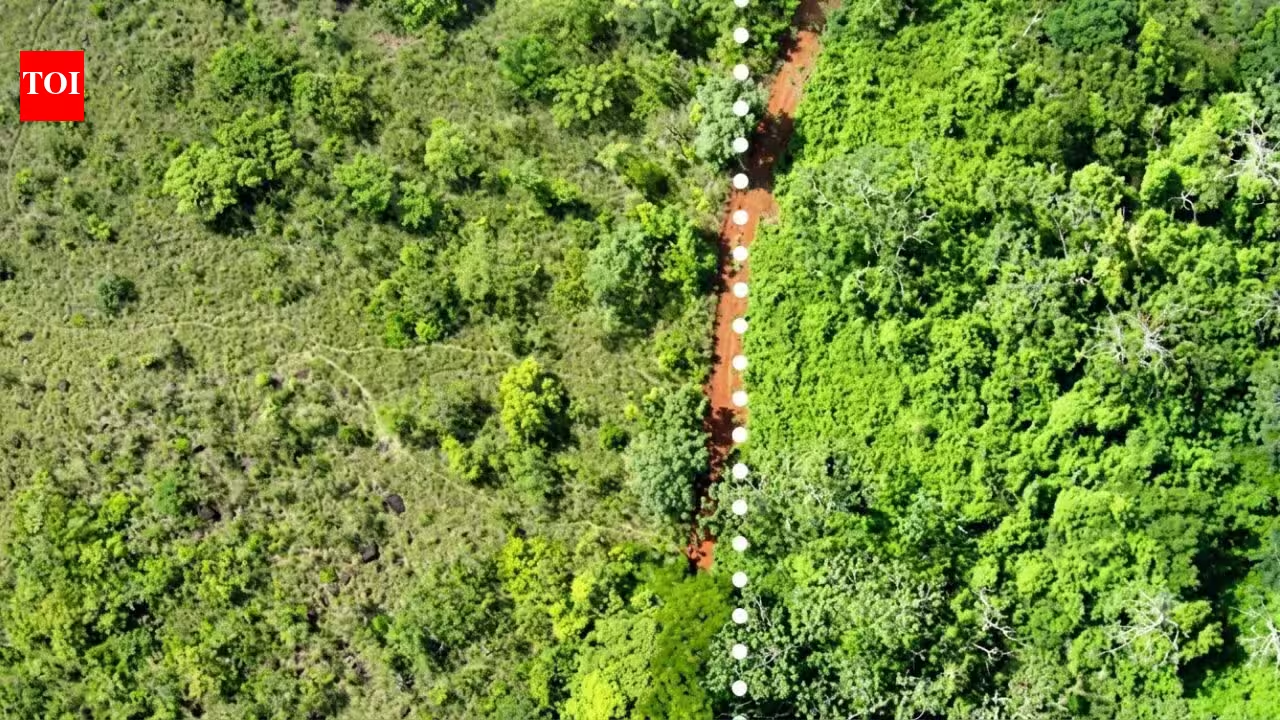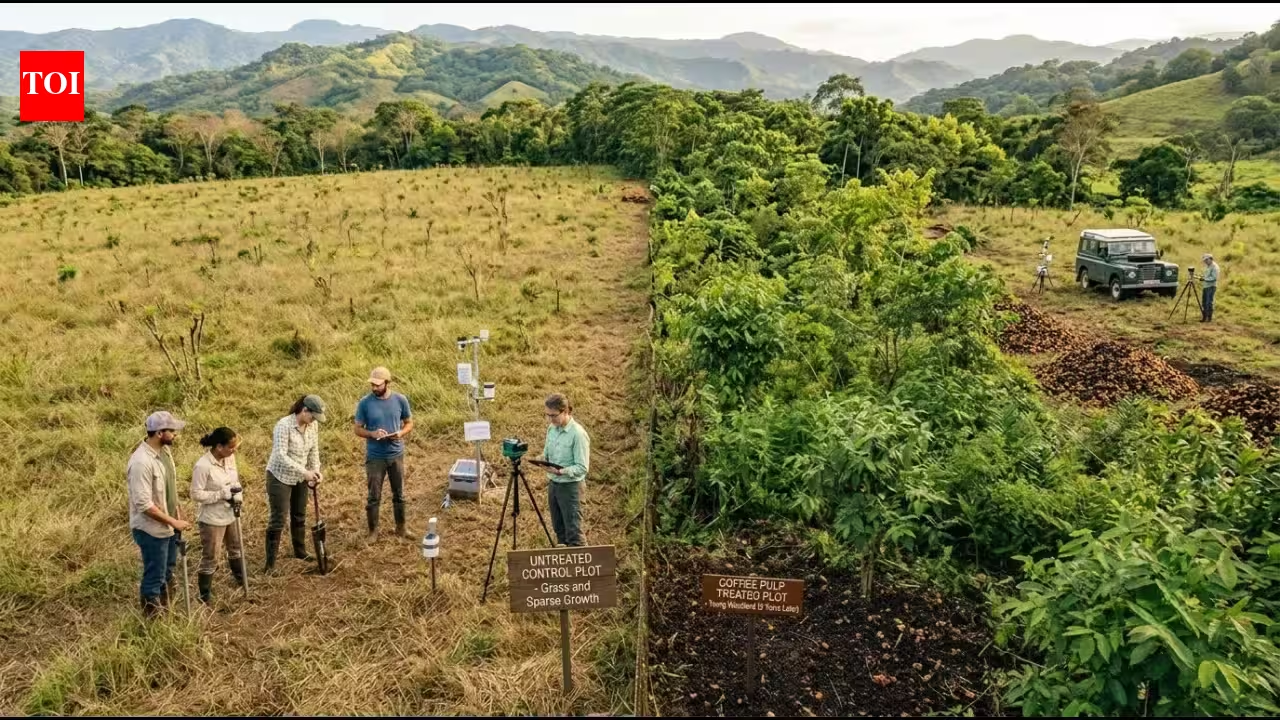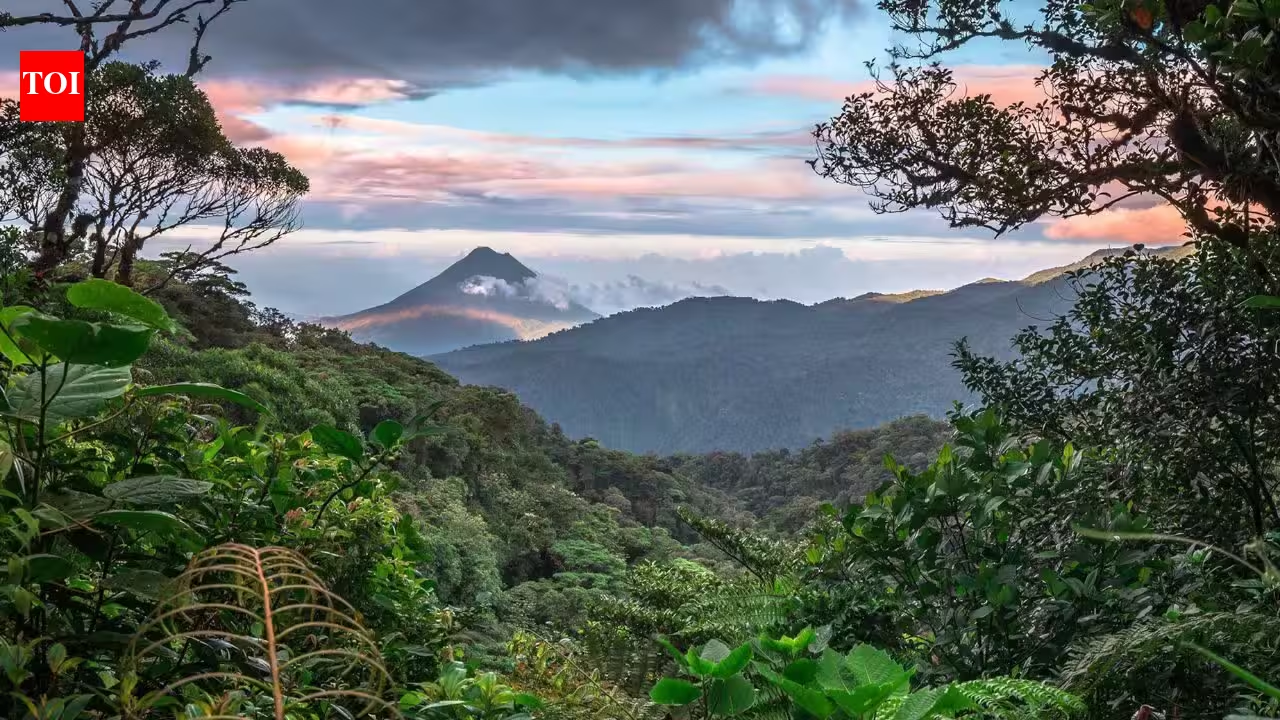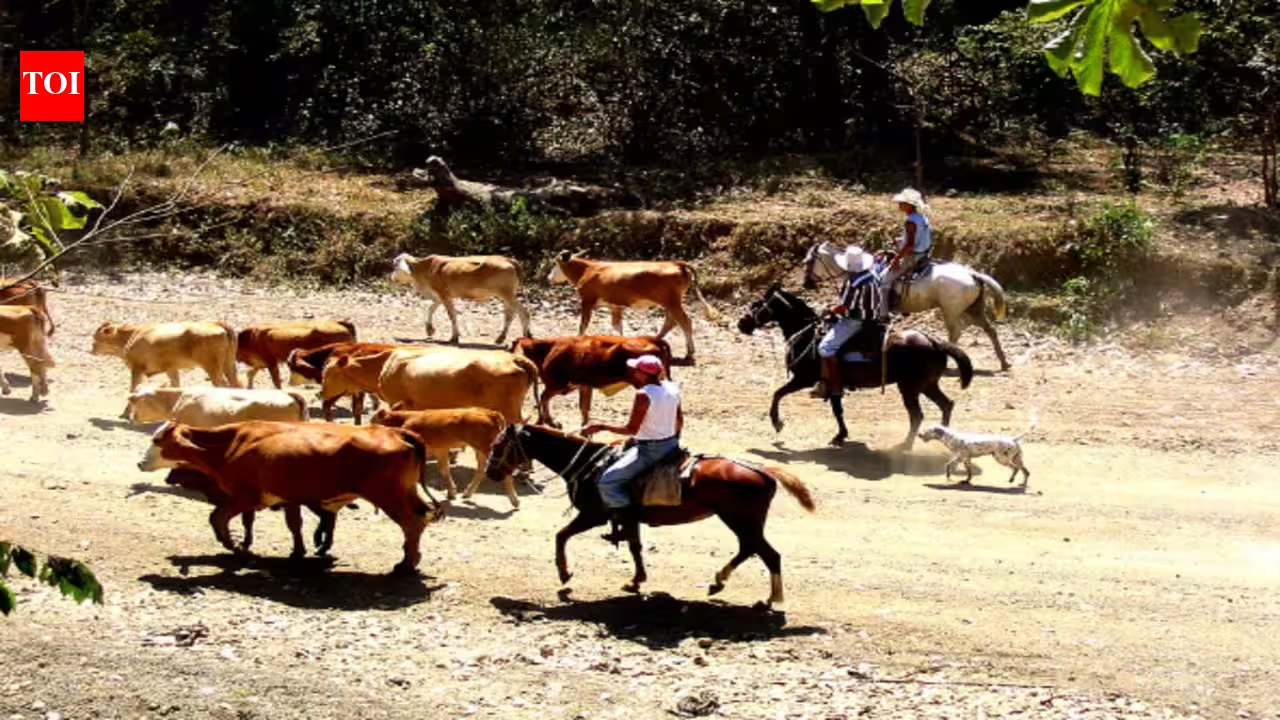
Herding cattle in Costa Rica. Image credits: Wikimedia CommonsIn 1993, ecologist Diane Firestone bought a stretch of exhausted pasture near Dominical on Costa Rica's Pacific coast. The soil was thin, the grass patchy, and the forest that had once covered the property was down to a few scattered tree lines after decades of cattle grazing. More than three decades later, the 145-acre farm that is now the Firestone Center for Restoration Ecology contained 20% primary forest and an additional 69% of secondary forest, as documented on Pitzer College’s site.A farm constructed after deforestationThe history of this farm mirrors broader national trends: across Costa Rica, forest was cleared for pasture through the 20th century, and by the mid-1980s forest cover had fallen to about 40.8% before later recovery efforts began. The settlers started deforesting the area in the early 20th century to create pastures, and by 1972 there were just a few patches of intact forests left. Costa Rica’s forest cover fell from about 59.5% in 1960 to 40.8% in 1986 during a period of extensive deforestation, before beginning to recover, as documented in Analysis of the forest cover of Costa Rica Between 1960 and 2013.Three decades of active restorationAfter buying the ranch in 1993, Firestone spent more than a decade actively restoring the land rather than simply abandoning it and letting nature recover on its own, an approach that can make a significant difference, as described in Pitzer College’s account of the Firestone Center’s history. Passive regeneration of abandoned pasture can take years, especially when nearby seed sources are scarce or invasive grasses compete with seedlings. Firestone's active management and the farm’s proximity to an existing wildlife corridor likely helped the land recover as fully as it did. In 2005, the ranch was donated by Firestone to Pitzer College, establishing the Firestone Center for Restoration Ecology.Why secondary forests regenerate so quicklyThe rapid regeneration in that case is not unique to the land owned by Firestone. It follows a larger trend that has been noted in the tropics. A 2016 Nature study, Biomass resilience of Neotropical secondary forests, analysed secondary-succession data from 45 forest sites and about 1,500 plots across the Neotropics. It found that aboveground biomass recovery after 20 years averaged 122 Mg per hectare, corresponding to a net carbon uptake of 3.05 Mg C ha⁻¹ yr⁻¹, 11 times the uptake rate of old-growth forests. Recovery after 20 years varied 11.3-fold across sites, while aboveground biomass took a median of 66 years to reach 90% of old-growth levels.The study also notes that more than half of the world's tropical forests are not old-growth but naturally regenerating forests, a large proportion of which are secondary forests. The authors highlight the importance of secondary forests for carbon uptake and restoration in human-modified tropical landscapes. The findings provide broader context for the regeneration documented at the Firestone Center, although the study does not assess the Costa Rican property itself.Part of a bigger biodiversity corridor, Firestone’s farm recovered as part of a larger conservation landscape. It lies within the Savegre Biosphere Reserve, added to UNESCO’s World Network of Biosphere Reserves in 2017, a region documented to contain about 20% of Costa Rica’s plant species, 54% of its mammals, and 59% of its birds. The property borders the Hacienda Barú reserve.Interpreting the dataPrimary forest accounts for 20% of the property and secondary forest for an additional 69%, meaning that 89% of the site is now covered by these two forest types. Pitzer College notes that the property was once an overused cattle ranch and has undergone more than a decade of active restoration.
In 1993, ecologist Diane Firestone bought a worn-out Costa Rica cattle ranch; decades later, it held 20% primary forest and 69% secondary forest
In 1993, ecologist Diane Firestone bought a stretch of exhausted pasture near Dominical on Costa Rica's Pacific coast. The soil was thin, the grass patchy, and the forest that had once covered the property was down to a few scattered tree lines after decades of cattle grazing.
598 words~3 min read