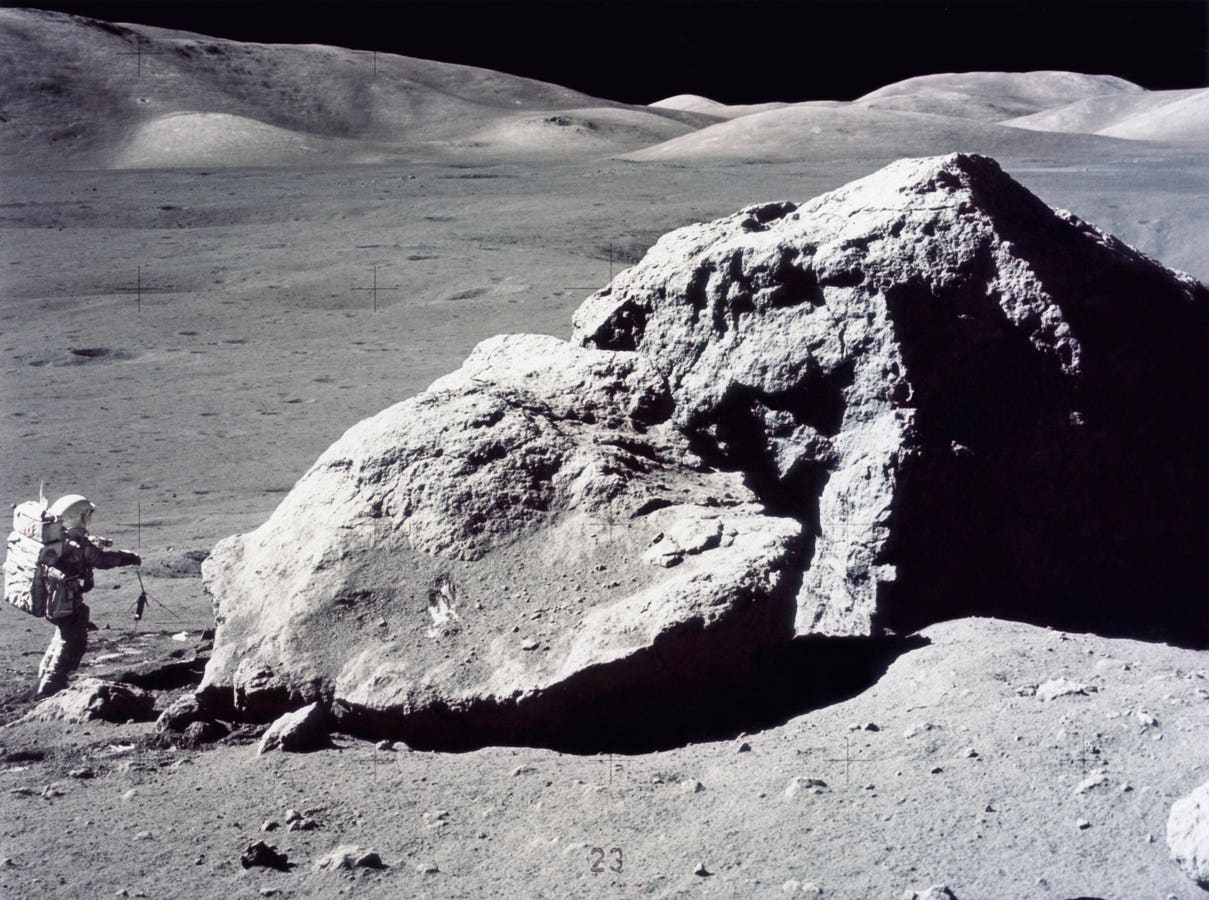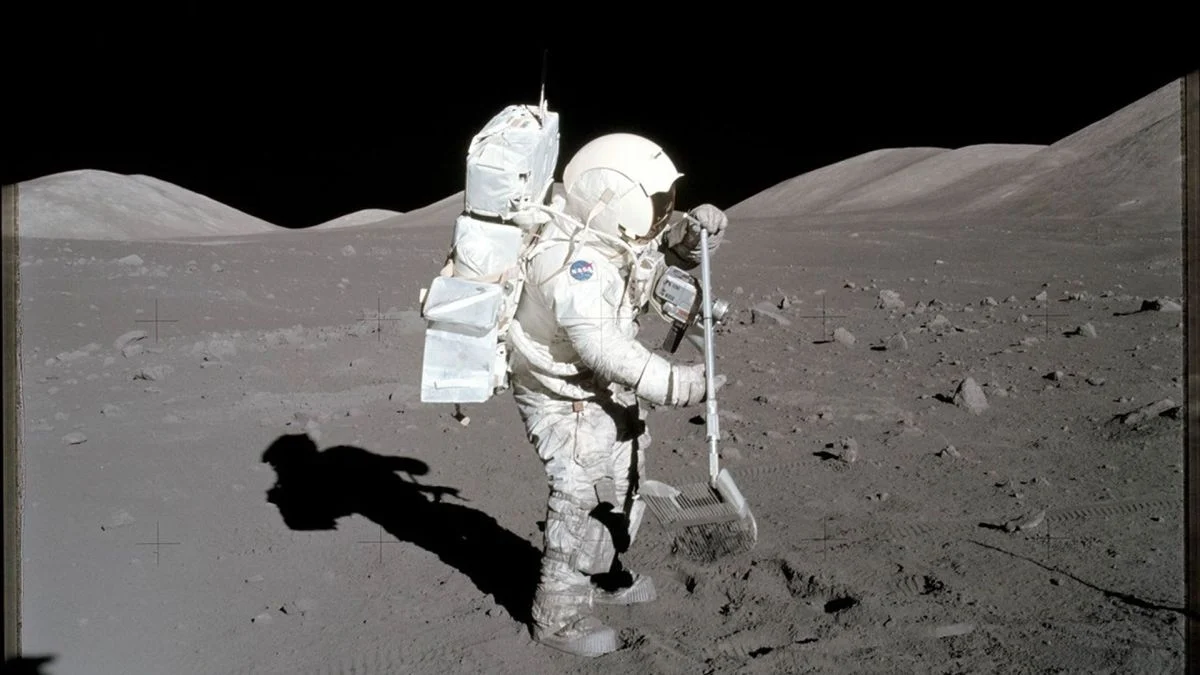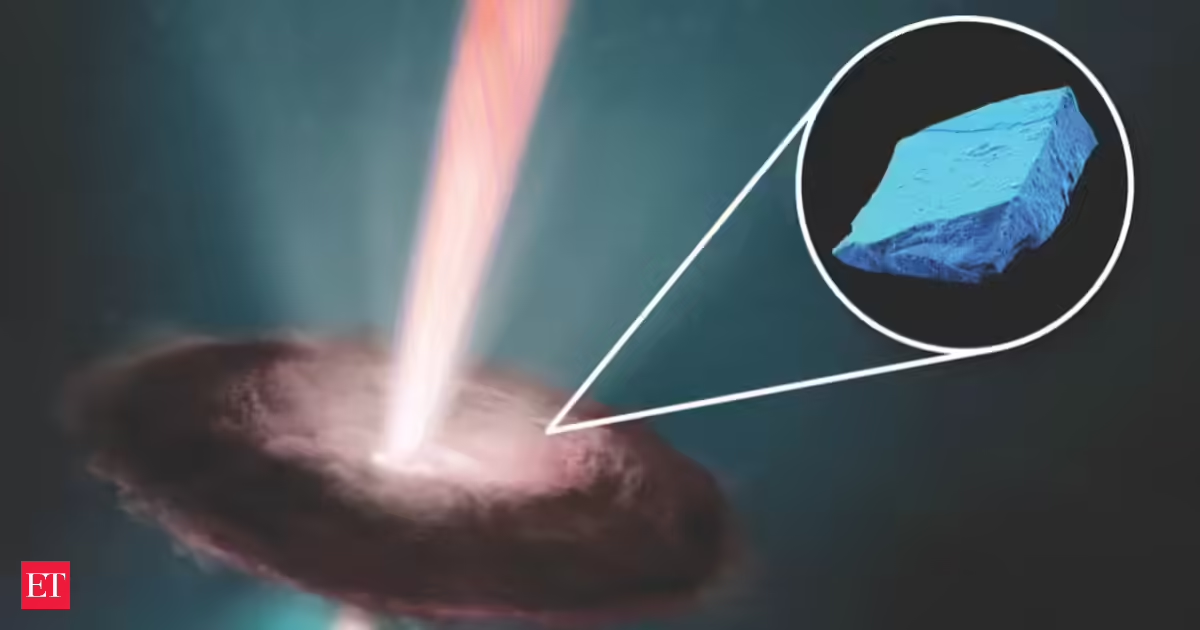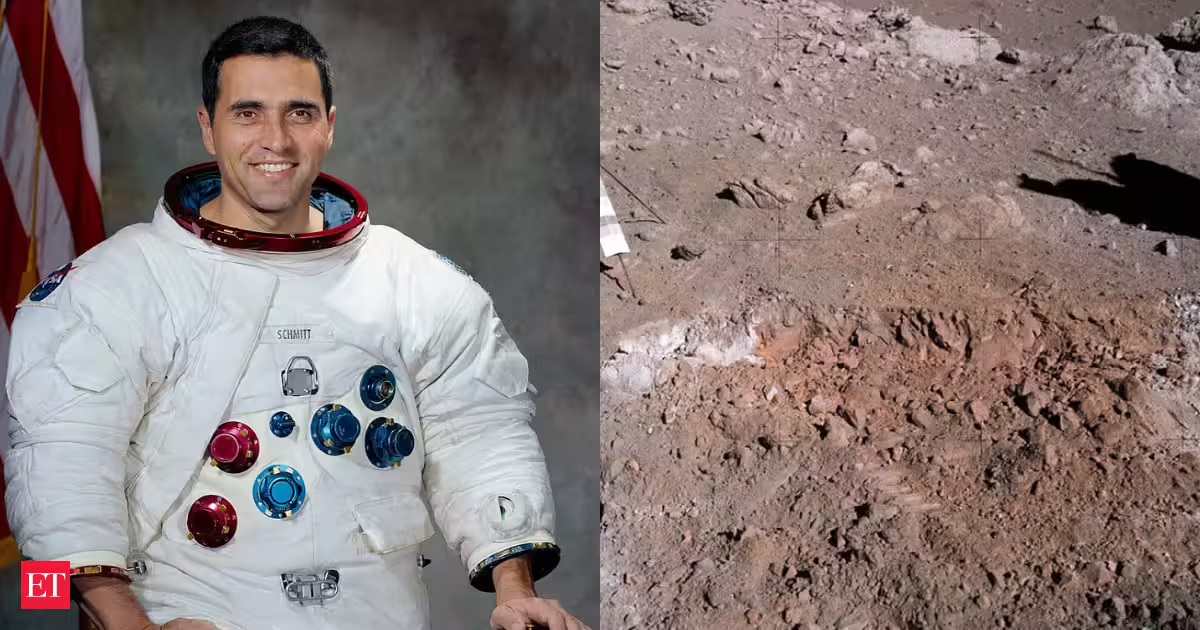
In 1972, Apollo 17 astronaut Jack Schmitt suddenly shouted, “There is orange soil!”: It contained tiny glass beads from ancient lunar fire fountainsSynopsisDuring the Apollo 17 mission, astronauts stumbled upon intriguing orange soil at Shorty Crater, revealing a treasure trove of microscopic glass beads created by ancient volcanic activity on the Moon. Contemporary studies of these samples have unveiled hidden insights about past lunar eruptions, while also illuminating the possible presence of water ice deposits on our celestial neighbor, showcasing the enduring mysteries of our lunar exploration.Listen to this article in summarized formatThe Apollo 17 astronaut, Harrison "Jack" Schmitt, and the orange lunar soil that rewrote what scientists knew about the Moon's volcanic past. Image Credits: NASA/JSC/Arizona State University via Wikimedia CommonsOn December 12, 1972, during Apollo 17's second moonwalk at Shorty Crater, astronaut-geologist Harrison "Jack" Schmitt spotted something odd underfoot and called out, "There is orange soil!" according to a NASA History Office account of the mission published in News & Notes. Commander Eugene Cernan checked it out personally and agreed it was real. This exchange was recorded in the mission audio logs and led to the discovery of tiny beads of volcanic glass that had been lying on the Moon for billions of years.A find nobody expectedApollo 17 launched from Kennedy Space Center at 12:33 a.m. EST on December 7, 1972, the only Apollo mission ever launched at night. The landing took place four days later in the valley of Taurus-Littrow. Schmitt, a trained geologist, and Cernan were studying Shorty Crater when Schmitt noticed that the soil had turned orange-red. He quickly dug a trench across the rim of the crater and pushed a core tube to collect samples below the surface level, the NASA account notes. The astronauts worked quickly because their oxygen supply was limited.Up close, the "orange soil" is really thousands of tiny glass beads, each formed in an ancient lunar fire fountain. Image Credits: NASA via Wikimedia CommonsWhat the orange soil turned out to beBack on Earth, scientists examined the material. The orange color was due to a huge number of microscopic glass spheres less than one millimeter in diameter that were present in the lunar soil. The beads formed when magma erupted from deep within the Moon during fire-fountain eruptions similar to those seen in Hawaiian volcanoes, according to the same account. The color of these glass beads depends on the amount of iron and titanium they contain, and some beads turned black due to devitrification, in which the glass slowly crystallizes.Fifty years of lost colorFor decades, photographs of the trench appeared dull and pale, not the bright orange Schmitt remembered. Old film and early digital scans, historians note, didn't capture the real colors. Schmitt teamed up with researcher Ronald Wells to fix this with modern photo-editing software, adjusting the color channels bit-by-bit. It took several rounds of fine-tuning before Schmitt approved the corrected image. Similar orange-red-black patches also appeared in photos taken from lunar orbit by crewmate Ron Evans, suggesting that these volcanic deposits are more widely spread across the Moon than scientists first thought.New instruments, old rocksScientists are still finding surprises more than 50 years after the discovery. A study published in Icarus in June 2025, led by scientists at Brown University and Washington University in St. Louis, investigated the Apollo 17 beads using a NanoSIMS ion microprobe that was not invented until after 1972. According to Space.com, physicist Ryan Ogliore commented that his team had an instrument they could never have imagined back then when the samples were discovered. As per the study, there is an extremely thin coating over these beads, less than 100 nanometers thick, formed due to the condensation of gases during cooling down of the beads. They identified surface features called micromounds and blebs, which reveal how gas pressure changed over just seconds during the eruptions. The study also found that black beads, unlike orange beads, contained notable zinc-sulfide crystals, a difference researchers say points to a shift in vapor-deposition conditions between the two phases of eruption.Scientist-astronaut Harrison Schmitt collects lunar samples during Apollo 17's second moonwalk at the Taurus-Littrow landing site. Image Credits: NASA Eugene Cernan via Wikimedia CommonsConfirmed by NASA's own recordsThe complete chemistry of the orange soil, officially called sample 74220, is listed in NASA's official Lunar Sample Compendium, compiled by the Johnson Space Center curator's office. The analysis confirms the material is unusually rich in titanium and low in silica compared to most rocks on Earth, a finding consistent with the original Apollo-era analysis.Why it still mattersThese little glass beads might be related to another even greater mystery. Researchers note that the release of volatile substances like water from these volcanic episodes could be one contributing source of lunar water, alongside the comets and meteorite impacts widely thought to have delivered most of the ice found at the lunar poles. With Artemis II complete and NASA preparing for Artemis III, decades-old Apollo samples continue to yield new findings as scientists use better tools.The bottom lineA single surprised shout on the lunar surface in December 1972 led to the discovery of volcanic glass beads that showed the Moon had once been volcanically active, not the cold, silent place it appears to be today. More than 50 years later, those orange beads are still yielding new information.Read More News on(Catch all the US News, UK News, Canada News, International Breaking News Events, and Latest News Updates on The Economic Times.) Download The Economic Times News App to get Daily International News Updates....moreless
In 1972, Apollo 17 astronaut Jack Schmitt suddenly shouted, “There is orange soil!”: It contained tiny glass beads from ancient lunar fire fountains
In December 1972, Apollo 17 astronaut Jack Schmitt discovered orange soil on the Moon, revealing volcanic glass beads that suggest the Moon was once volcanically active. This groundbreaking find has implications for lunar geology and the presence of water on the Moon.
918 words~4 min read