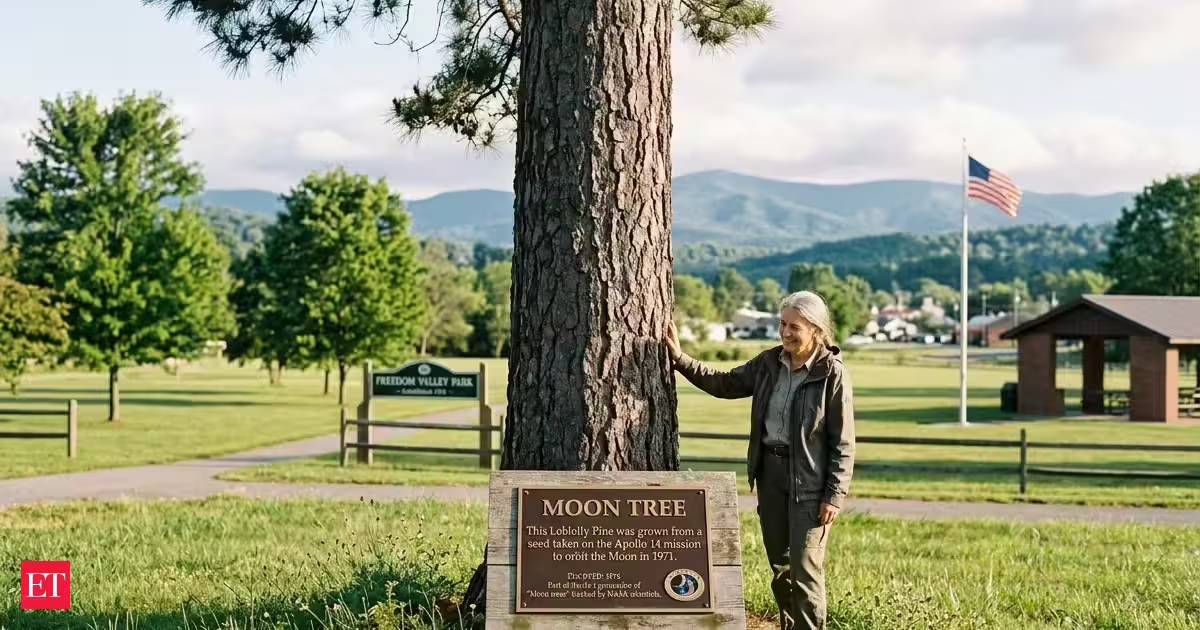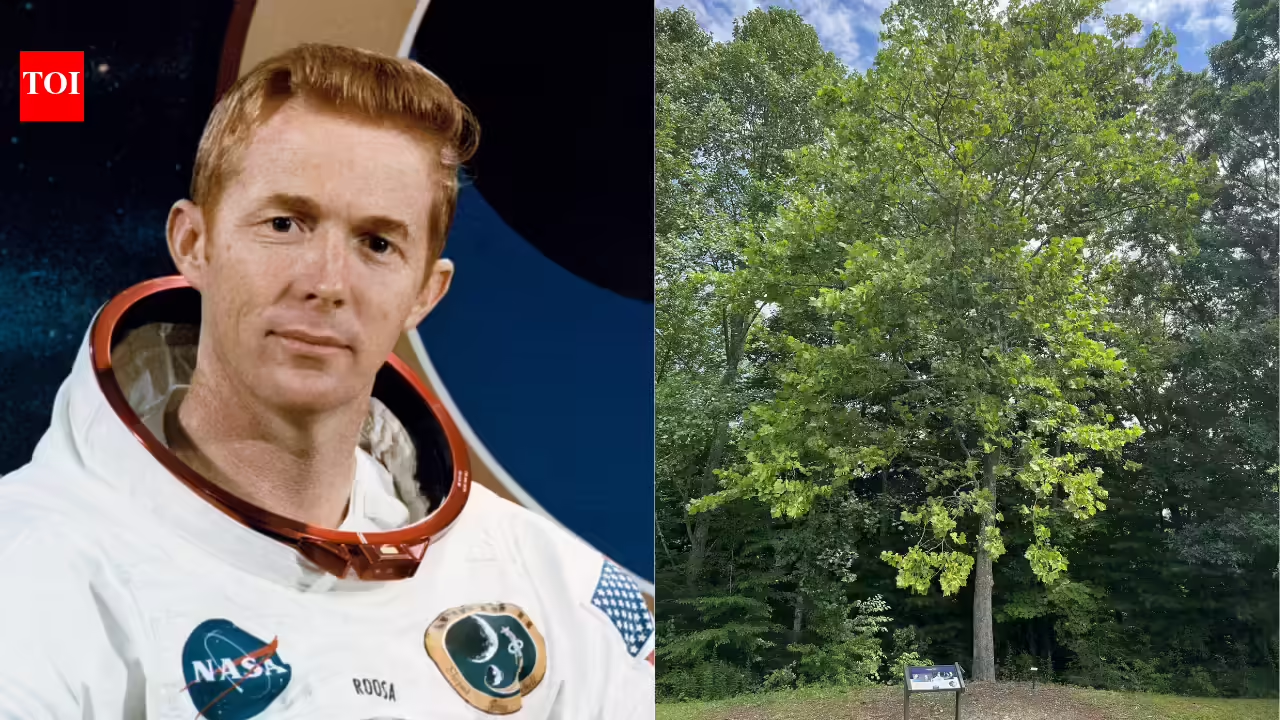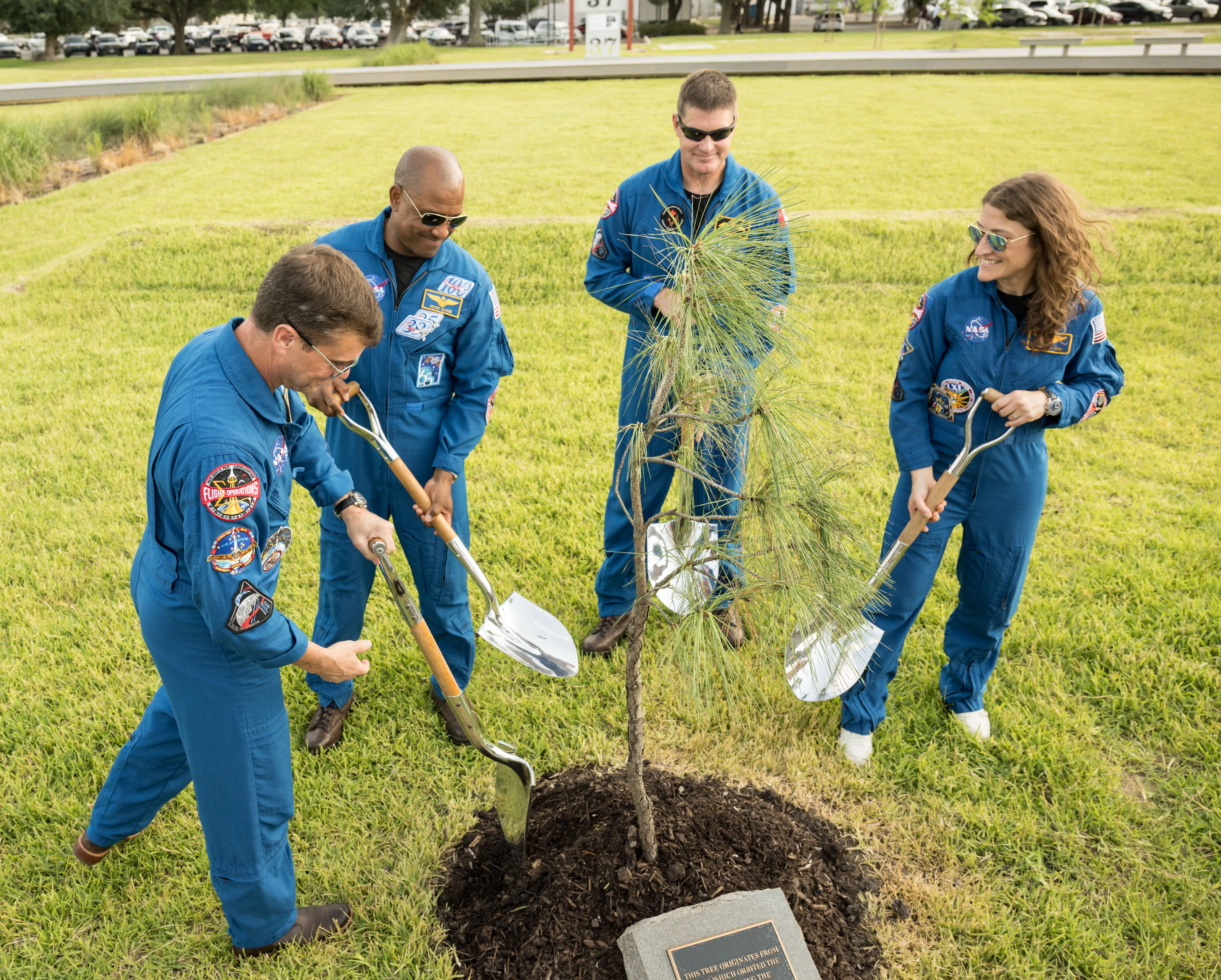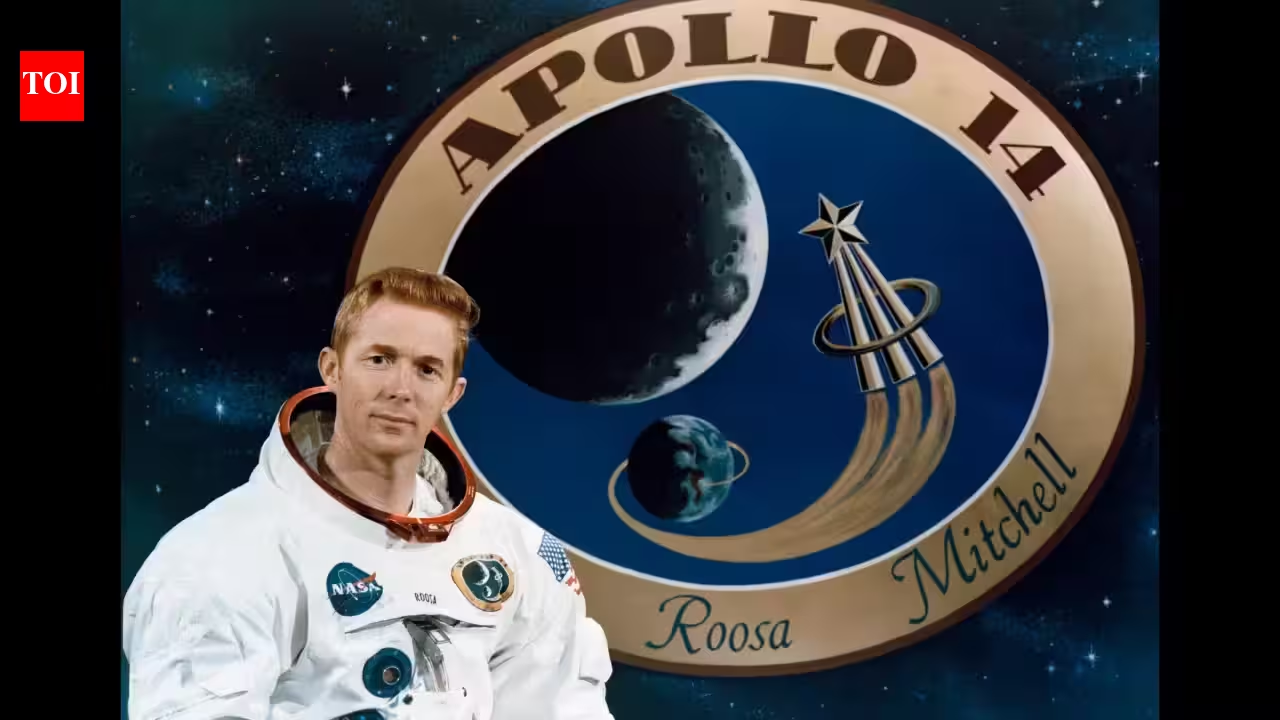
Astronaut Stuart A. Roosa was the command module pilot of the Apollo 14 lunar landing mission. In 1971 hundreds of tree seeds were packed in his personal kit as part of a joint NASA/USFS project. Image Credits: NASASpace exploration is often associated with silver spacesuits, dusty footprints and grey lunar rocks, but a living legacy from the space age continues to grow in public parks, university campuses and historic grounds around the globe. NASA's official Apollo 14 Moon Trees history records that astronaut Stuart Roosa carried possibly 2,000 or more seeds from five tree species in his personal kit aboard Apollo 14 in February 1971. The seeds were part of a joint NASA and U.S. Forest Service project exploring whether the journey to the Moon might affect their germination or growth. At first glance, these trees look like ordinary American sycamores or Douglas firs in a neighbourhood park, but their origins lie in an extraordinary journey through lunar orbit.The story behind these famous seeds began with Roosa, who served as the Command Module Pilot on Apollo 14. Before joining NASA and training as an astronaut, he had worked for the U.S. Forest Service as a smokejumper, parachuting into remote wilderness locations to fight forest fires. His connection to the Forest Service led to a proposal for him to carry tree seeds into space as an educational project. Roosa agreed and packed the seeds in his personal kit, allowing researchers to study whether exposure to space conditions might affect the plants.From lunar orbit to Earthbound soilThe seeds represented five tree species: loblolly pine, sycamore, sweetgum, redwood and Douglas fir. During Apollo 14, Roosa remained aboard the command module Kitty Hawk while crewmates Alan Shepard and Edgar Mitchell explored the lunar surface. The spacecraft completed 34 orbits around the Moon before returning to Earth.After Apollo 14 returned to Earth on February 9, 1971, the seed canister was accidentally ruptured during decontamination in the mobile quarantine facility. The seeds scattered across the chamber and were exposed to sterilisation gases. The recovered seeds were sent to the U.S. Forest Service, where they were germinated and studied.Many of the recovered seeds successfully grew into viable seedlings, which were later distributed to different locations. Researchers monitored the seedlings alongside control seeds that had remained on Earth, comparing their growth and development for signs of differences. The comparison found no detectable differences between the Moon Tree seedlings and the control seedlings that had remained on Earth.During the United States Bicentennial, many Moon Tree saplings were gifted to communities, creating a beautiful link between space exploration and local histories. Ongoing efforts aim to monitor and celebrate these extraordinary lunar descendants. Image Credits: Wikimedia CommonsPlanting a cosmic legacy around the globeIn 1975 and 1976, many Moon Tree saplings were distributed to state forestry organisations, schools, universities, parks and government offices as part of the United States Bicentennial celebrations. A sycamore grown from an Apollo 14 seed was planted in Washington Square in Philadelphia. A loblolly pine was planted on the White House grounds, while other Moon Trees went to locations including Valley Forge and the International Forest of Friendship. Several countries, including Brazil, Switzerland, Japan and Italy, also received Moon Tree saplings.Over the decades that followed, information about many of the trees became scattered because no comprehensive master list had been maintained during the original distribution. The effort to track them began in 1996, when Indiana teacher Joan Goble contacted NASA for information about the Moon Trees. NASA planetary scientist and lunar historian Dr David Williams then began compiling a list of known trees, while dozens of people contributed information about other surviving specimens. NASA's current database records known Moon Trees and their locations, although the complete number of surviving original trees remains unknown.Today, the surviving Moon Trees offer communities a tangible connection to one of the most remarkable chapters in space exploration. They stand in ordinary landscapes, yet their history reaches back to a spacecraft that travelled around the Moon more than five decades ago. For visitors who encounter one, the trees provide a reminder that the legacy of Apollo was not limited to lunar rocks and photographs. Some of it returned to Earth as living seedlings and continued growing long after the mission ended.
In 1971, an Apollo 14 astronaut took nearly 500 tree seeds around the Moon; many later germinated into ‘Moon Trees’ on Earth
Space exploration is often associated with silver spacesuits, dusty footprints and grey lunar rocks, but a living legacy from the space age continues to grow in public parks, university campuses and historic grounds around the globe. NASA's official Apollo 14 Moon Trees history records that astronaut Stuart Roosa carried possibly 2,000 or more seeds from five tree species in his personal kit aboard Apollo 14 in February 1971.
707 words~3 min read