Concrete slowly absorbs small amounts of carbon dioxide from the air over its lifetime, a natural process sometimes proposed as a solution to the cement industry’s heavy carbon footprint. But a new UCLA-led study finds that this passive absorption process is far too slow and too small in scale to meaningfully offset the emissions released when cement is made.
Published in Communications Sustainability, a Nature Portfolio journal, the study was led by researchers at the UCLA Samueli School of Engineering.
Cement is the binding ingredient in concrete — the most widely used building material in the world — but its production is responsible for roughly 10% of global carbon dioxide emissions, driven largely by the chemical process of heating limestone to make the key ingredient in cement.
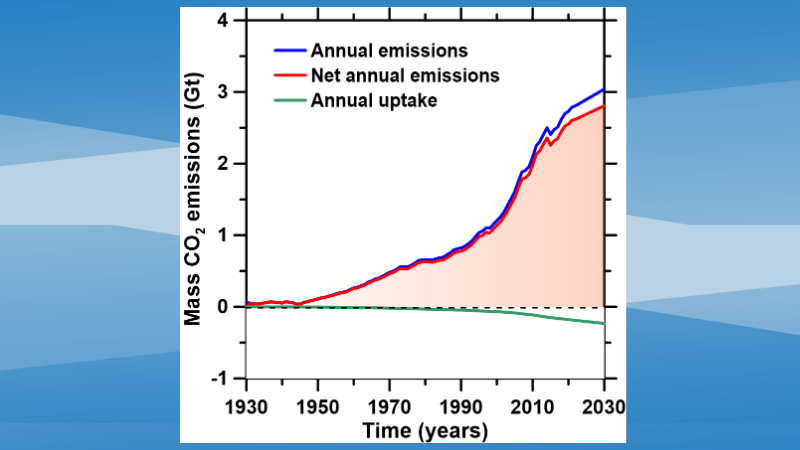
Using thermodynamic and diffusion-based modeling, UCLA researchers studied the rate and extent to which concrete used in buildings, roads and other structures slowly absorbs carbon dioxide from the air over time. The gas reacts with alkaline compounds inside the concrete to form calcium carbonate — the same mineral found in limestone and seashells. But this natural process, known as ambient carbonation, offsets less than 10% of the cement industry’s own annual carbon dioxide emissions — far below previous estimates, which reached as high as 57%. A typical concrete beam, slab or pavement, fully exposed to the atmosphere, would take roughly 1,000 years to reach even 50% carbonation under normal outdoor conditions.