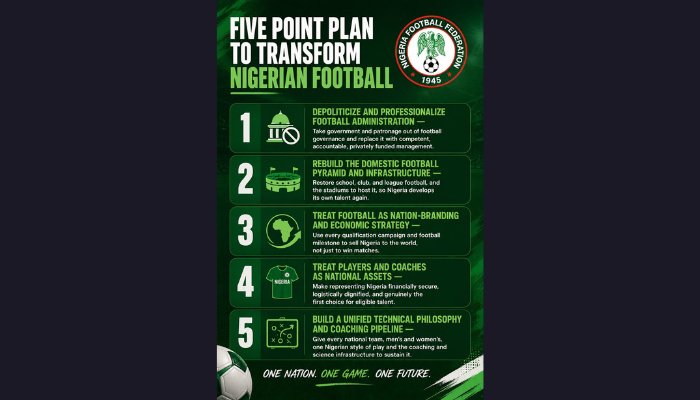
…From an Underperforming Football Nation to the Dominant Football Nation and Culture We Should Be
Introduction
Cabo Verde, a nation of roughly half a million people, took about thirty years of patient institution-building — youth structures, coaching pipelines, diaspora engagement — to reach its first World Cup in 2026. Curaçao, under two hundred thousand people, did something similar. Morocco spent two decades methodically building before becoming the first African team to reach a World Cup semi-final. None of these countries assumed greatness; they began with an honest diagnosis and a plan they followed even without immediate reward.
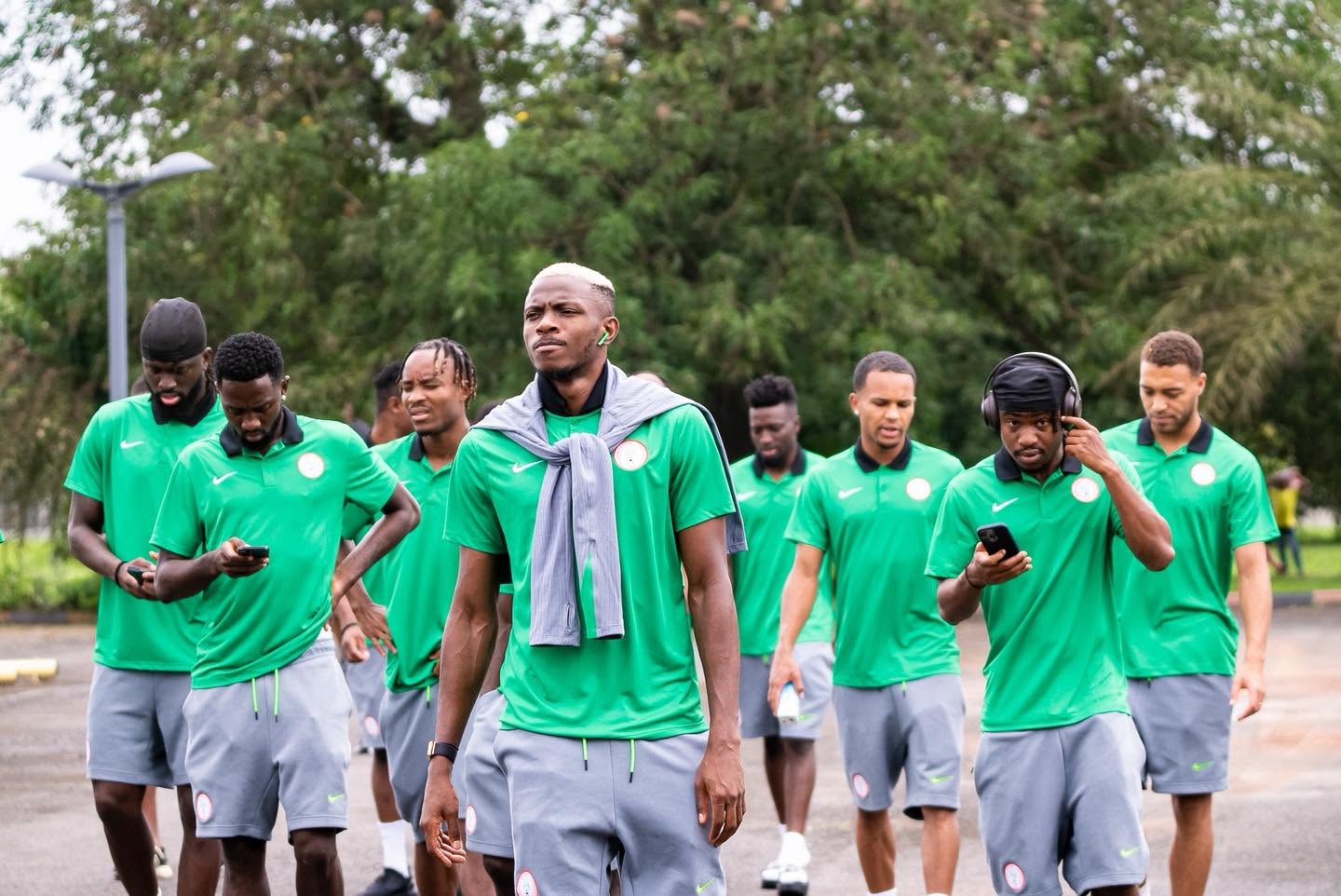
Nigeria has never made that diagnosis, because Nigeria has never had to believe it might not deserve success. A country of over 220 million people, with a footballing culture stretching back more than 120 years and arguably the most talented player pool on earth, has always assumed qualification and trophies are its birthright. That assumption may one of the greatest obstacle to Nigerian football’s transformation. At the 2026 World Cup, the Super Eagles were absent for the second tournament running, yet sixteen players of Nigerian heritage represented nine other countries. Talent has never been the problem. The system around it has been, for decades. And we must start from a perspective of ‘staying humble.’