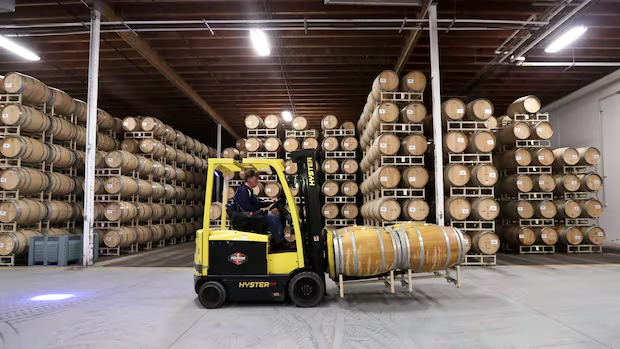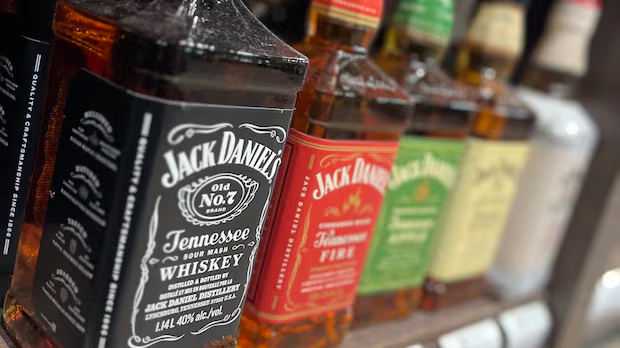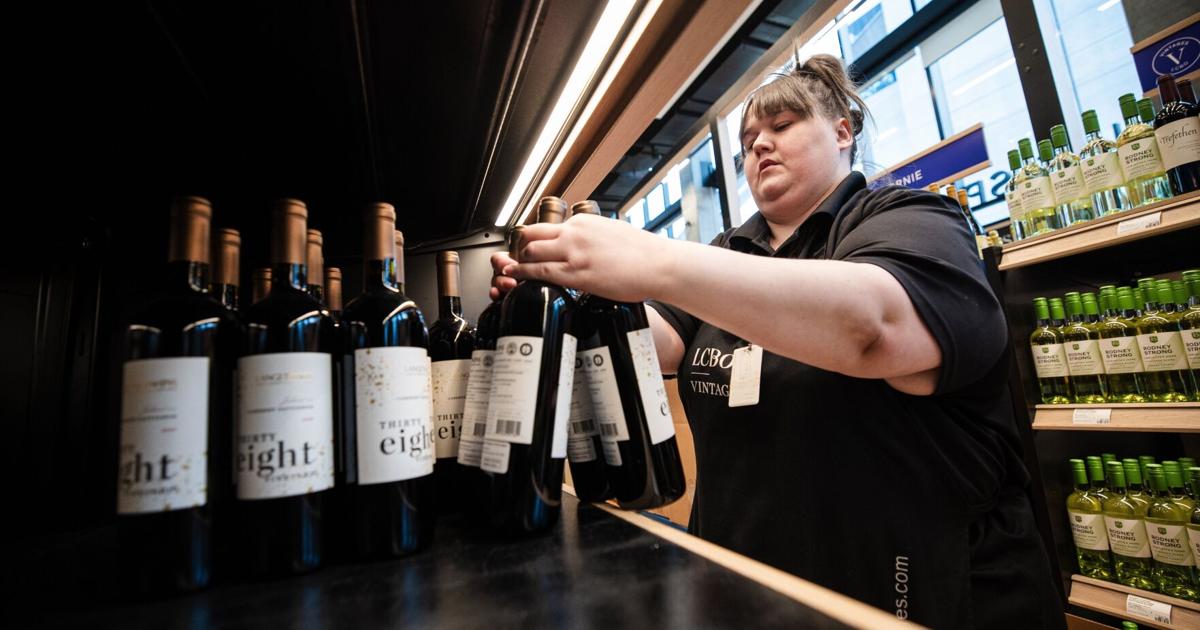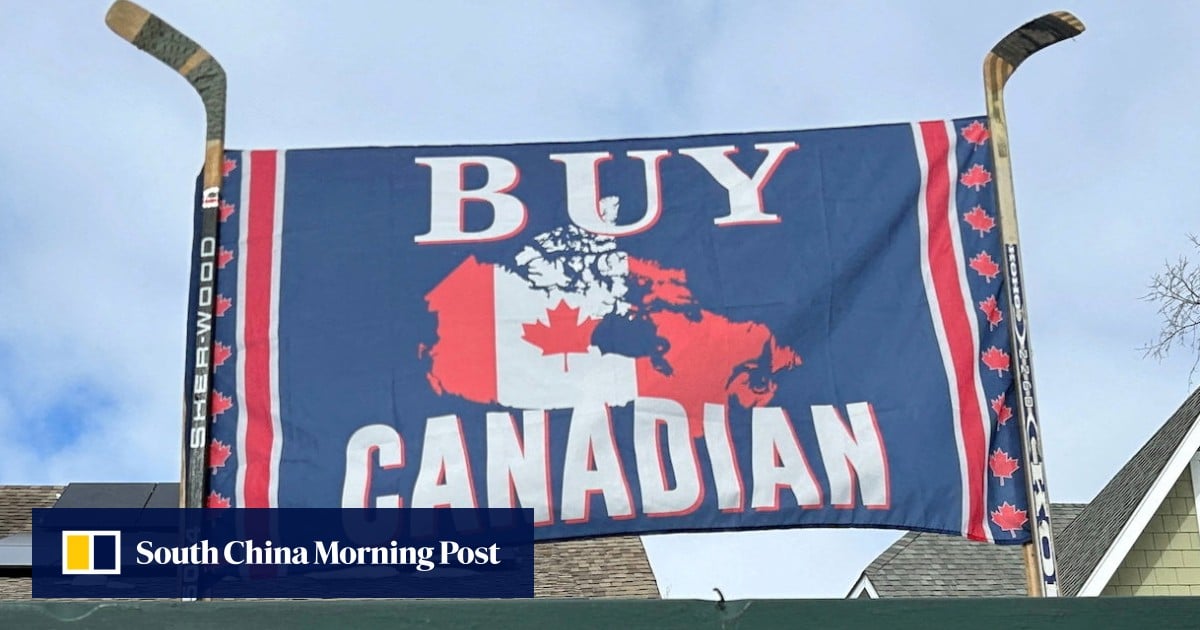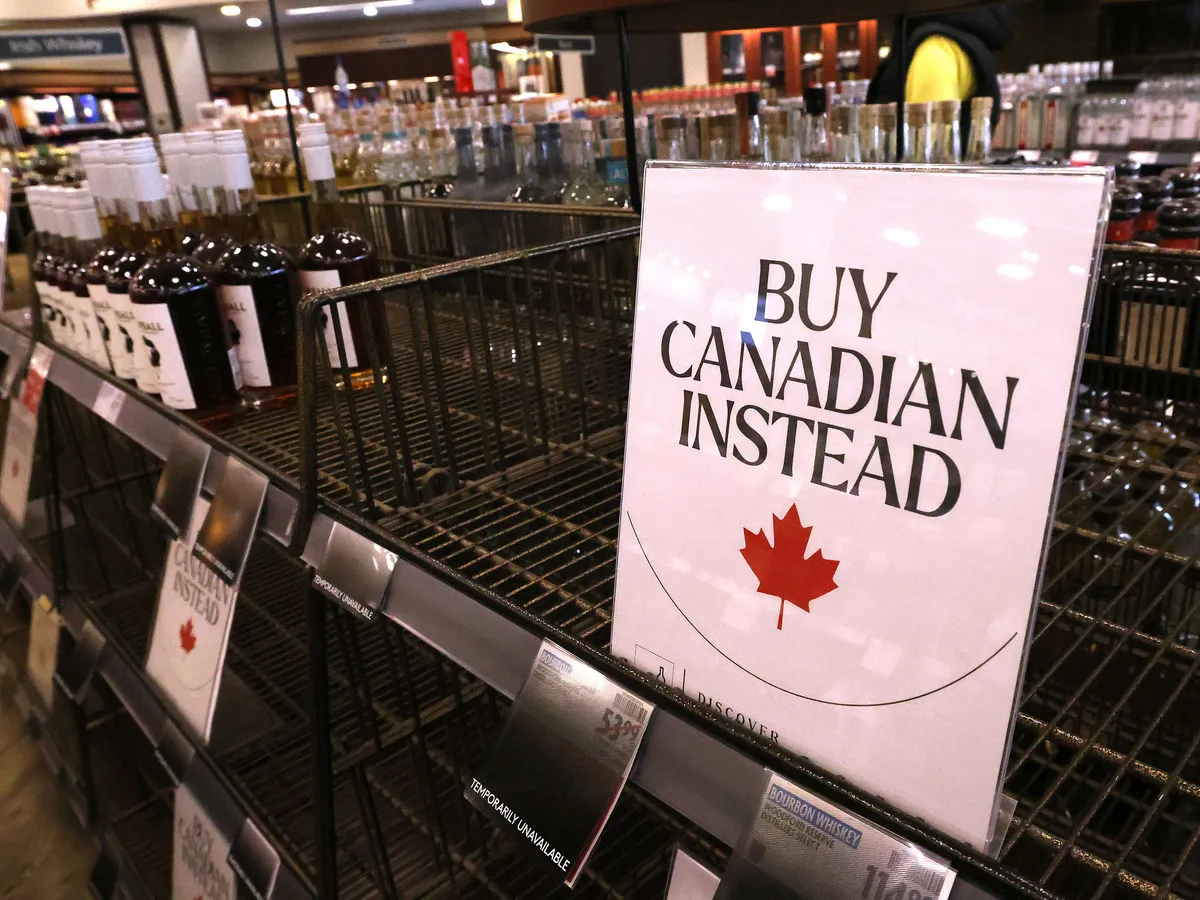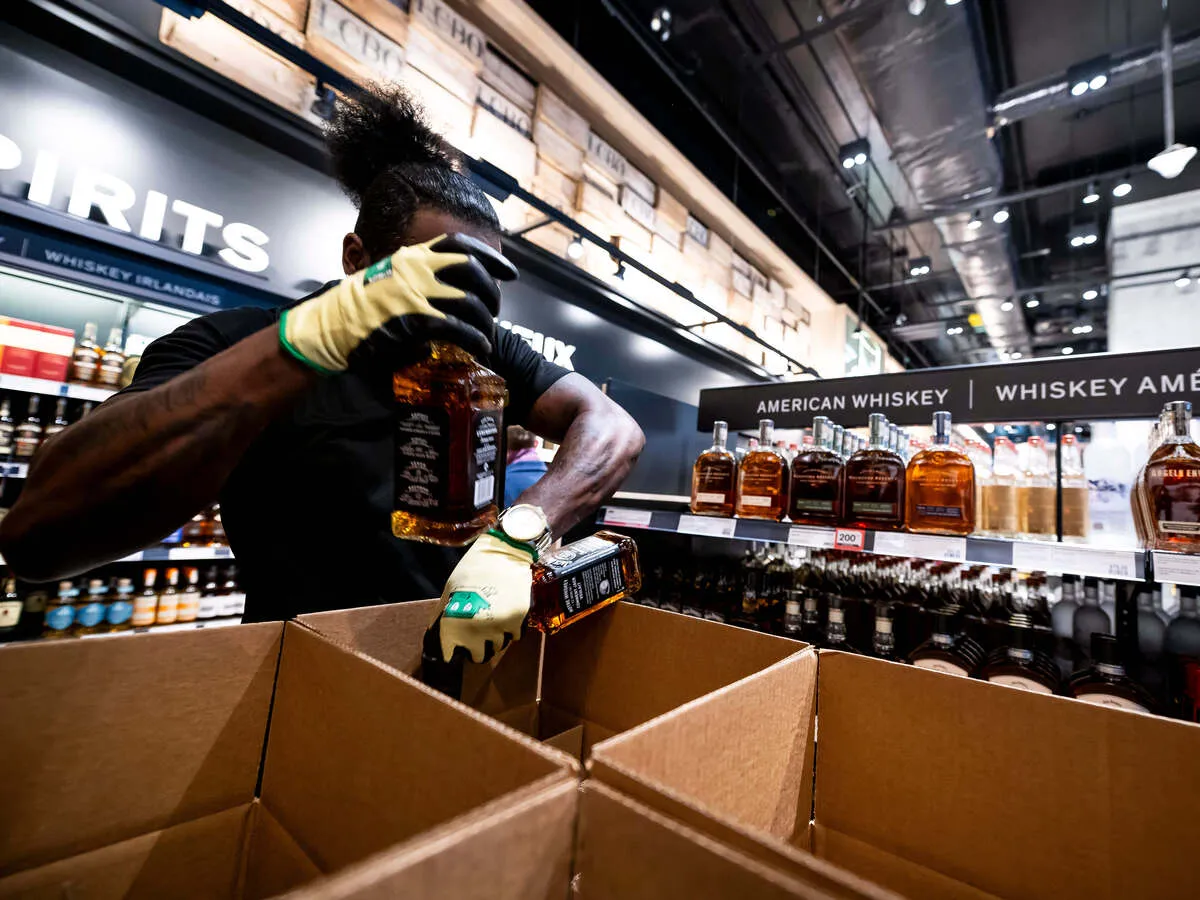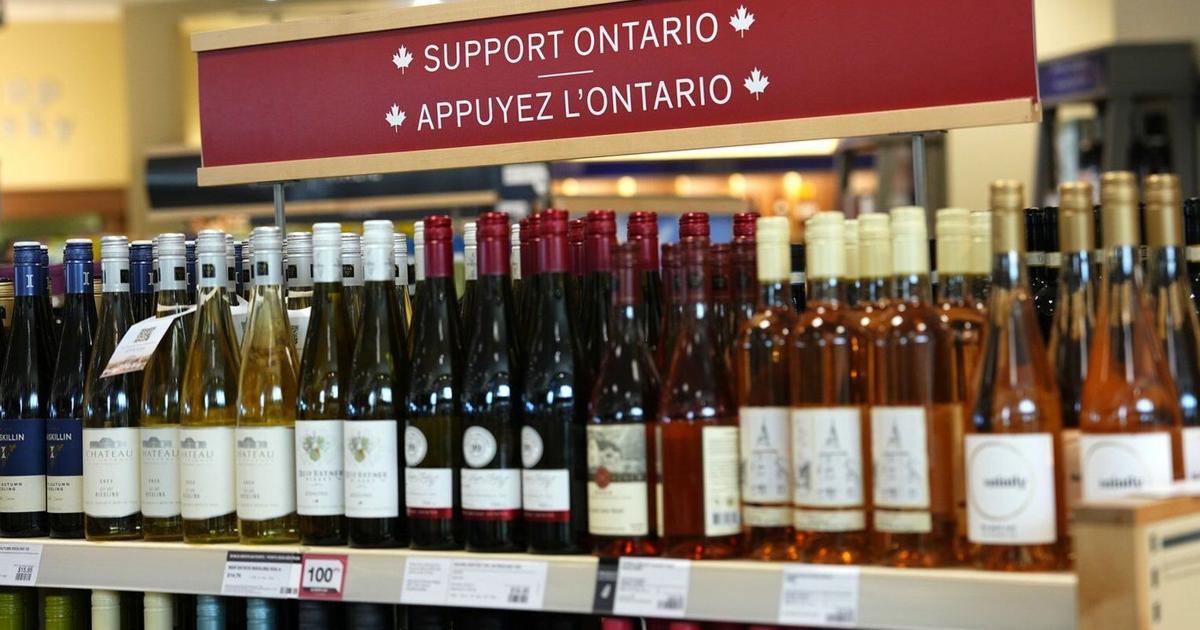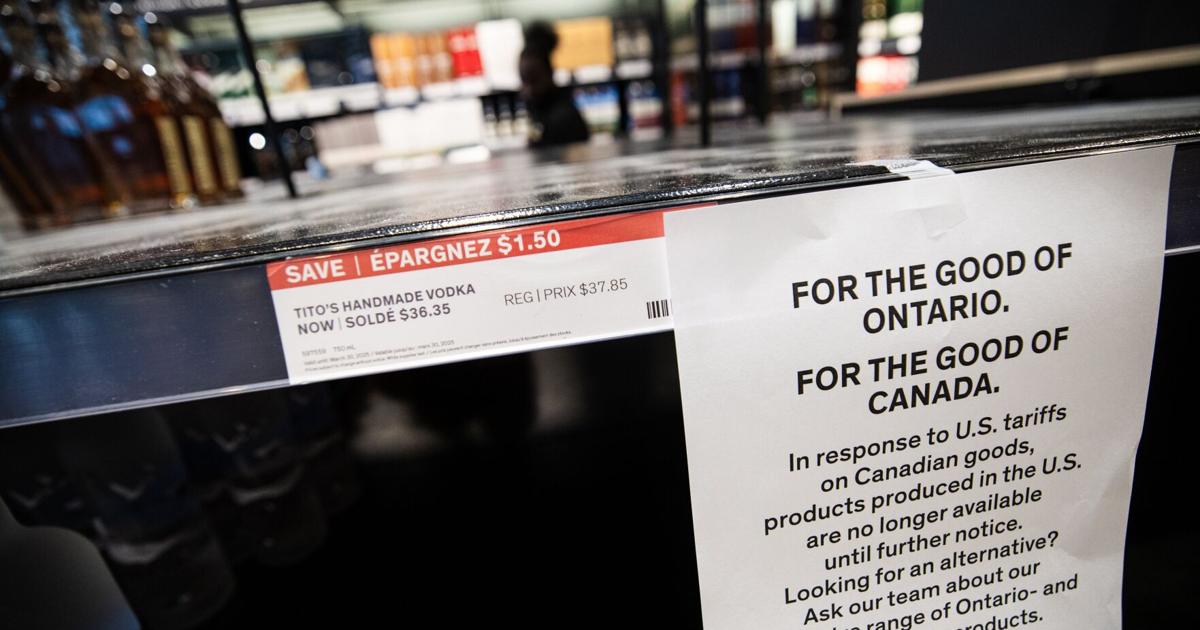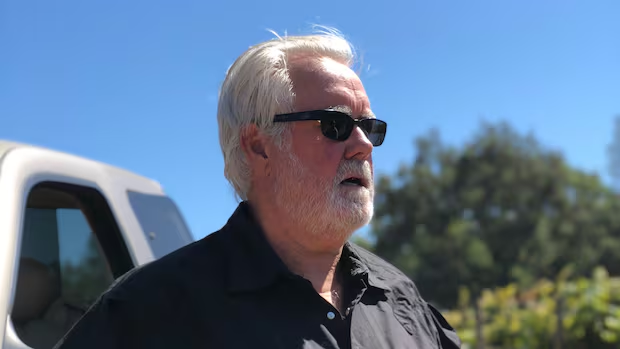
WorldBans by Canadian provinces on U.S. alcohol has taken centre stage in trade negotiations as premiers consider whether to put bottles back on the shelves to pacify the White House. Winemakers and industry associations say it's bewildering to have their livelihoods end up as leverage in an international dispute.'We're being used kind of as a tool for this negotiation,' California winemaker saysRhianna Schmunk · CBC News · Posted: Aug 21, 2026 4:00 AM EDT | Last Updated: 1 hour agoListen to this articleEstimated 5 minutesThe audio version of this article is generated by AI-based technology. Mispronunciations can occur. We are working with our partners to continually review and improve the results.Bill Easton, founder of California's Terre Rouge Wines, says bans on U.S. alcohol by Canadian provinces cost him an estimated $500,000 in income last year. He and other winemakers and distillers say they're bewildered that they've been caught up in an international dispute. (Bill Easton/Submitted)At one time, Bill Easton used to have cases of Syrah on regular reorder to Montreal. Every six weeks, a truck would come to pick up a shipment from his winery in northern California's Sierra Foothills. Six weeks later, a Canadian cheque would land in Easton's bank account.That clockwork disappeared when Quebec pulled American alcohol off its shelves last spring. Easton's regular transactions happen every four weeks now, when he pays $1,200 to store cases of the wine in a temperature-controlled facility for yet another month."We actually have wine that is labelled in both English and French, specifically for that Quebec market, sitting in a warehouse waiting to be sold," said Easton, who runs Terre Rouge Wines in Plymouth, Calif.Canadian provinces' ban on alcohol from the U.S. has taken centre stage in the trade negotiations as premiers consider whether to put bottles back on the shelves to pacify the White House. Winemakers and industry associations say they're bewildered to have their livelihoods end up as leverage in an international dispute.'We're very close,' LeBlanc says of tariff deal after hours-long meeting with U.S. officials"I think we're being used kind of as a tool for this negotiation. I'm not sure why we have this tariff battle going with Canada," Easton said in an interview Thursday."We're just farmers and winemakers selling wine to people who like what we do."Premiers consider bringing back U.S. boozeMost Canadian provinces stopped distributing U.S. alcohol products early last year in response to tariffs U.S. President Donald Trump imposed on Canadian goods. This week, Prime Minister Mark Carney asked provinces to reconsider in hopes of finalizing a deal to stop a new round of American tariffs on $29 billion in Canadian goods. Some premiers said they would oblige if they were convinced the deal was a good one. Others said they wouldn't make any promises without more details. One leader said he didn't think it wise to give up effective leverage in such a volatile trade dispute.'A bad taste left in my mouth': Will Canadians buy U.S. booze again?If U.S. booze returns to shelves, 'leave it there,' Manitoba premier says"The American president is weak. He's threatening us and I think if we kept pushing, I think that we probably would get more," said Manitoba Premier Wab Kinew. He added he would consider lifting the ban on U.S. alcohol, but urged Canadians not to buy it either way. "We can make these changes that the prime minister is asking, but who are we making this deal with? Do we expect ... Donald Trump is all of a sudden going to say, 'Ah, yeah, I'm not going to bug Canada again.' We're going to say that Donald Trump isn't going to go back on his word?"WATCH | Kinew on ending liquor bans:'We should fight' U.S. tariffs, says Manitoba premierAugust 20|Duration 1:29Manitoba Premier Wab Kinew says he thinks U.S. President Donald Trump is 'very weak' and 'about to get slaughtered in the midterms,' and that Canada has the upper hand in trade negotiations.Washington has been particularly irritated by empty shelves where California wines, Kentucky bourbons and other American spirits used to sit. Trump said the ban was one of three key issues behind his threat to impose 50 per cent tariffs on hundreds of Canadian goods.Most Canadian provinces control alcohol distribution through government-run liquor boards, which the U.S. says impose barriers ranging from listing restrictions and pricing rules to distribution requirements.Rebuilding trust key: wine groupNorth of Easton's winery, the Oregon Wine Growers Association said its members were optimistic, but need a deal to stick long-term if they're going to have a chance at rebuilding trust and relationships with Canadian buyers."I do think that producers are happy to see that this is a centre point of the current negotiation so that it can hopefully be resolved, but ultimately we want to have a stable trading environment," said executive director Jana Mckamey, whose organization represents two-thirds of Oregon's wine production."These international relationships take a long time to develop. It's a great deal of investment and that can disappear overnight."WATCH | Poll asks Canadians if they'd go back to buying American alcohol:Majority of Canadians say they won't buy American alcohol if it becomes available againAugust 19|Duration 2:33According to a recent Nanos Research poll, 69 per cent of Canadians said they would continue to boycott American alcohol even if it returns to Canadian stores.A number of Canadians have said they won't return to buying American brands because they've found new homegrown favourites or feel committed to continue personal boycotts.Phillips Distilling wasn't waiting around. The maker of the popular Sour Puss liqueur signed a multi-year agreement to move production from Minnesota to Montreal's Station 22 distillery last year."[We] plan to keep production in Montreal, regardless of Canada-U.S. trade policies. Since 98 per cent of Sour Puss sales are in Canada, we view it as a Canadian brand," spokesperson Laura Donnelly wrote in an email.According to trade data from the U.S. Census Bureau, wine exports from the U.S. to Canada dropped by $343 million US between 2024 and 2025. Those numbers represent a 77 per cent year-over-year drop in wine exports to Canada, which was previously the largest customer of American wineries.WATCH | Quebec's premier on her 'long conversation' with the prime minister:U.S. liquor will go back on shelves if tariff deal is 'positive' for Quebec, premier saysAugust 20|Duration 1:35Quebec Premier Christine Fréchette says she had a 'long conversation' with Prime Minister Mark Carney on Thursday morning during which he answered many of her questions about provisions of a tentative U.S. trade deal. Fréchette says she's analyzing the information and if it's positive for Quebec, her government will put U.S. alcohol back on shelves.The Distilled Spirits Council of the United States said bourbon exports to Canada dropped about 60 per cent from January to September compared with the previous year, sliding from 41.3 million to 16.4 million units. The head of the organization said American distillers are "caught in the middle of a broader trade dispute.""We encourage leaders on both sides of the border to reach a negotiated solution that gets American spirits back on retail shelves in all Canadian provinces and returns the spirits sector to a zero-for-zero tariff framework," wrote CEO Chris Swonger.On Thursday, Easton said the bans cost him an estimated $500,000 in income last year. He said he won't get his hopes up for a reprieve until he sees something in writing."I'd just like to see things go back to the way they were," he said. "I don't know if that's possible."ABOUT THE AUTHORRhianna Schmunk is a senior writer covering domestic and international affairs at CBC News. Her work over the past decade has taken her across North America, from the Canadian Rockies to Washington, D.C. She routinely covers the Canadian courts, with a focus on precedent-setting civil cases. You can send story tips to rhianna.schmunk@cbc.ca.Send confidential story tips with SecureDrop
As Canadian booze bans dominate tariff talks with U.S., winemakers and distillers feel caught in the middle | CBC News
Bans by Canadian provinces on U.S. alcohol has taken centre stage in trade negotiations as premiers consider whether to put bottles back on the shelves to pacify the White House. Winemakers and industry associations say it's bewildering to have their livelihoods end up as leverage in an international dispute.
1,301 words~6 min read