Researchers in India developed a PVT-hydrogen system using air-bubble injection to improve cooling, thermal and electrical efficiency, and hydrogen production. Tested outdoors in Tamil Nadu, the system achieved a peak thermal efficiency of 45.5% and hydrogen production of 15.5 ml/min.
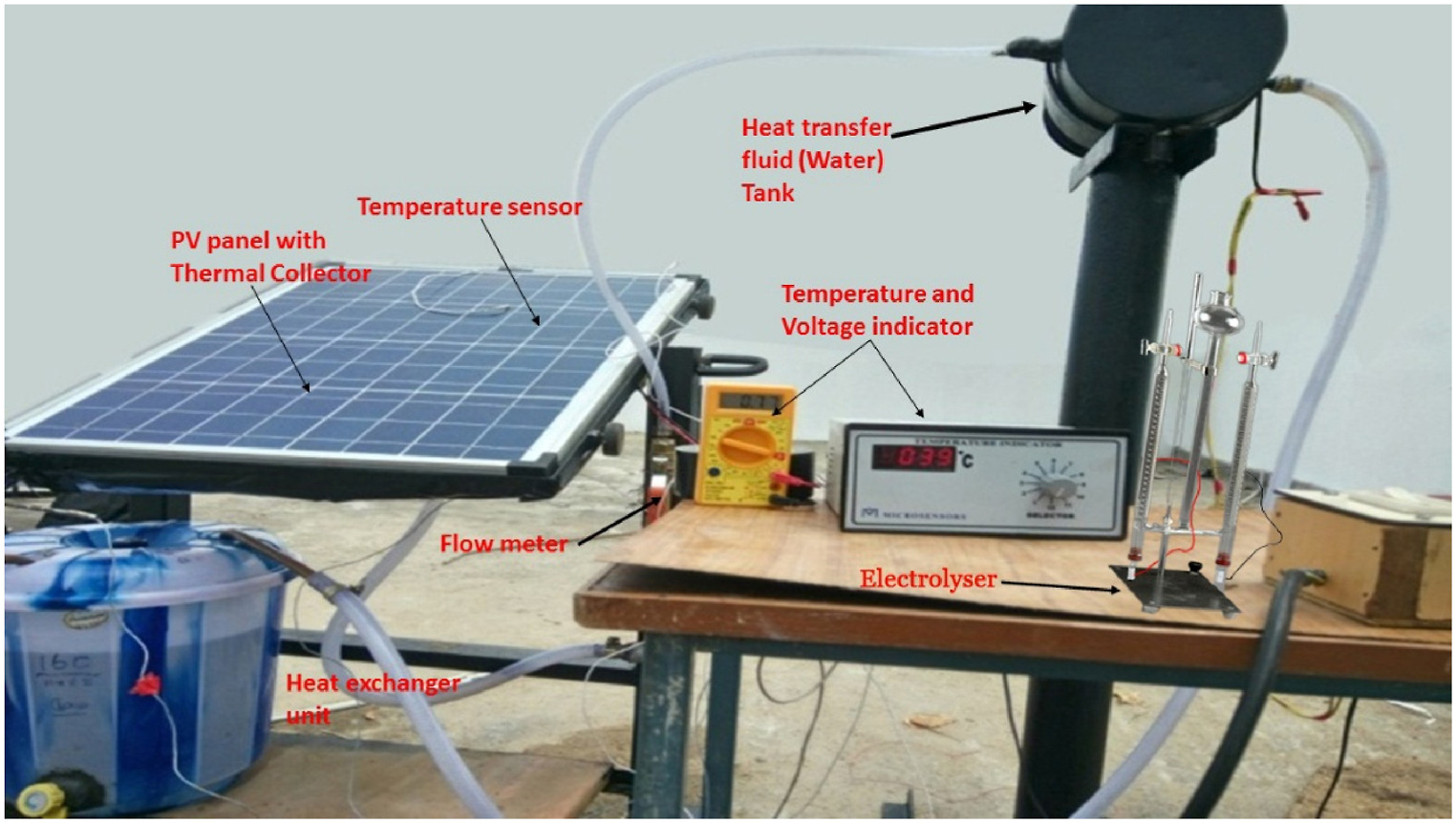
A research group in India has developed a novel photovoltaic-thermal (PVT) hydrogen-generation system that integrates air-bubble injection to improve system performance. The researchers also sought to isolate the effect of air-bubble injection on PVT cooling, allowing them to assess its contribution independently of the hydrogen-generation process. The system was experimentally tested on the rooftop of a building in Tiruchengode, Tamil Nadu, in southern India, under real-world outdoor conditions. The results provide insights into the potential of air-bubble injection as a cooling technique for PVT systems while simultaneously supporting hydrogen production.
“Numerous researchers have used several cooling methods, including air cooling, liquid cooling, and phase change materials, but failed to explore the impact of air bubbles on the performance of PV system efficiency and hydrogen yield rate,’” said the research team. “This study’s findings will be advantageous for both developed and emerging nations, taking into account environmental pollution and energy requirements.”