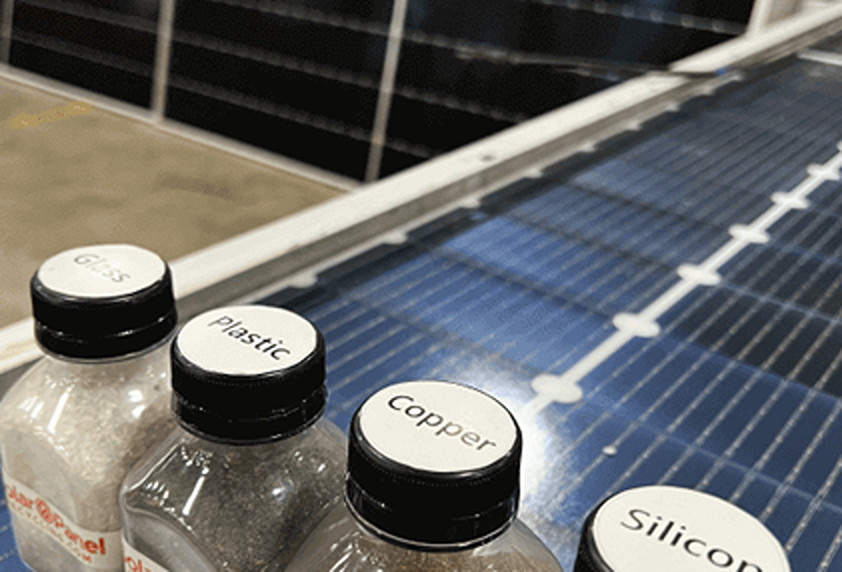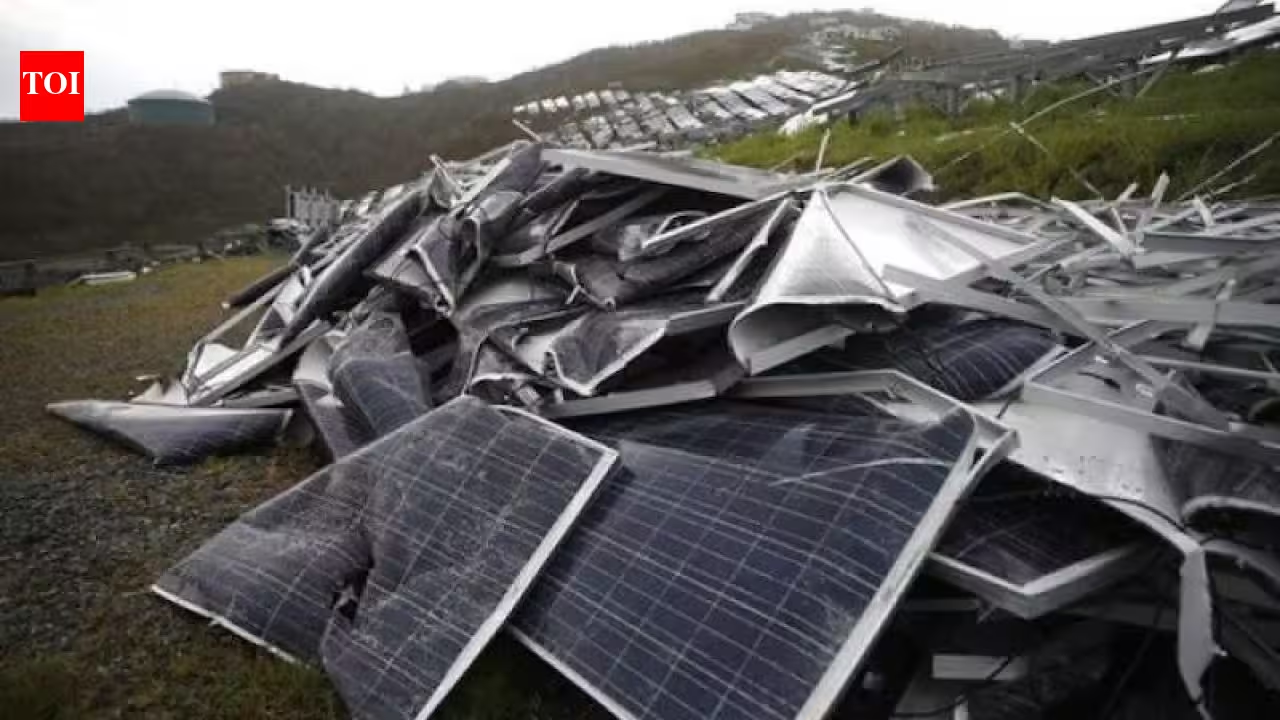
A new white paper from Sustainable Source Studios cites regulatory filings, industry disclosures and IEA lifecycle datasets in concluding that most U.S. solar module recycling yields degraded, landfilled, or offshored material.
A new white paper published by Los Angeles-based research firm Sustainable Source Studios (S3) claims that the vast majority of decommissioned U.S. solar panels are not being recycled into clean secondary feedstock.
With the U.S. solar industry facing an estimated one million tons of retired photovoltaic (PV) modules by 2030 and roughly ten million tons by 2050, the report authored by circular supply chain analyst Isaac Nichelson argues that the prevailing domestic end-of-life management system relies on landfilling, material downcycling and overseas export.
“Almost none of what the United States calls ‘solar recycling’ is closed-loop recovery,” wrote Nichelson in the report. “Three practices dominate instead — landfilling, offshoring, and camouflaging (disposal disguised as recycling) — and all three are the same failure in different clothing: the material never becomes clean feedstock again, and a customer, an investor, or a regulator usually cannot tell any of them apart from the real thing.”