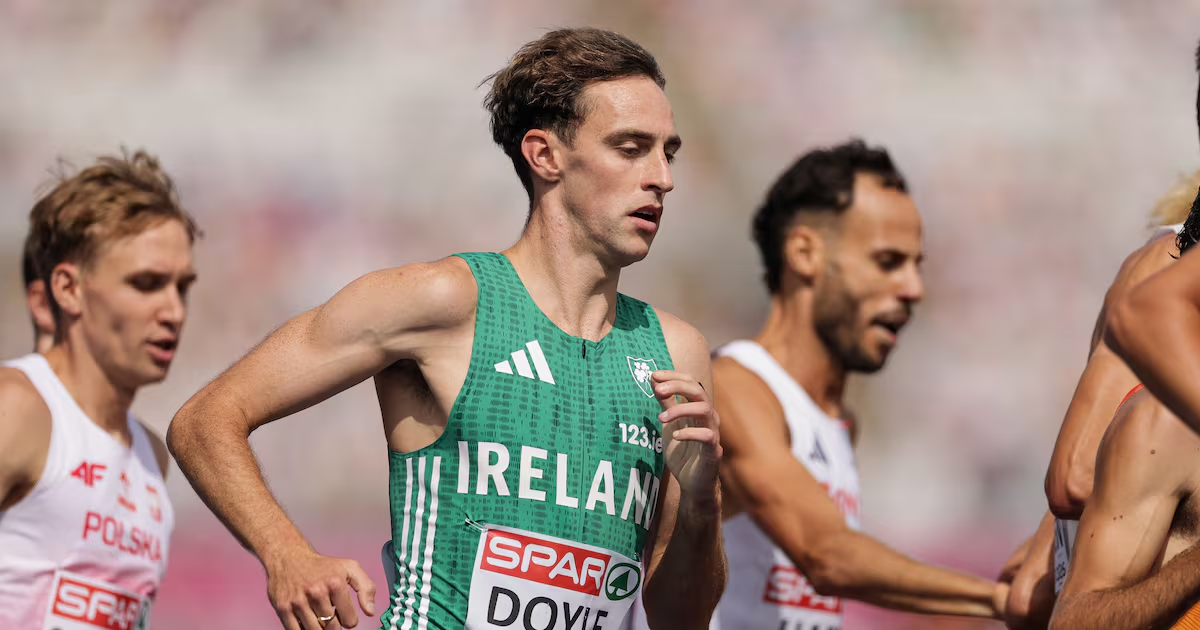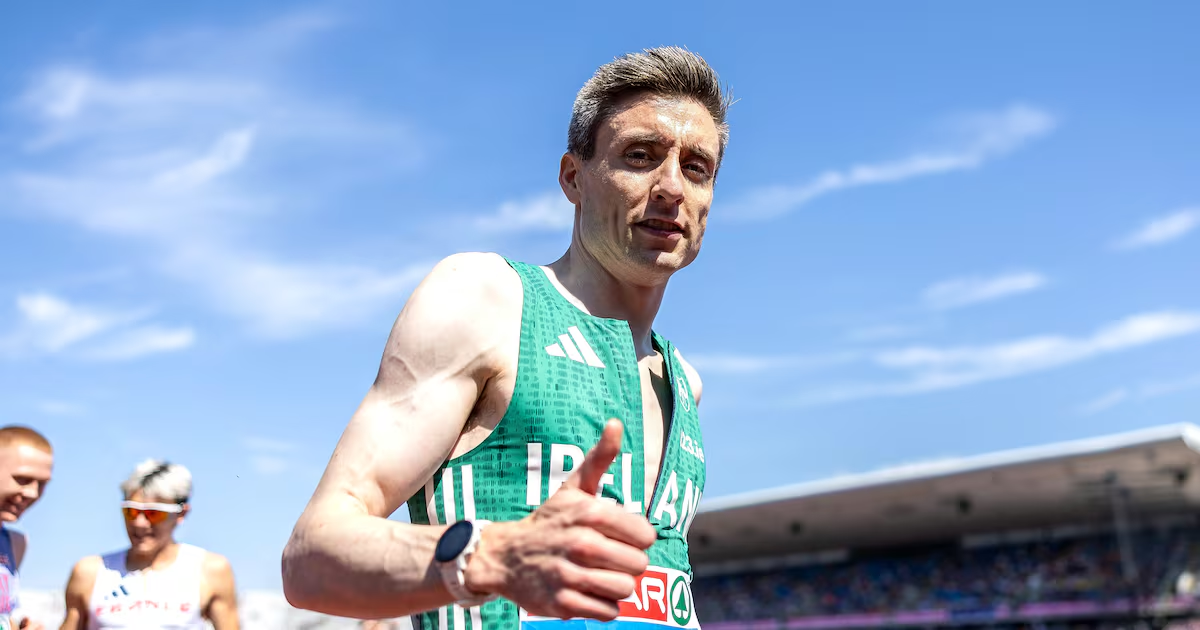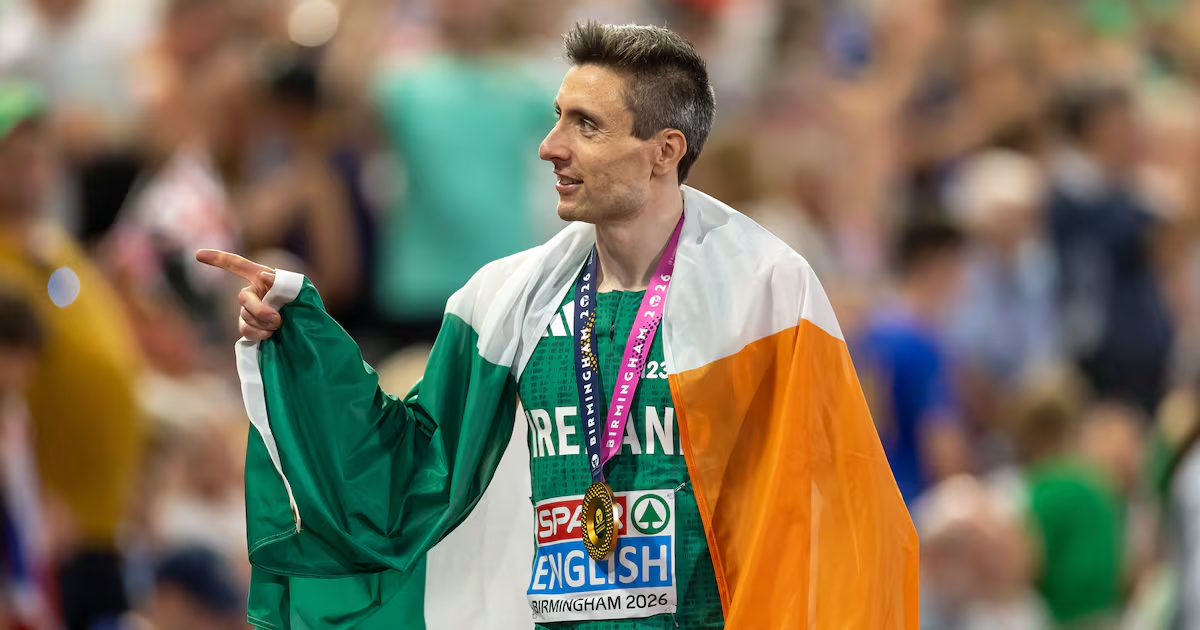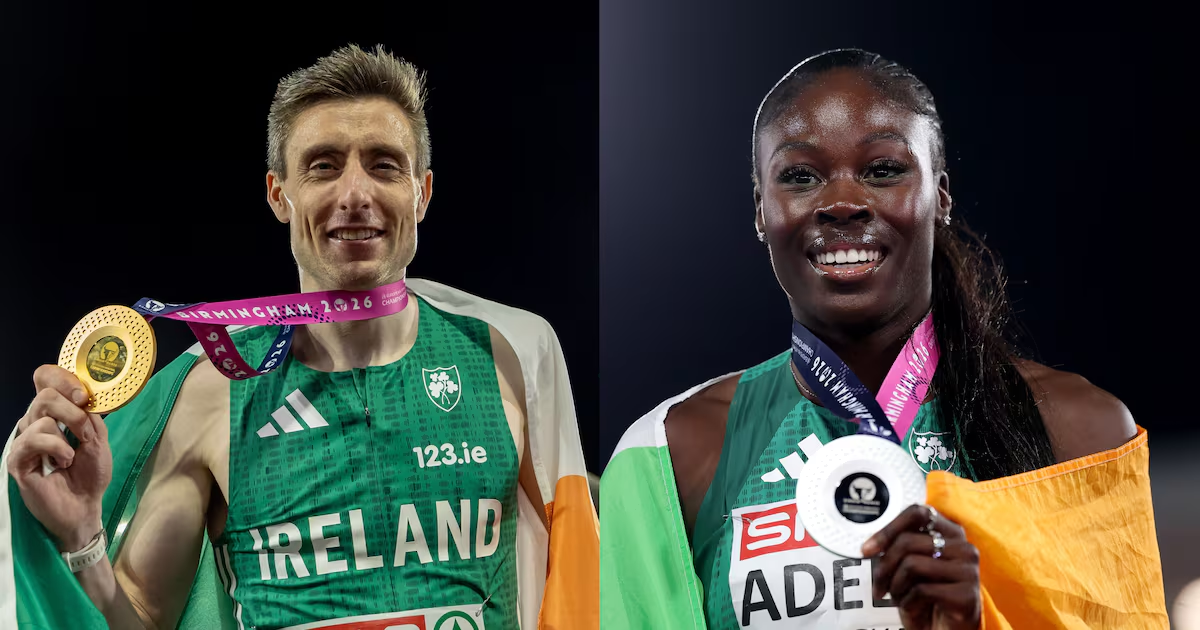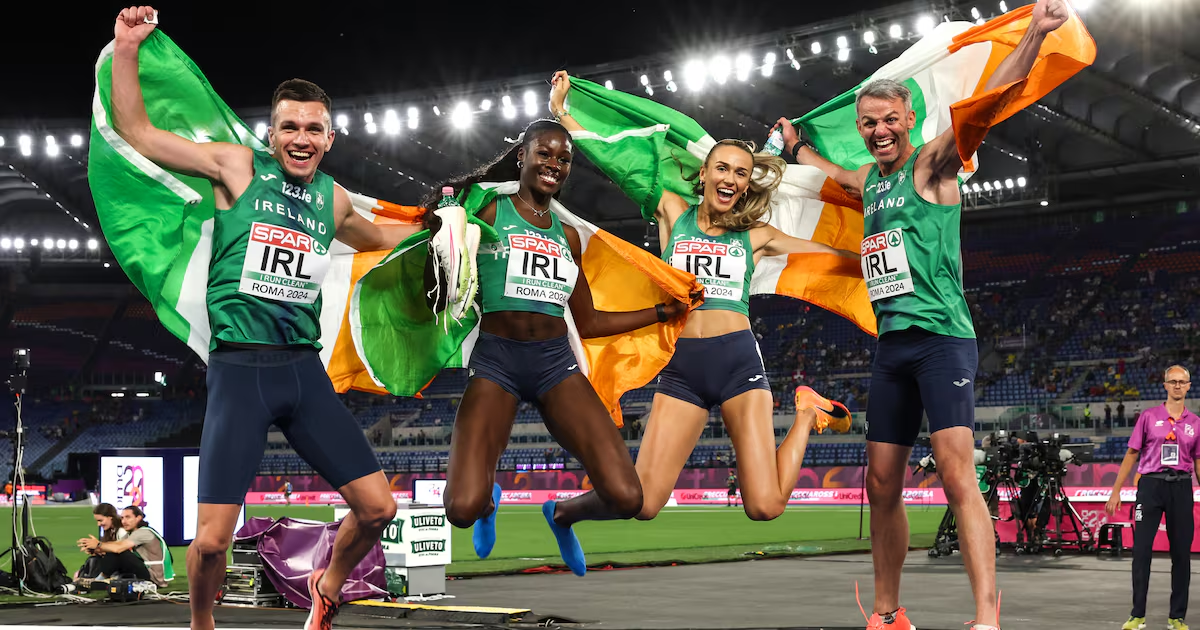
Donegal athlete Mark English looked almost serene when winning the 800m final at the European Athletics Championships in Birmingham last week. His run was marked by a control, authority and poise that comes with much experience. There are particularly moving photographs of silver medallist Marino Bloudek of Croatia clasping English’s head and arm as English crouched on the track just after the finish to take in the sheer scale of his achievement. Well might he savour it, especially at the age of 33, and following all the ups and hard downs. For all the modern training expertise deployed, some things do not change. When one of the great late 19th-century Irish runners, Thomas Conneff of Kildare, pondered his achievements, he said: “I have often thought that the secret of my success to a great extent lies in the fact that I punished myself more than other men”.The memoirs of some of our notable athletes contain moments of triumph, but most are punctuated with much punishment. The most recent, by Ciara Mageean, European championship winner for the 1,500m in 2024, refers to her constant quest to improve by metaphorically “running through a brick wall”, only to then face a devastating bowel cancer diagnosis. David Gillick, the 400m-runner-turned-broadcaster, did not hold back in his book last year, The Race: “By 2014, my relationship with running could be best described as toxic. I hated athletics, hated it, and blamed it for everything I was feeling. The love I once felt had first dissipated, then outright disappeared, replaced by a burning, bitter resentment. And yet I couldn’t let it go. Couldn’t escape it. “If I wasn’t David Gillick, the Athlete, then who was I? Nobody. Nothing. I was 30-years-old, living with my parents and the lads I’d grown up with had their own homes with established careers. I was 10 years behind, feeling like I’d invested all I had into this dream and been left with nothing to show for it.”Peter Byrne’s history of Irish athletics, Winning for Ireland (2018), recalls the pressure on athletes during the State’s infancy to embody the new independence. He writes of Pat O’Callaghan, the young Cork doctor and hammer thrower, who won Olympic gold medals in 1928 and 1932, and the “aura which had developed around him at a time when the emerging Irish Free State urgently needed cult figures to flesh out their towering idealism”.Eamonn Coghlan, dominant on the indoor running circuit in the US, came fourth in Olympic finals in 1976 and 1980 and recalled his discomfort with expectation and premature fanfare. After resisting the embrace of a send-off before the 1976 Olympics, where he ran the 1,500 metres race, “I was overcome with shame that I tried to put out of my mind; but the guilt I felt over my behaviour that day was a weight I carried to the Games”. Sonia O’Sullivan struggled, too, with the weight on her shoulders, observing how “so many athletes aren’t the focus of attention in their country”. The tension became too much by 1996 when she became ill at the Atlanta Olympics, making her resurrection and Olympic medal in 2000 even more admirable. Clean elite athletes have also faced the what-ifs of certain races run by cheats.Historically, the pressures of competing at the elite level have encompassed tales of addiction and breakdown. The Norwegian writer Thor Gotaas’s Running: A Global History (2010) contains a fascinating cast of drinkers, chain smokers, naked runners and dietary experiments. He documents soldiering, imperialism, migration, class snobberies, medical experiments, premature death, corruption, doping and heroism. The founder of the modern Olympic movement, Pierre de Coubertin, said: “Women have but one task, that of the role of crowning the winner with garlands, as was their role in ancient Greece”. John Charles McQuaid, then a future Catholic archbishop of Dublin, told this newspaper in 1934 how “mixed athletics and all cognate immodesties are abuses that right-minded people reprobate, wherever and whenever they exist”. It was a view that enraged Maeve Kyle, the first woman to represent Ireland in athletics at any Olympic Games, qualifying in the 100m and 200m for the Melbourne Games in 1956.The images of English after his race at the European Athletics Championships encapsulate the ultimate mission of these athletes, summed up in the phrase “running to stand still”: finally to find the relief so they can briefly pause, mentally and physically. It has clearly been a lonely journey for many, few of whom get rich on the back of it, as noted by English this week. The “world-class grant” category of his funding this year from Sport Ireland is just €25,000. Very few embrace this most ancient sport as a route to wealth, making our debt to them and the pride they generate all the deeper.
Diarmaid Ferriter: Few embrace athletics to get rich, but we are deeply indebted to them
Memoirs of notable athletes contain triumph, but most are punctuated with much punishment
795 words~4 min read