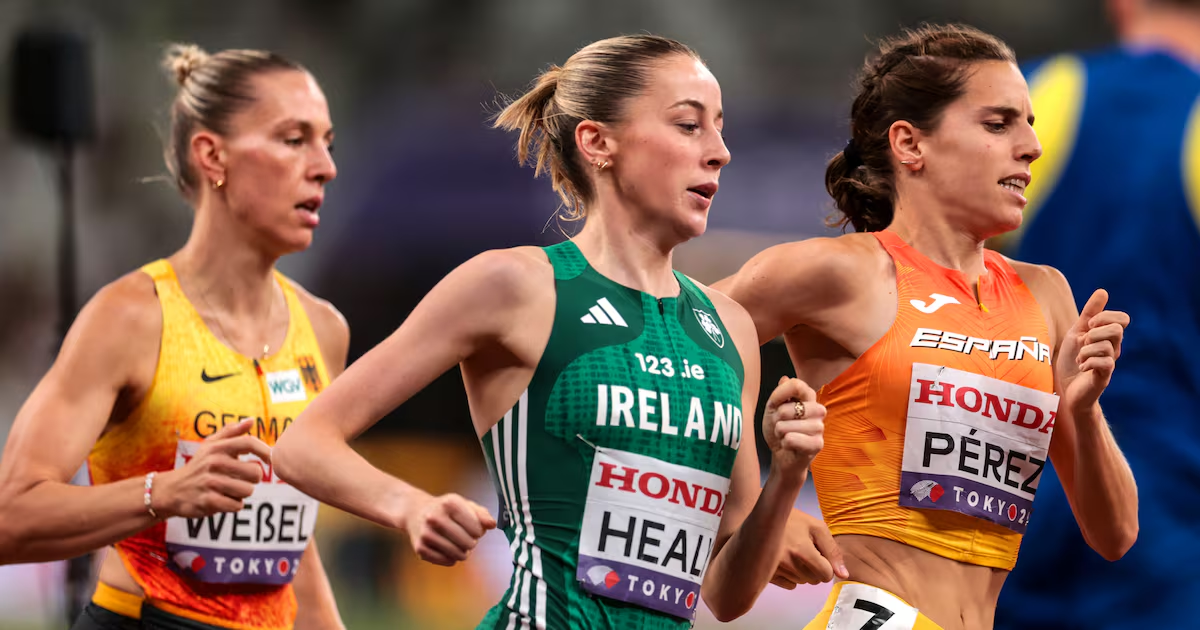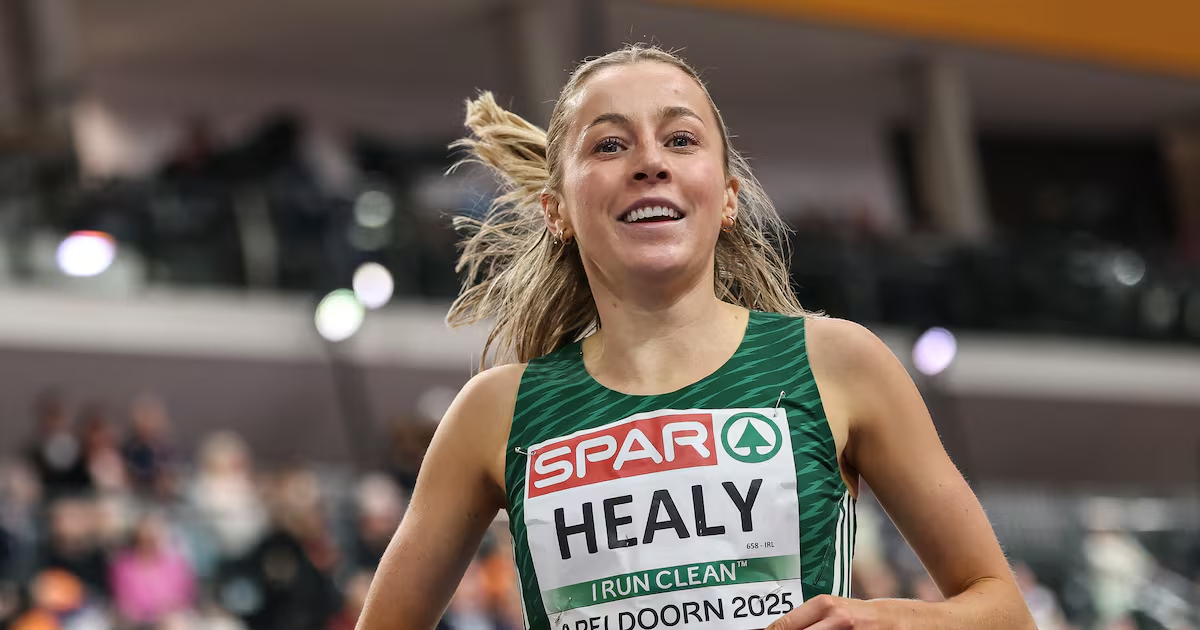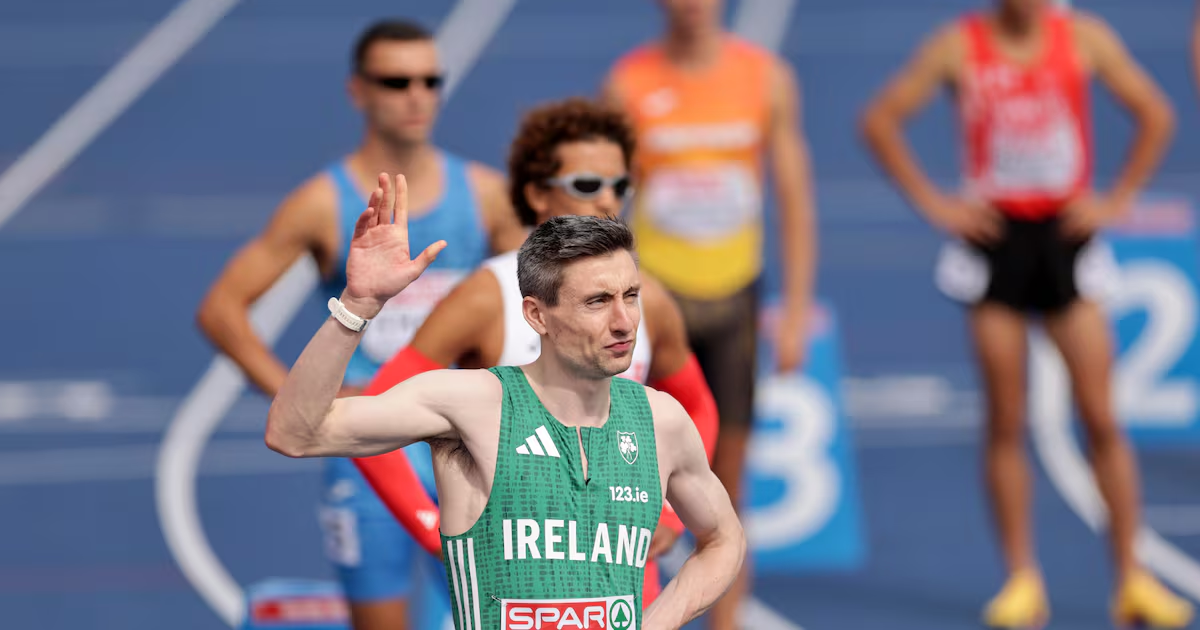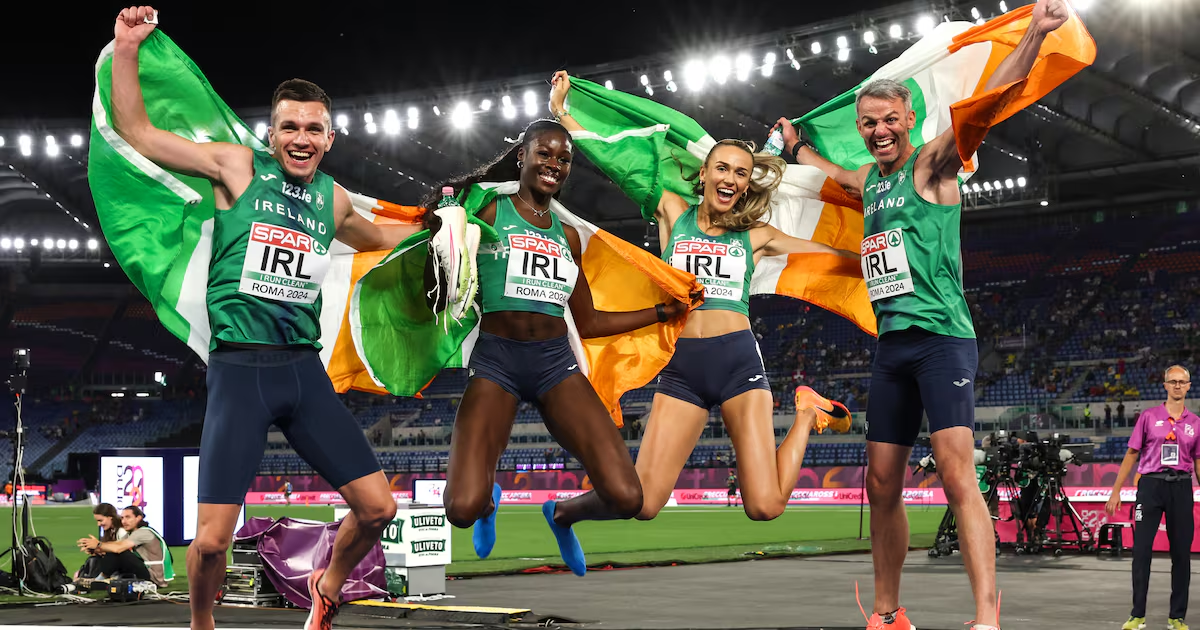
There was a fetching story on the European Athletics website this week under the headline: “Who will succeed Ireland as European champions in Birmingham?” A good question, because the answer appears to be wide open.They were setting the scene for the mixed 4x400m relay, among the first medal events at next week’s European Championships. Run as a straight eight-team final during Monday’s evening session, it’s become one of the giddy highlights at every major athletics championship. The event sent Irish spirits soaring when Thomas Barr, Rhasidat Adeleke, Chris O’Donnell and Sharlene Mawdsley combined to win the gold medal in Rome two years ago. This time round the top eight teams were invited to Birmingham based on their European Athletics ranking at last month’s cut-off point for qualification. The Ireland quartet, unable to maintain their times over the last two years, dropped down to ninth and just missed out – a timely reminder that nothing can be taken for granted in top-level athletics. Next week will also see the race to succeed Ciara Mageean as European 1,500m champion. The circumstances of her absence from Birmingham are still difficult to process, given her glorious triumph in Rome only two years ago. In life as in sport, there is no telling when fate will intervene.Despite the significant absence of Mageean and the mixed-relay team, Ireland is still in a position to send a 46-strong team brimming with quality to Birmingham. It is possible that they might even improve on the record four-medal haul from Rome.Ireland’s Rhasidat Adeleke with the silver medal she won at the 2024 European Athletics Championships at Stadio Olympico in Rome. Photograph: Morgan Treacy/Inpho Along with Adeleke’s silver in the 400m, plus another silver in the women’s 4x400m relay, the Rome tally surpassed the three-medal haul from Budapest back in 1998, when Sonia O’Sullivan pulled off the 5,000m-10,000m double and Mark Carroll also won bronze in the men’s 5,000m. That was the first time two Irish athletes made the podium at the same European Championships. Some people thought those boom times might never be repeated.Indeed, for years after that it was usually left up to one Irish athlete to fly the medal flag, even if plenty more did travel in hope. Think Derval O’Rourke winning silver in the 100m hurdles in 2006, Mark English winning 800m bronze in 2014, or Thomas Barr winning 400m hurdles bronze in 2018 – without which those championships would have been a write-off for Irish athletics.Trace the trail even further back. For the first 60 years of the European Championships – the inaugural edition being staged in Turin in 1934 – there were only three Irish medal winners. All three of them came in the men’s 1,500m: Ronnie Delany’s bronze in 1958, followed by Frank Murphy’s silver in 1969 and Eamonn Coghlan’s silver in 1978.After 2010, the European Championships went biennial, thus also staged in Olympic year. At the first edition of those championships in Helsinki in 2012, no Irish athlete won a medal. Fionnuala McCormack did run gallantly to finish fourth in the 10,000m, while there was only one Irish medal winner in 2016, when Mageean won bronze in the 1,500m.So back to Birmingham, incidentally the first European Championships to be staged in Britain, one of the traditional strongholds of the sport. Which in turn makes it the closest we’ve ever had to a home championships.Ireland’s Kate O’Connor will be aiming to continue her remarkable run of success when she competes in the heptathlon at the European Athletics Championships in Birmingham. Photograph: Morgan Treacy/Inpho You can expect a good atmosphere in the Alexander Stadium next week, even if, with only 18,000 permanent seats, plus the extra bleachers rolled in for the week, it’s certainly no Stadio Olimpico.Of the 46 Irish athletes, widely spread between sprints and distance running and relays – though a lot thinner in the field events – six have already won senior championship medals. Either as individuals, or with the relay. English leads the way in the 800m, with five medals from the five European finals he’s contested; bronze in 2014 and 2022, plus silver and two bronze indoors. Whisper it for now, because with Cian McPhillips fast returning to his best, it could be that Ireland have two medal hopes going into that final next Thursday night.It’s a long time since two Irish athletes have stood on the senior championship podium in the same event – Frank O’Mara and Paul Donovan winning gold and silver in the 3,000m at the 1987 World Indoors in Indianapolis – although that’s getting a little too far ahead of ourselves.Sarah Healy, European Indoor champion over 3,000m last year, is looking to emulate Sonia O’Sullivan and win two medals in two different events, although her best chance may well come in Tuesday’s 5,000m, a straight final. Adeleke’s Irish record in the 200m of 22.34 would have won her the gold medal in Rome two years ago. Even if not quite back to her absolute best, she’ll still know what’s required to chase a podium position again this time. With six successive medals from her last six multi-event competitions, Kate O’Connor may have spoiled some people into thinking another medal in the heptathlon is already a given. In reality, nothing can be certain about how she handles seven different events over two days, other than she’s guaranteed to give them her best.Sadly, Mawdsley was unable to recover from a hamstring injury in time to take her place in the 400m, or later the 4x400m relay. On top of winning silver two years ago with the women’s 4x400m relay, she was ranked fifth fastest in Europe this season. It’s still possible Ireland’s record medal tally at the European Championships could be surpassed, but either way, such boom times can’t always be taken for granted.
Ian O’Riordan: It’s easy to get carried away about Ireland’s chances at the Europeans
Despite the absence of Ciara Mageean and the mixed relay team, Irish athletes are targeting a record medal haul
967 words~4 min read