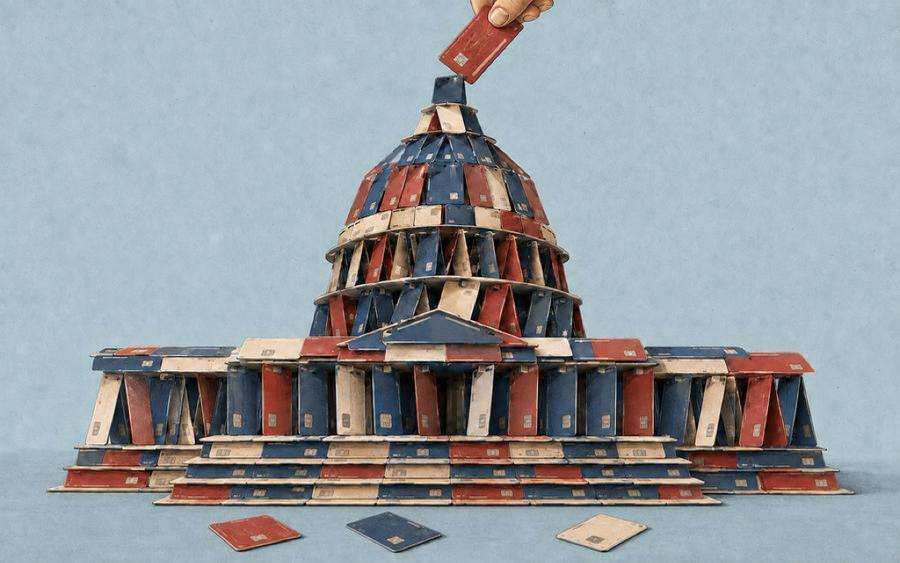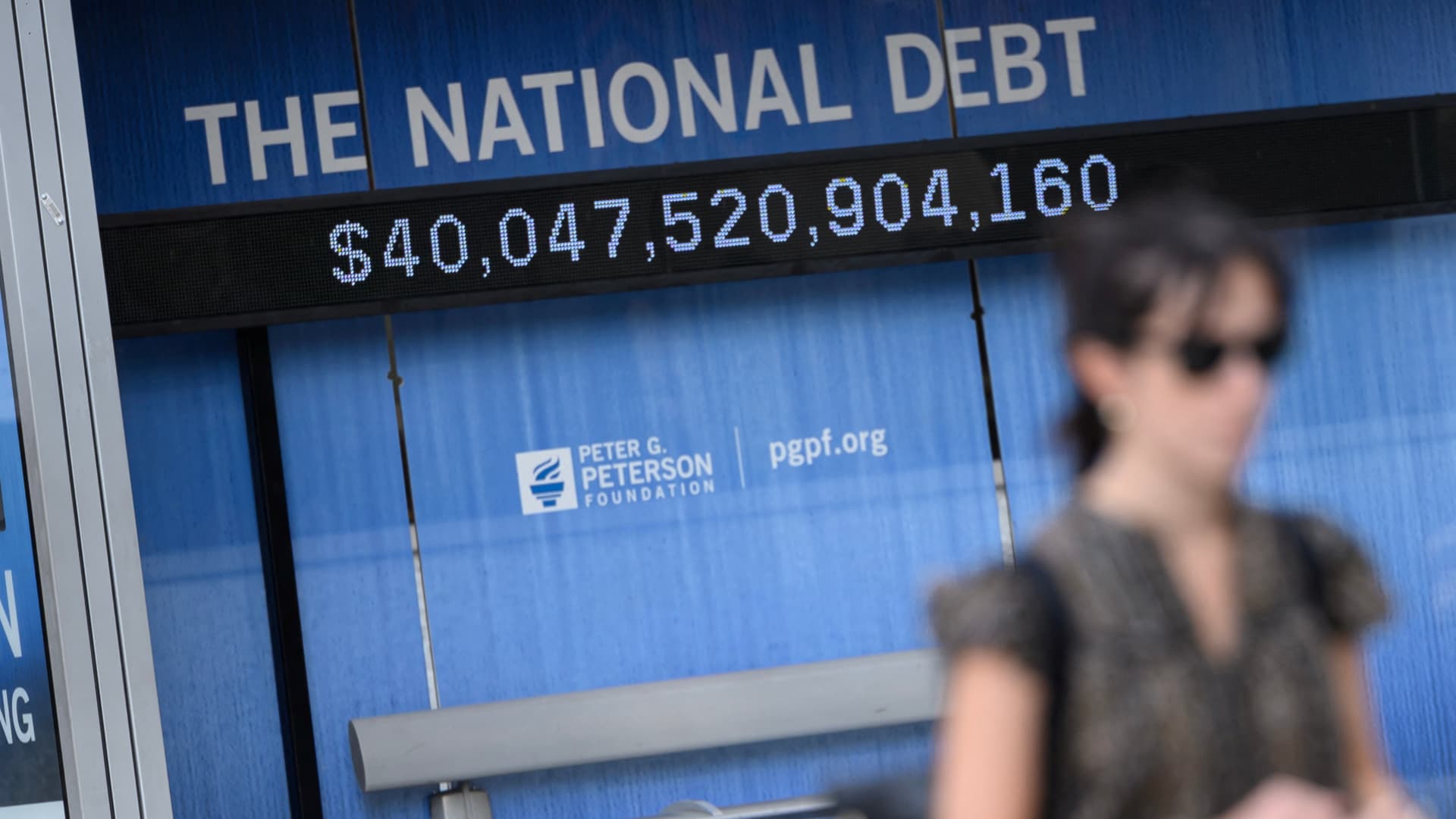
In all caps, right in the middle of The New York Times’ front page on Thursday, Aug. 20: “U.S. debt surges to $40 trillion.”Paying the interest on all of that debt is now the third-most expensive obligation the U.S. government has, behind Medicare and Social Security, and just ahead of national defense. This year, interest payments are on track to cost the government — and, by extension, every taxpayer — around a trillion dollars.On Wednesday, the Treasury Department tried to rein in some of that interest cost when it announced it would be buying back long-term bonds it had issued. That did cause long-term interest rates to come down — a little — but only for about a day. On Thursday morning, interest rates on long-term bonds started creeping back upward again. Treasury Secretary Scott Bessent has been saying that he wants to sell fewer of those long-term bonds and more short-term debt.Part of the problem here is that demand for long-term debt has been a little shaky lately —buyers just aren’t all that interested. So how to attract them? “Bottom line, if the U.S. issues a ton of long-term debt, long-term interest rates will be higher,” said Chris Low, chief economist at FHN Financial.But short-term rates are usually lower. Alex Wolf, managing director at J.P. Morgan Private Bank, said that’s motivating the Treasury Department to issue shorter-term debt. “Part of that effort is taking advantage of what’s happening in terms of market pricing, and simply borrowing at lower rates versus at higher rates,” Wolf said.The kind of short-term securities that the federal government has been issuing more of are called Treasury bills. They come in several flavors: “One-month, two-month, three-month, four-month, six-month, and 12-month T-bills,” said Zachary Griffiths, senior strategist at CreditSights.He said there’s a lot of demand for these T-bills — mostly from big investors who want a safe place to park their cash for a little while — and the government is well aware of that.“And frankly, if you’re running a $2 trillion annual deficit, and you have a $40 trillion debt stock outstanding, you need to tap every market where you think there’s demand,” Griffiths said.But pivoting to T-bills could backfire. Wolf at J.P. Morgan said rates on short-term debt closely track what the Federal Reserve Bank does with interest rates. “And so if the Fed’s on hold, then that rate should remain unchanged,” he said. “If the Fed hikes, then that rate will go up.’Remember, these securities mature in just months, which means the Treasury has to keep issuing new ones over and over again. As a result, interest rates on them can be volatile, said Low at FHN Financial.“Funding the U.S. government with T-bills is like buying a house with a credit card,” he said. “The card company can reset the rate, and does, every time short-term interest rates change.”In order to buy back its own long-term bonds, Low said the Treasury is going to have to issue even more short-term debt. You can think of that like squeezing a balloon, he said: “You’re increasing the risk of something going wrong by increasing reliance on short-term funding.”Low said that’s because short-term rates are probably headed up.
"Buying a house with a credit card": The Treasury's plan to finance the national debt
The Treasury wants to use short-term borrowing to finance the national debt. While short-term interest rates are usually lower than long-term rates, they’re also more volatile.
532 words~2 min read