view more
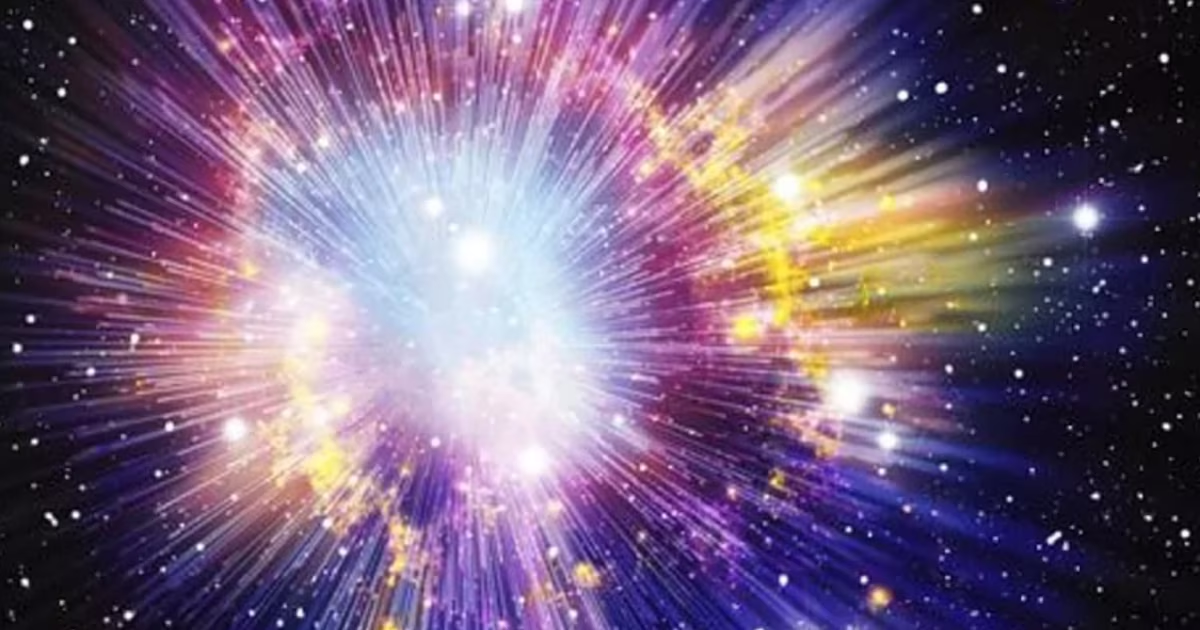
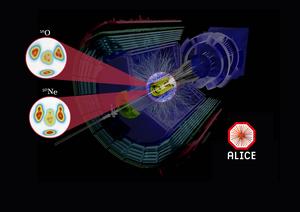
Researchers from the University of Copenhagen have succeeded in recreating the primordial matter that filled the Universe shortly after the Big Bang – by smashing much smaller atomic nuclei together than previously thought possible. These microscopic Big Bangs could provide new insights into the Universe’s earliest moments while also helping researchers understand one of the fundamental questions in nuclear physics.
What happened in the first moments of the Universe – before the building blocks of life and the world we know today came into existence?
Physicists at the CERN research facility in Switzerland are trying to answer this question by recreating some of the extreme conditions that prevailed in the Universe during its earliest history. Now, researchers from the Niels Bohr Institute, together with colleagues from the international ALICE collaboration, have come one step closer to understanding them.
At CERN, researchers can make atomic nuclei collide at almost the speed of light, creating tiny droplets of the primordial matter that filled the Universe during its first millionth of a second. This matter is known as quark-gluon plasma and is thought to have been the earliest form of matter in the Universe.