Long before Earth existed, before the Sun had fully formed, clouds of gas and microscopic dust drifted through interstellar space.
Within those tiny grains, astronomers believe, some of the chemistry that eventually gave rise to planets, and perhaps even life, first began.
Yet studying this process has always been difficult because the dust forms in some of the most hostile environments in the universe, often around dying stars or within vast molecular clouds many light-years away.Now, scientists have recreated part of that cosmic chemistry inside a laboratory.
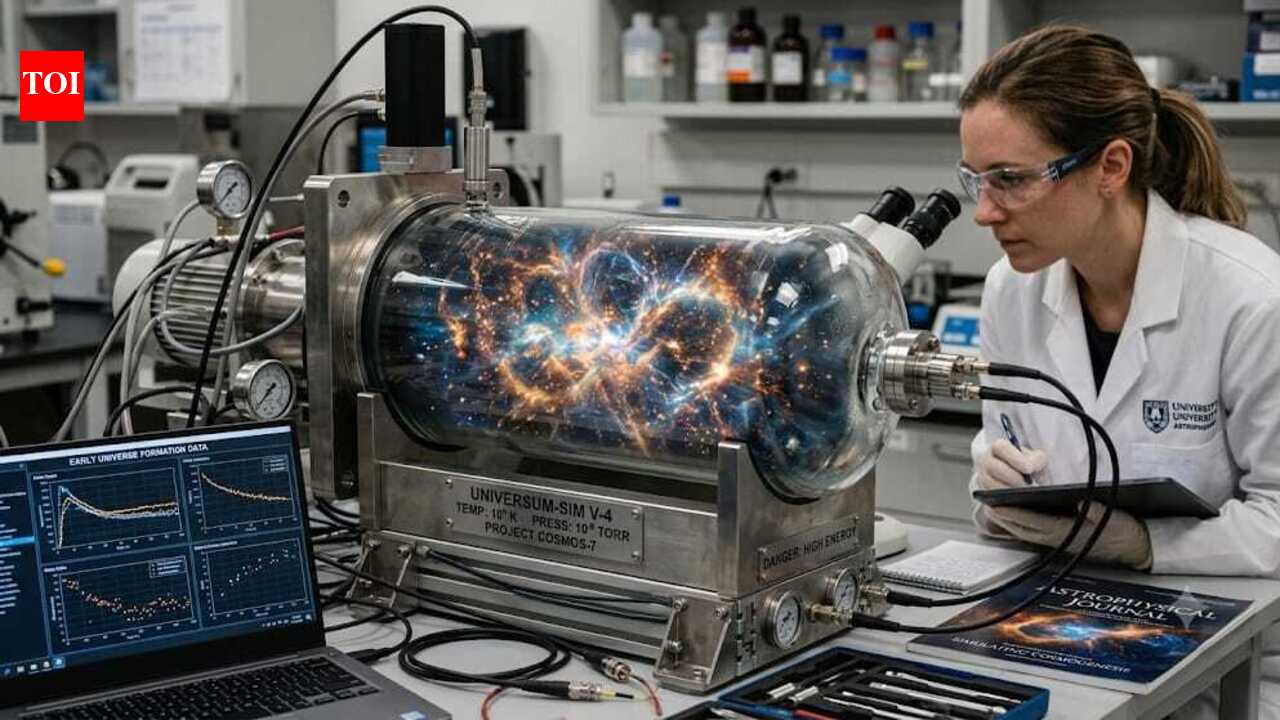
By generating artificial interstellar dust under carefully controlled conditions, researchers from the University of Sydney have produced particles whose chemical fingerprints closely resemble those observed by space telescopes.
The work provides a new way to investigate how carbon-rich cosmic dust formed billions of years ago and how it may have supplied the raw ingredients that later became part of planets, meteorites and, ultimately, living organisms.How scientists recreated interstellar cosmic dust inside a laboratoryThe research, ‘Laboratory Synthesis of Carbonaceous Cosmic Dust Analogues Using Plasma Polymerisation’, was led by Linda Losurdo from the School of Physics, University of Sydney, together with Professor David R.