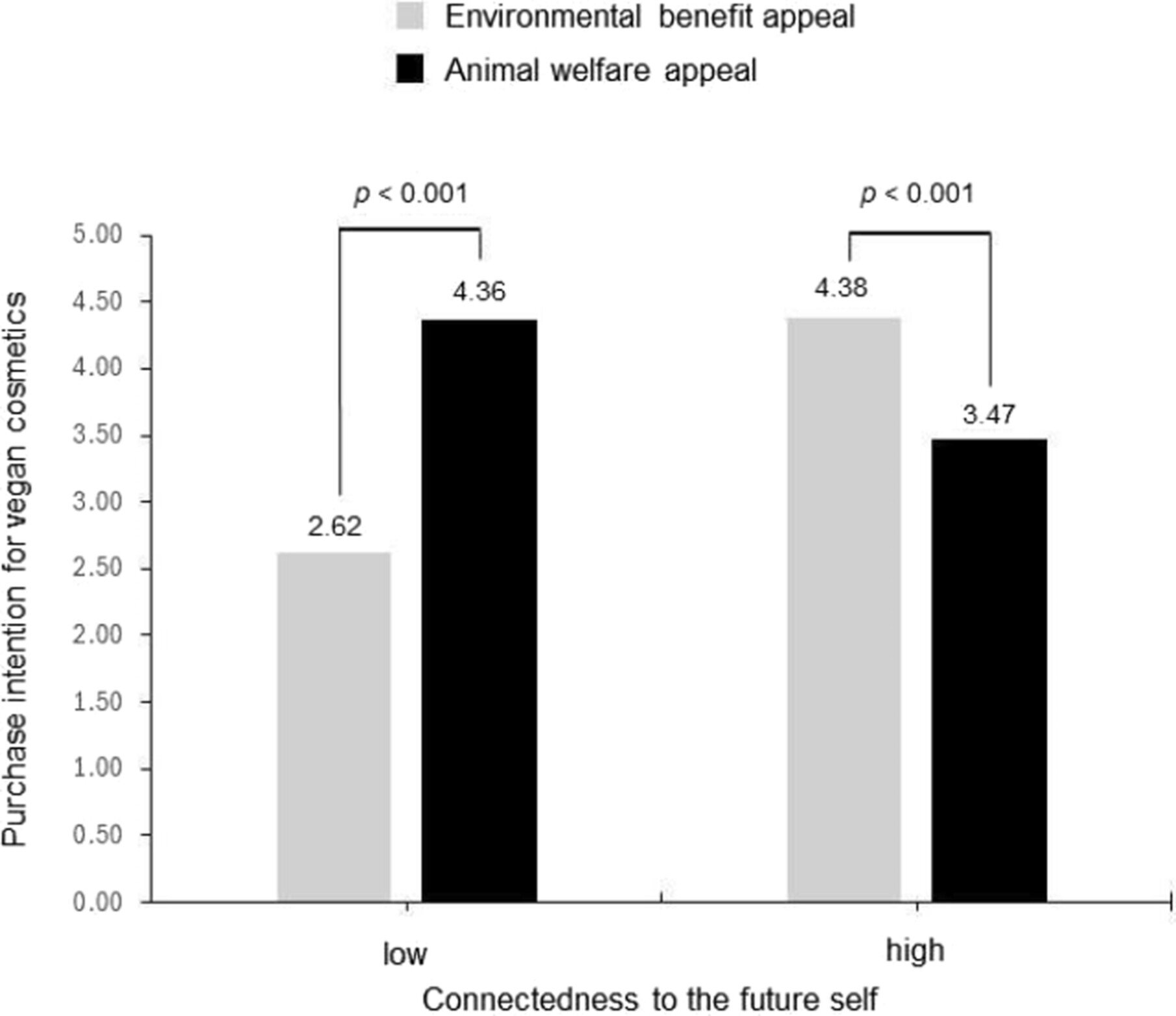
Interaction between ad message appeal and connectedness to the future self in Study 3. Credit: Psychology & Marketing (2026). DOI: 10.1002/mar.70107
Major cosmetics retailers such as Sephora, Ulta and Amazon now feature sections aimed at socially conscious consumers, highlighting products that are sustainable, eco-friendly, cruelty-free or packaged with recycled materials. This shift reflects changing consumer preferences.
Consumers are increasingly mindful of their purchases—often seeking products that are ethically aware—and manufacturers have responded by incorporating related claims into product webpages and labels designed to appeal to them.
"Today, consumers may choose certain lifestyles not only to show who they are, but also to express their values through what they buy," said Mona Safizadeh, a doctoral candidate at the University of Rhode Island's College of Business who is studying this trend.
The cosmetics industry has seen a surge in vegan and sustainable products in recent years. Globally, the market for vegan cosmetics is worth billions of dollars. Yet despite growing demand, research examining the motivations, psychological processes and conditions that influence consumers' preferences for these products has been limited.