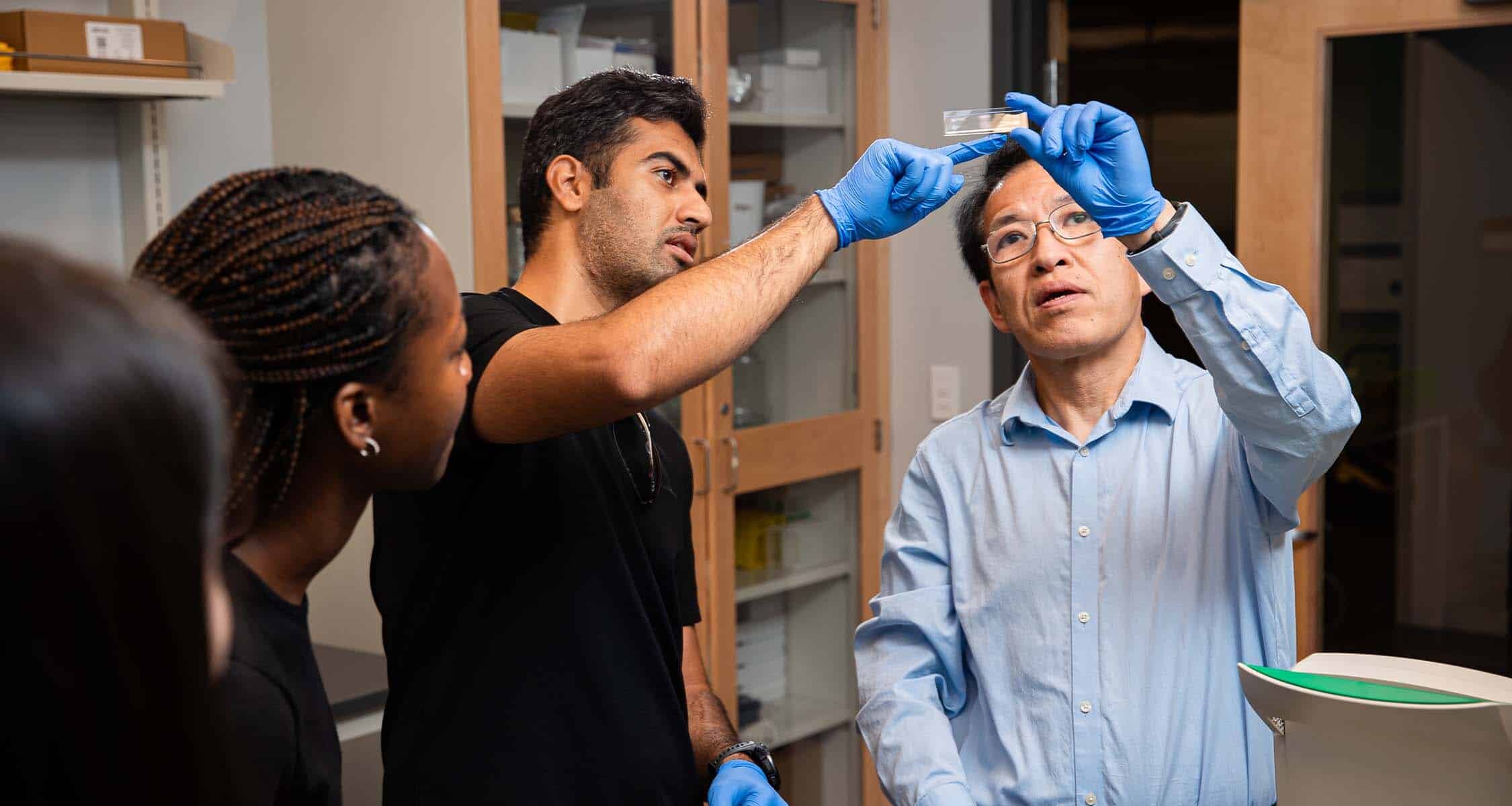
University of Tennessee, Knoxville Professor Dacheng Ren works with a student in his lab. Credit: University of Tennessee
The use of antibiotics has traditionally been considered the gold standard in bacterial infection control—the more bacterial cells you kill, and the faster you kill them, the better. University of Tennessee, Knoxville Professor Dacheng Ren champions a different approach: engineer an antibiotic-free surface that prevents bacteria from establishing an infection at all.
"It actually arose from an accidental discovery," said Ren, who heads the Department of Biomedical Engineering. "About 10 years ago, I gave some students a project that I thought would be simple and give straightforward results. However, the findings weren't as expected. I got lucky to work with these really talented students. They paid attention to details, which helped lay a foundation for some exciting ideas that we work on today."
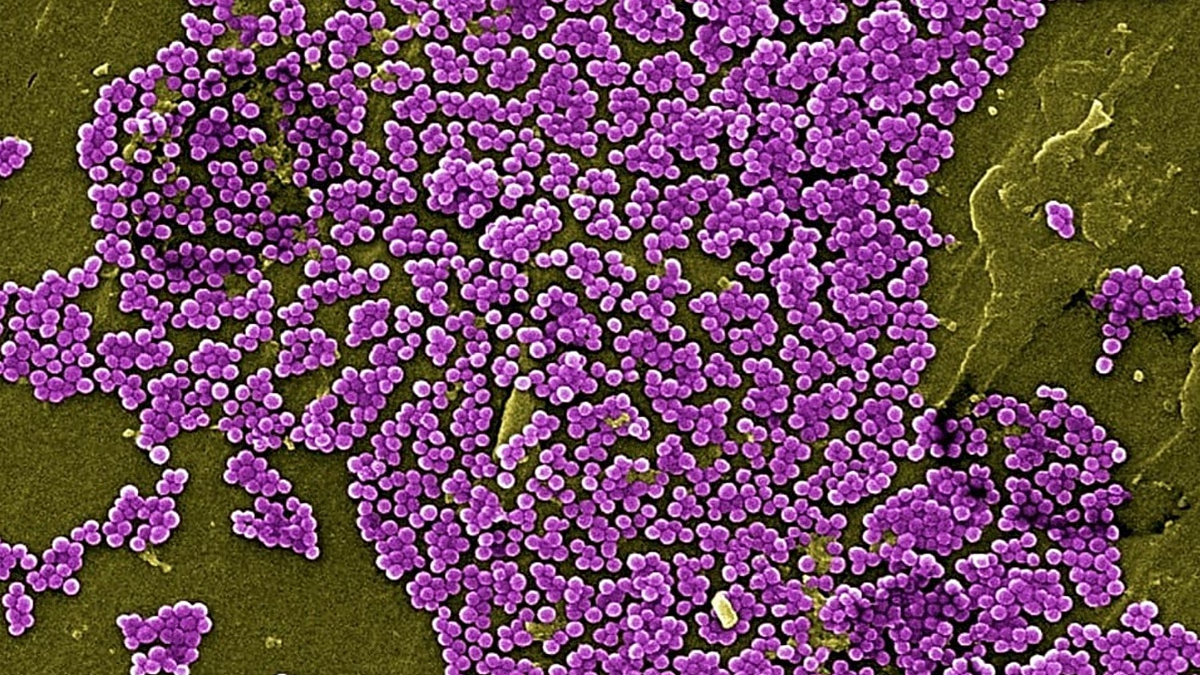
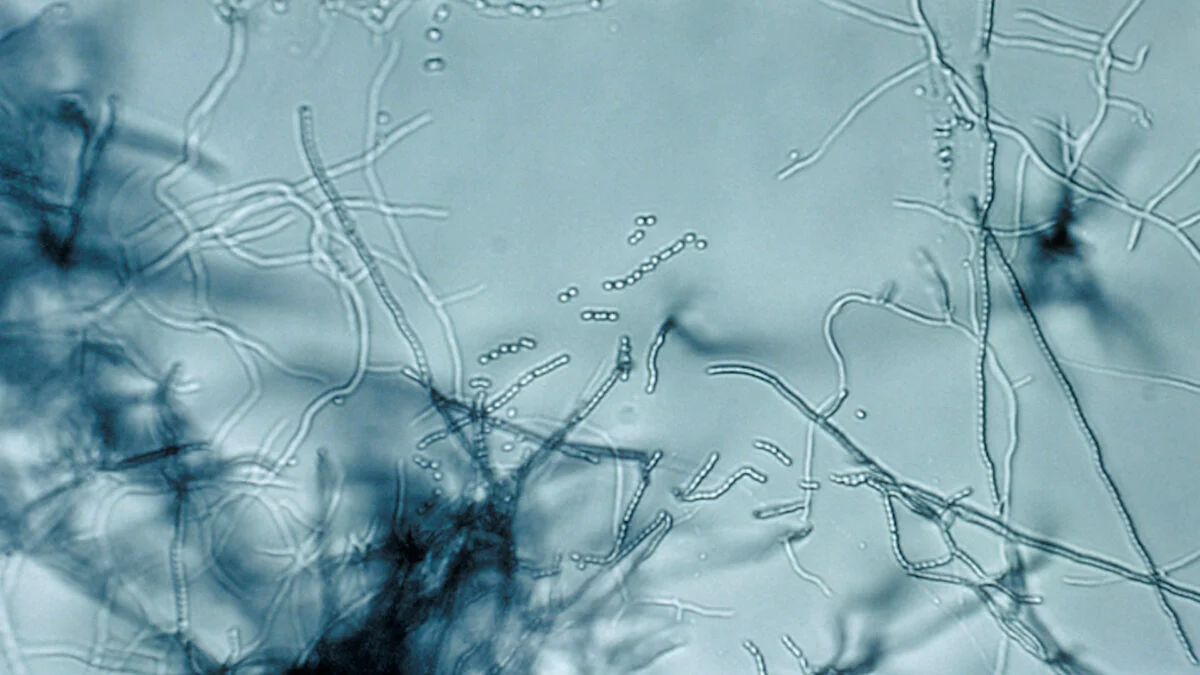
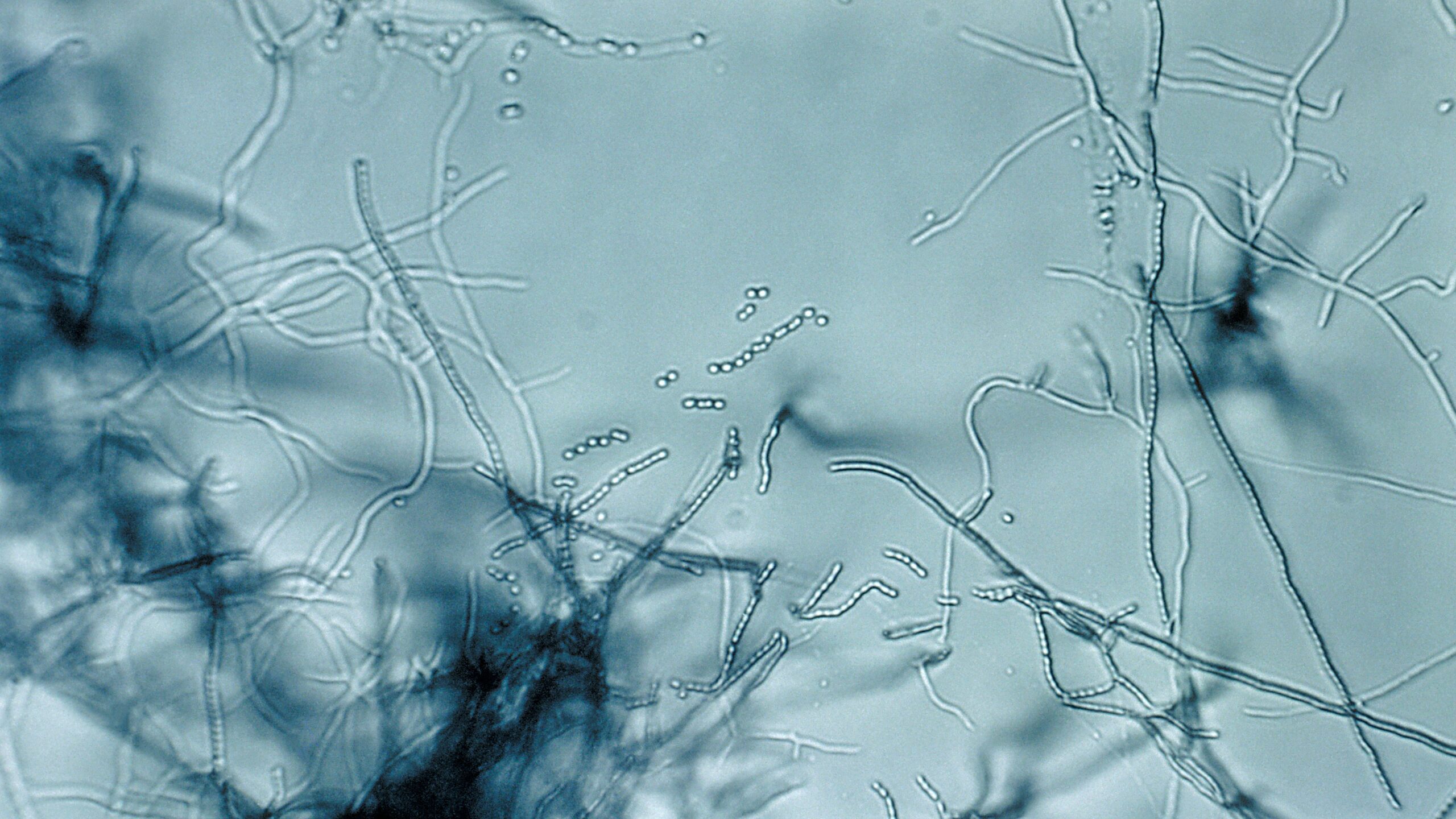
Ren had been studying biofilms, layers of bacteria that coat themselves in a matrix that both glues them to a surface and shields them from danger. Forming a biofilm makes bacterial cells 1,000 times less susceptible to antibiotics.
Biofilm-forming bacteria are a major cause of medical device-associated infections for patients who need catheters, replacement heart valves, orthopedic implants and other devices, sometimes resulting in severe illness or even death.