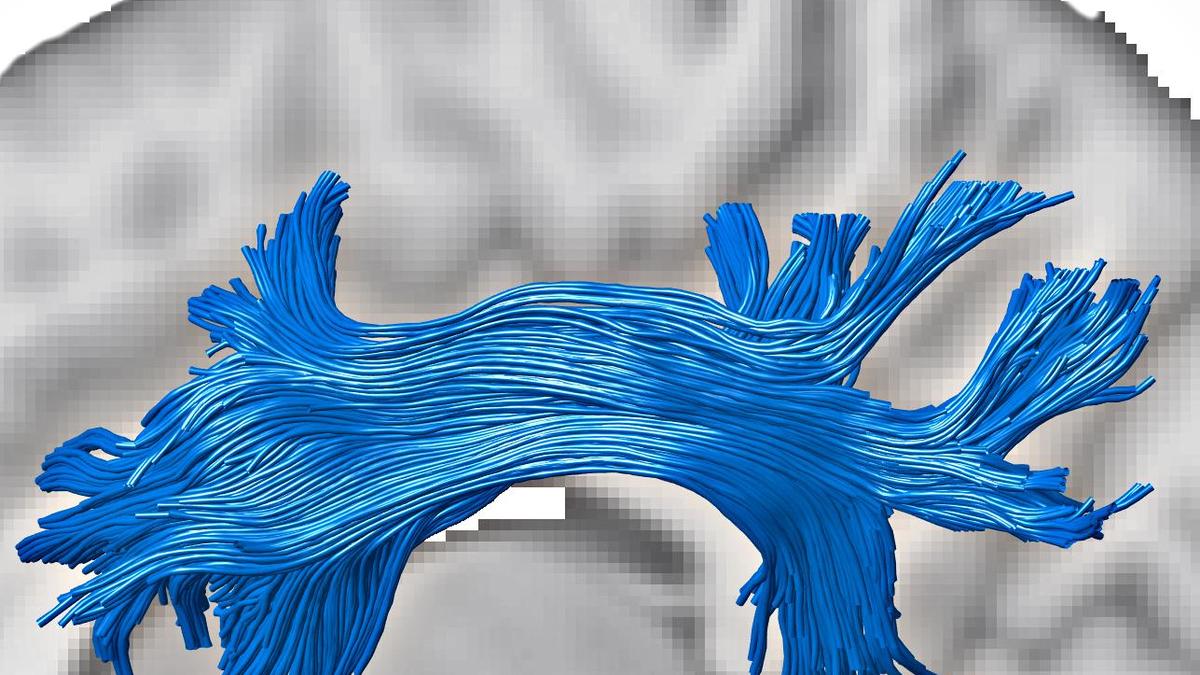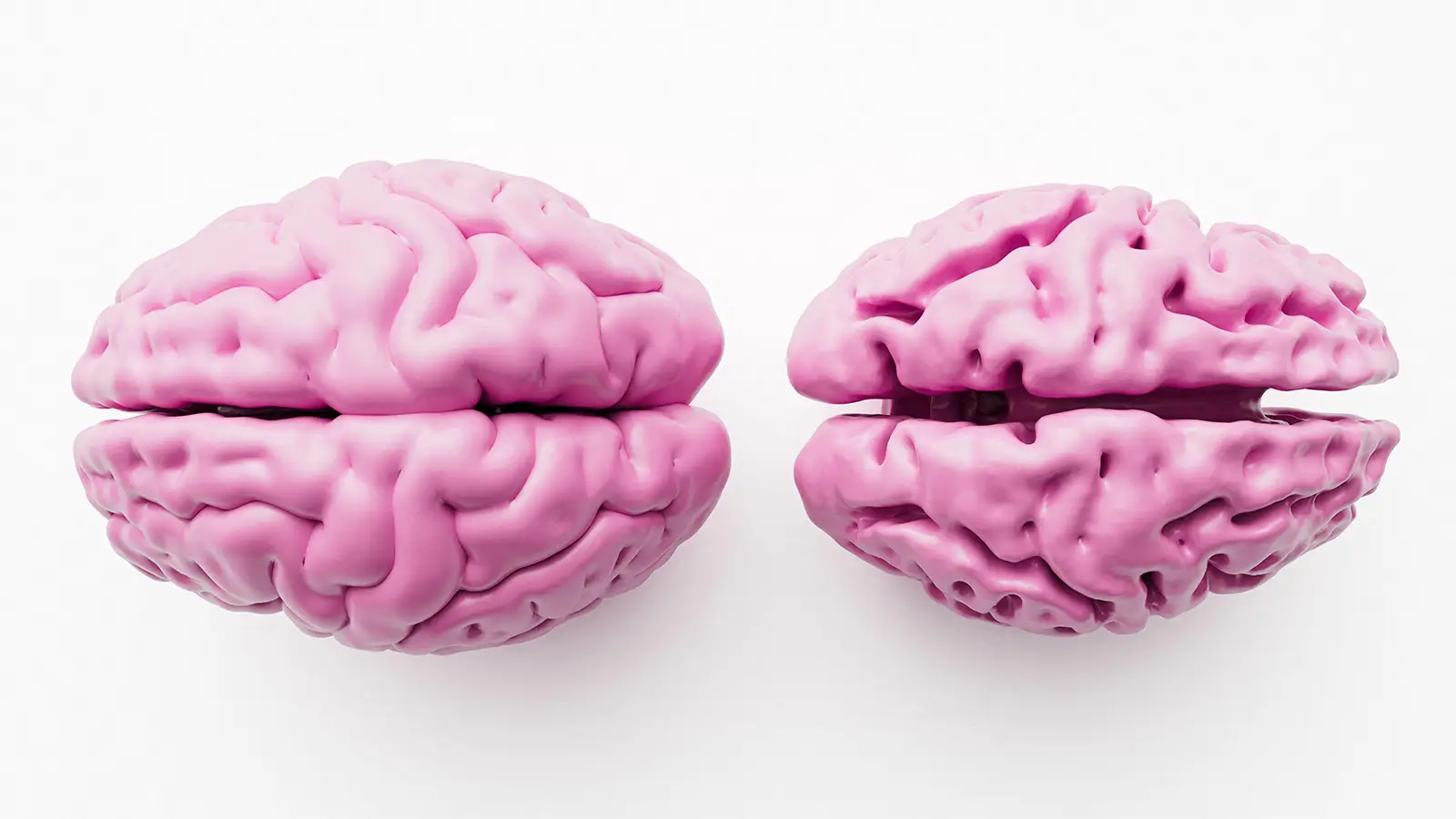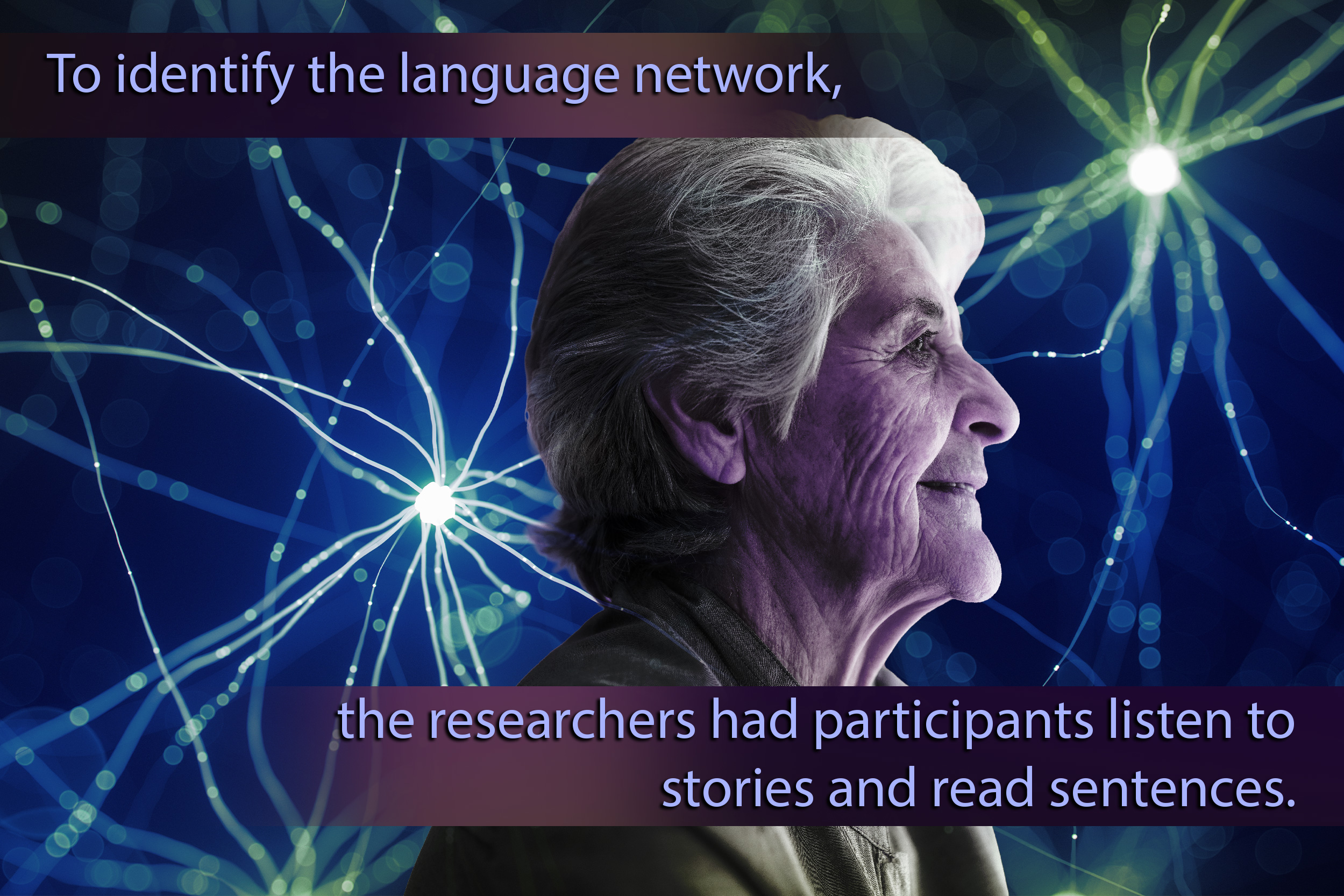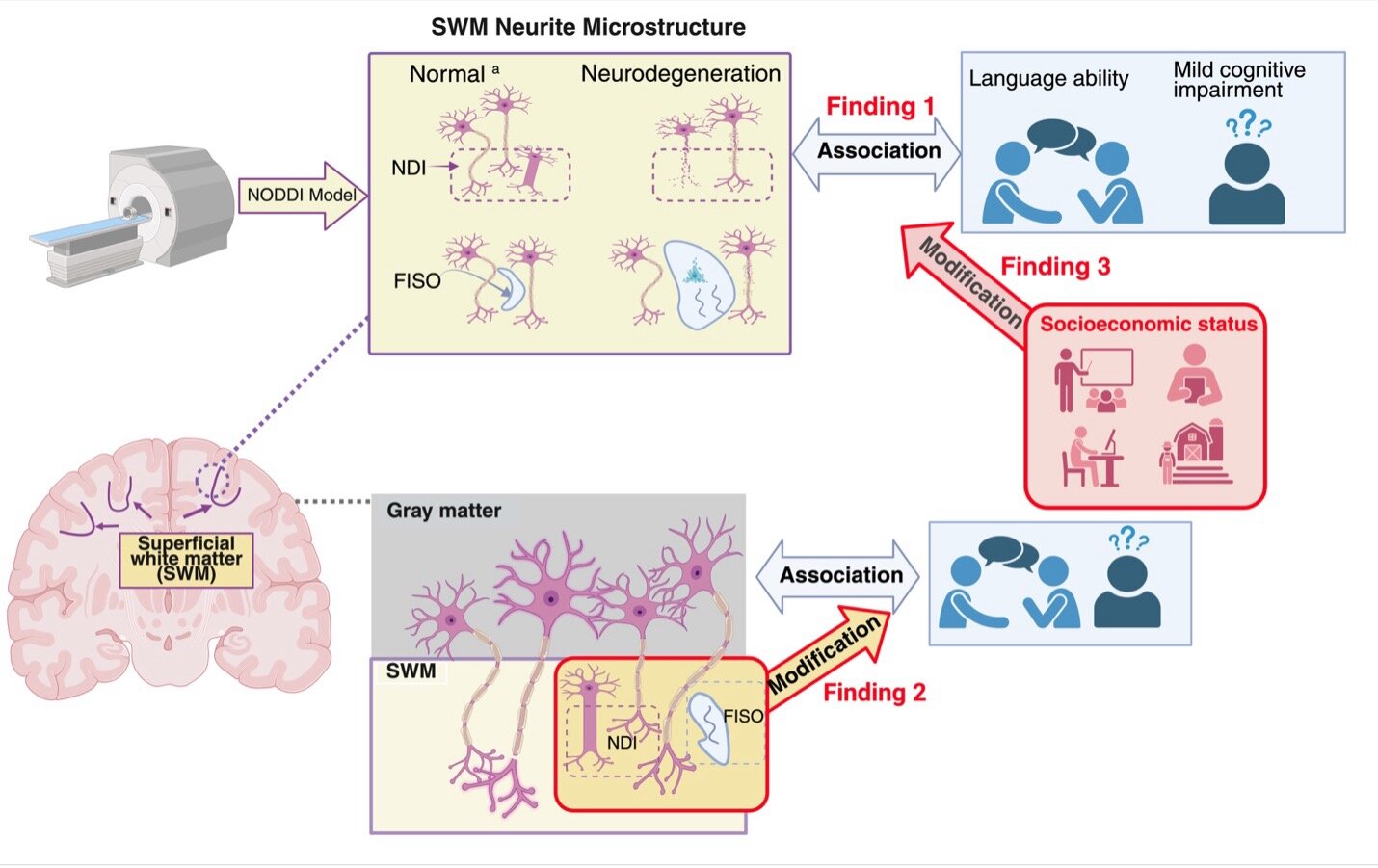
Illustration of the study's key findings. Credit: Stevens INI
Researchers from the Mark and Mary Stevens Neuroimaging and Informatics Institute (Stevens INI) at the Keck School of Medicine of USC have found that two distinct types of brain tissue work together to support cognition in older adults and that the health of the brain's short-range wiring may help soften the cognitive effects of gray matter loss.
The study, published in Alzheimer's & Dementia: The Journal of the Alzheimer's Association, analyzed brain scans and cognitive assessments from 459 community-dwelling adults 60 and older across India.
It is among the first studies to examine the brain's superficial white matter in a community-based population from a low- and middle-income country.
Superficial white matter is a thin layer of nerve fibers immediately beneath the brain's outer gray matter. These short, curved fibers act like local roads, carrying signals between nearby areas of the cerebral cortex. Gray matter, by comparison, contains many of the brain cells that process information.