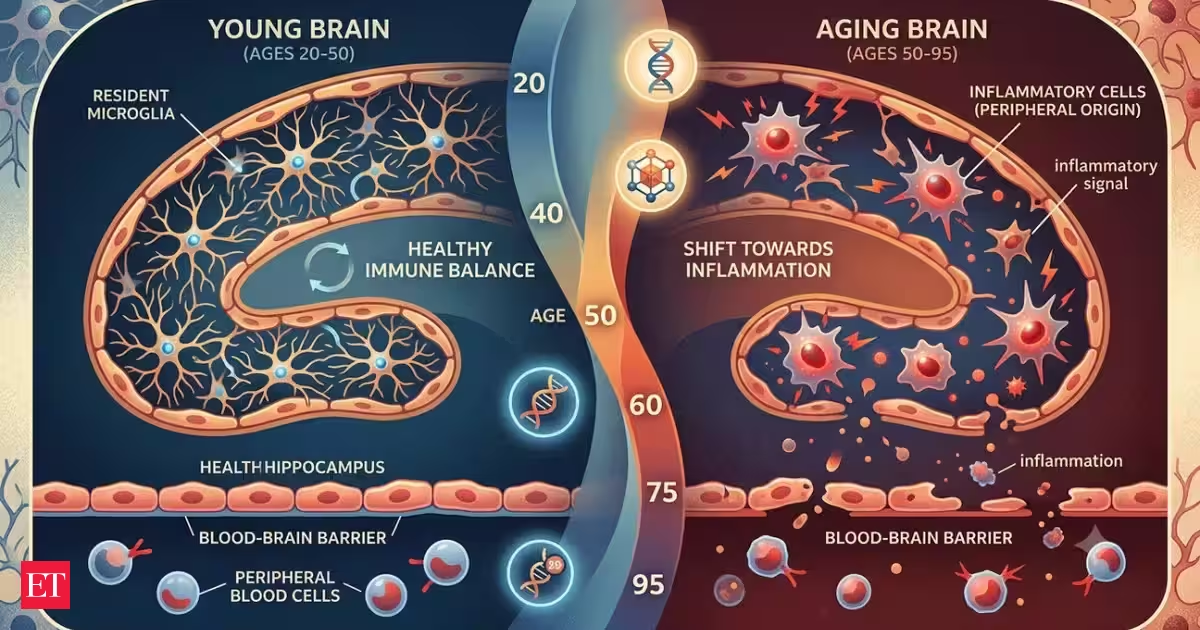
Brain aging study: The brain's immune system may begin changing around midlife, according to a new NIH-funded study. Researchers found that immune cells in the hippocampus gradually shift with age, offering a possible clue into why aging is associated with long-lasting inflammation in the brain.The researchers examined postmortem hippocampal tissue from 40 neurologically healthy adults between the ages of 20 and 95. They found that microglia, the brain's main immune cells, gradually declined from about age 50 to 75, as per a Sciencedaily report. At the same time, they appeared to be replaced by cells with stronger inflammatory signals and characteristics similar to immune cells that originate in peripheral blood.The findings could help scientists better understand how aging changes the brain and provide a new direction for studying its possible connection to Alzheimer's disease and other age-related neurodegenerative conditions.Immune cells begin changing around midlifeThe study was conducted by researchers from the University of California, San Diego, the New York Genome Center and the University of California, Irvine.The team analyzed postmortem hippocampal tissue from adults between 20 and 95 who were neurologically healthy. The hippocampus plays a central role in learning and memory.You Might Also Like:Researchers found that the immune environment in the hippocampus changed with age. Resident microglia gradually declined between about ages 50 and 75, while other immune cells with stronger inflammatory characteristics became more prominent.The finding challenges the long-standing view that microglia, which first develop during embryonic growth, remain in the brain and continuously renew themselves throughout life.Advanced technology revealed changes that were previously hiddenThe researchers combined several methods to examine the aging brain in greater detail.They analyzed gene activity alongside techniques that map the three-dimensional organization of the genome and chemical modifications known as the epigenome.You Might Also Like:Nathan Zemke, director of single-cell genomics at the UC San Diego Center for Epigenomics, explained that gene expression shows what a cell is doing, while epigenetic signatures can preserve information about where a cell came from, according to the Sciencedaily report.Using these approaches together allowed the researchers to identify changes in immune-cell identity and lineage that would not have been apparent from gene expression data alone.Aging also affects the blood-brain barrierThe study found other age-related changes in the brain.Researchers observed signs of decline in cells that help maintain the blood-brain barrier, the protective boundary that controls what can pass from the bloodstream into the brain.You Might Also Like:They also found widespread changes in the physical organization of the genome across different types of brain cells.Bing Ren, a corresponding author of the study, said these structural changes were closely linked to shifts in gene regulation and cell identity, as per the Sciencedaily report.Researchers are investigating a possible Alzheimer's connectionThe study does not show that the changes in immune cells cause Alzheimer's disease.Instead, the findings point to questions that researchers want to investigate further. Future studies will examine why resident microglia decline with age and whether the newly identified transition in immune cells directly contributes to Alzheimer's disease and other neurological conditions associated with aging.Richard Hodes, director of the NIH's National Institute on Aging, said aging is the single largest risk factor for dementia, although scientists still do not fully understand how aging drives disease, according to the Sciencedaily report.The researchers said that understanding these cellular changes could eventually provide opportunities to develop interventions aimed at preserving brain function and reducing vulnerability to neurodegenerative disease.The research was supported by the National Institute on Aging and the NIH Common Fund's 4D Nucleome program. It is part of a broader collection of studies examining how the three-dimensional organization of the genome influences human development, aging and disease.
What changes inside the brain as you age? Scientists find a hidden shift that may begin in your midlife
Brain aging study: A groundbreaking NIH-funded study uncovers significant changes in the brain's immune system as it ages, highlighting the potential links to Alzheimer's disease and neurodegenerative conditions. Discover how microglia decline and new immune cells emerge, affecting brain function.
604 words~3 min read