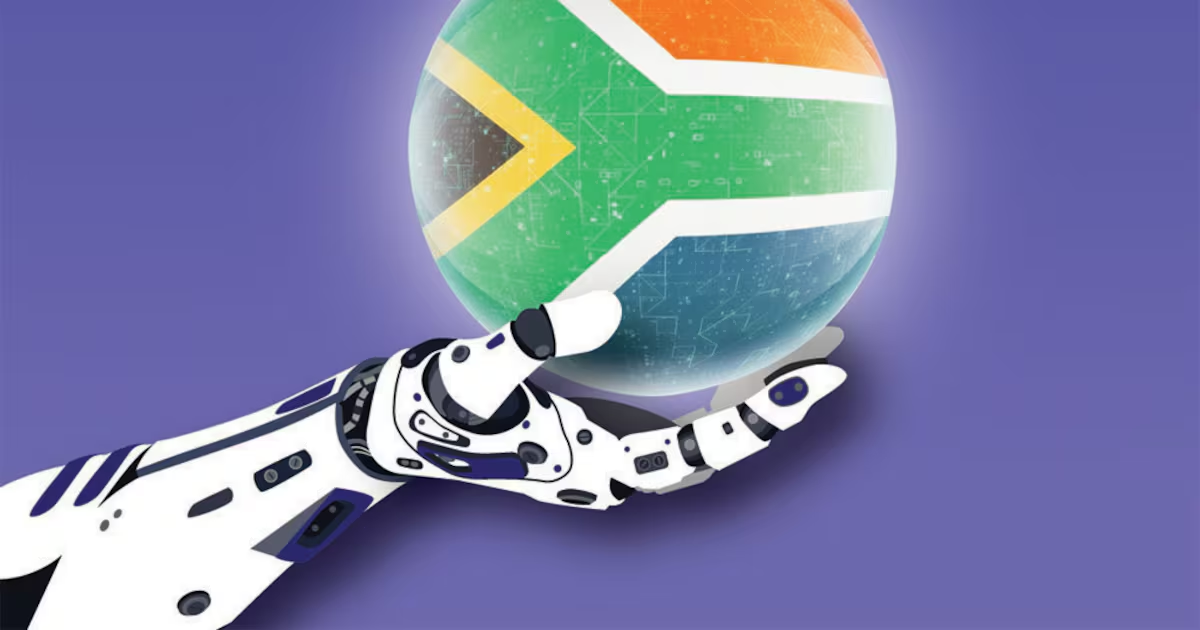
South Africa has learned repeatedly that access to strategic infrastructure and control over it are not the same thing. From mining and electricity to rail and telecommunications networks, the country’s economic trajectory has often been shaped by who owns critical capabilities and who captures the value they create.
Today, a new strategic asset is emerging, not beneath the ground or across railway tracks, but across algorithms, data and computing infrastructure. As artificial intelligence becomes embedded in every sector of the economy, a key national question is taking shape: who will own, control and benefit from the intelligence systems that increasingly power economic growth?
We have faced a similar crossroads before. As cloud computing became mainstream, South Africa adopted a cloud-first approach across the public sector. This accelerated digital transformation, but it also entrenched deep dependence on a small number of global providers. By failing to build meaningful national capability alongside adoption, we limited our ability to influence pricing, terms and, ultimately, our own digital destiny.
We cannot afford to repeat that mistake with AI.
AI is not simply another technology layer or productivity tool. It is fast becoming the operational intelligence layer of organisations, governments and economies. If we consume AI that is designed, trained and governed elsewhere, we risk borrowing someone else’s intelligence while giving away our competitive advantage. At the same time, we need to understand that sovereignty cannot be added later as a compliance exercise. Once control is surrendered, it becomes difficult to reclaim. Sovereignty must be part of the design from the start.