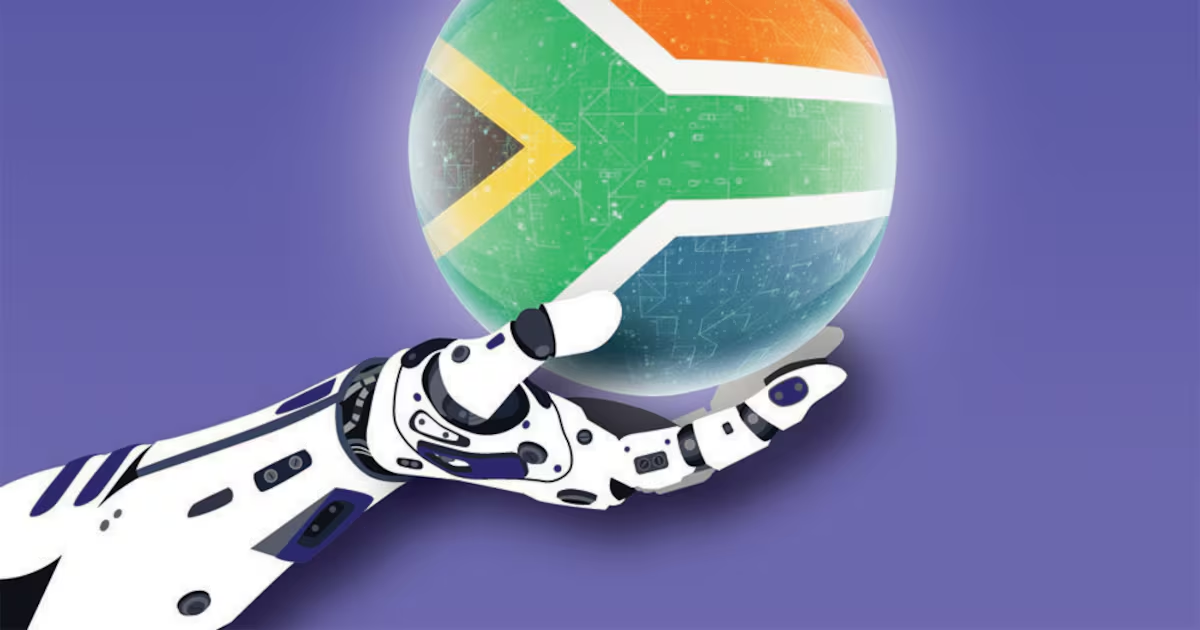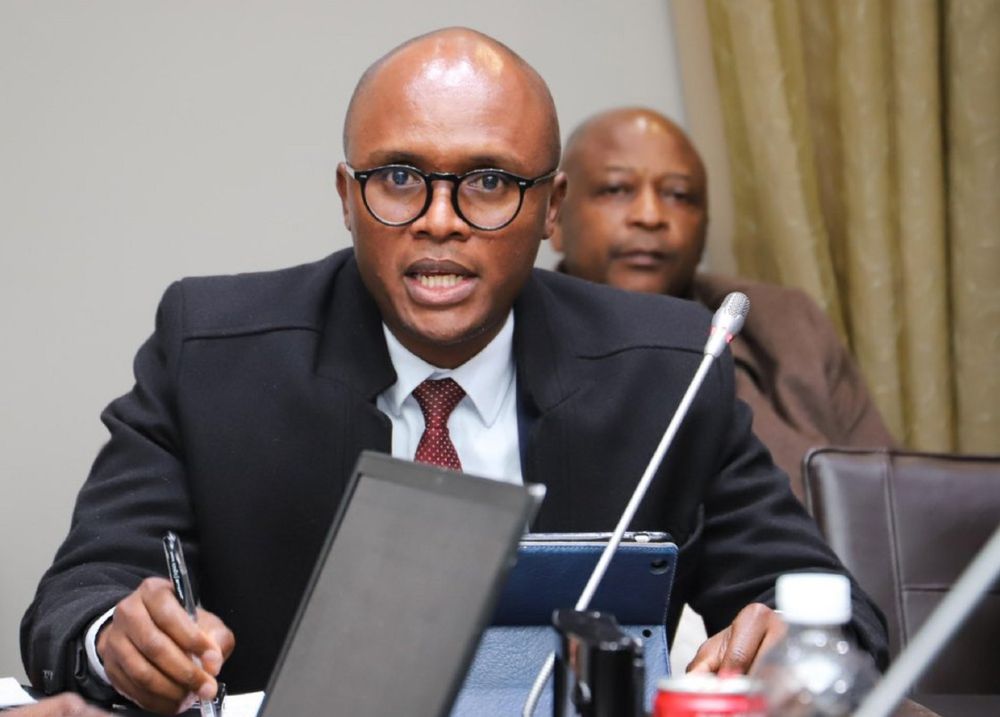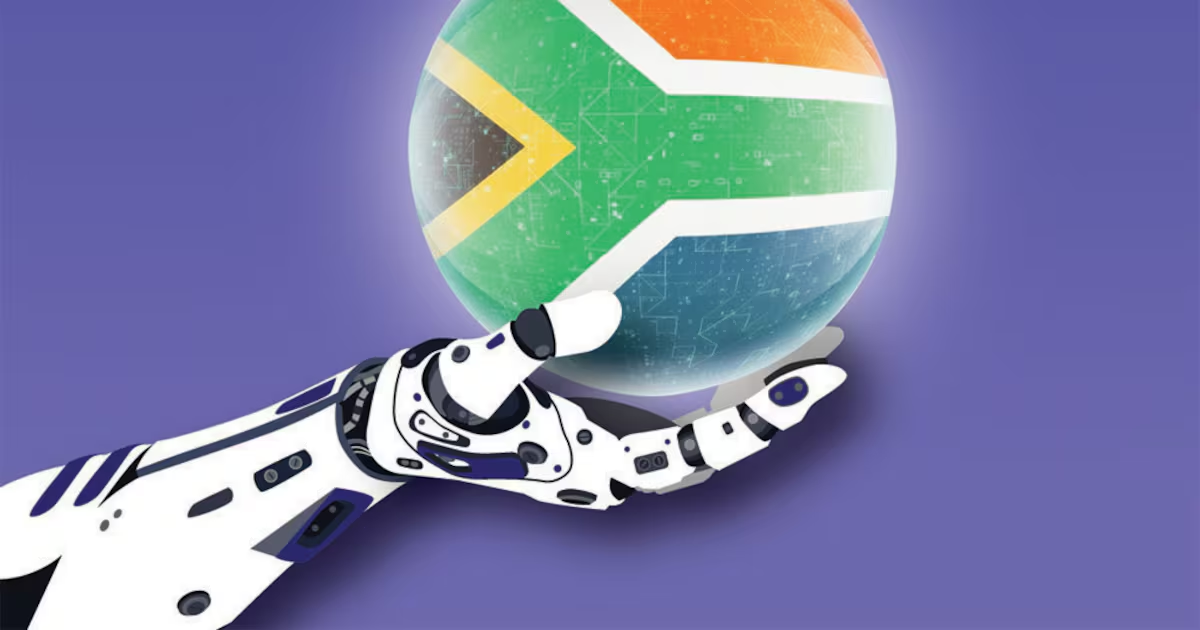
The world is in the midst of an AI “arms race”. While South Africa is not a leader in AI development, it has an opportunity to turbocharge its lacklustre economic growth by leveraging effective policy to encourage entrepreneurship and participation in this important field of technology.The economic potential of AI cannot be overstated. The International Labour Organisation estimates that one in four jobs globally is already exposed to generative AI. The last month has seen the launch of two major international AI oversight bodies. At the start of July the UN announced the formation of the AI for Good Global Commission, co-chaired by Rwandan President Paul Kagame and Salesforce CEO Marc Benioff, to advance the responsible development of AI and its deployment. China has also led the establishment of the World AI Co-operation Organisation, which launched in Shanghai during the 2026 World AI Conference. The body includes 29 founding nations with the aim of shaping global AI governance, sharing computing resources and establishing ethical standards. South Africa is affiliated with both bodies. AI investment has grown exponentially in recent years, with countries around the world seeking to capitalise on the trend through AI-backed services or software platforms, while others benefit from growing hardware demand to power such systems. It is therefore vital for South Africa to ensure that national AI policy is sound, especially after the embarrassing situation that saw communications minister Solly Malatsi having to withdraw the country’s draft national AI policy after it was found that an AI model had, ironically, inserted fake references into the document. Naspers’ AI governance & policy symposium last week encapsulated the current debate. For now it appears that government and business are focusing on increasing digital inclusion, investing in skills, and building infrastructure with the aim of growing participation in the digital economy. Parliamentary portfolio committee on communications & digital technologies chair Khusela Sangoni-Diko emphasised the importance of the state and private sector working together as co-architects of South Africa’s AI governance system. The government’s role is to put the regulatory and policy architecture in place that supports national economic growth objectives, she said, while the private sector is the “petri dish” developing AI at scale.While that all sounds good, the real question is whether local policy can truly allow the country to gain economically from the technology. As prominent AI researcher and Lelapa AI co-founder Vukosi Marivate noted, no country or entity can capture the real economic value of AI as a consumer. The spoils of this particular treasure hunt, as with many others, go to those creating the platforms, and thus also shaping how the game is played. The real opportunity comes from being able to attract investment into digital infrastructure and services that support AI, pushing to have more platforms built locally, and helping to move the country from consumption to production. Naspers South Africa head Phuti Mahanyele-Dabengwa detailed what businesses like hers can do with the right guardrails in place. “Imagine it is 2030. A young entrepreneur in Soweto is building an AI company serving customers across the continent. A teacher in Limpopo is using AI to personalise learning for rural students. A doctor in Mthatha is diagnosing disease faster because AI is supporting clinical decisions,” she said. In that ideal world, more South African companies would be competing globally because they trust the governance framework in which they operate, a future that is entirely possible but is not inevitable. Business Day
EDITORIAL | Will SA policy help or hinder in the AI race?
Policy blunders and global moves put spotlight on South Africa's digital ambitions
TL;DRAI
South Africa aligns government and business to shift from AI consumption to platform production via governance and infrastructure investment. Economic AI value flows to platform builders; policy soundness determines if SA can compete globally or stay trapped in consumption.
574 words~3 min read